

What To Do If You Find A Yellowjacket Nest In Your Yard
We may receive a commission on purchases made from links.
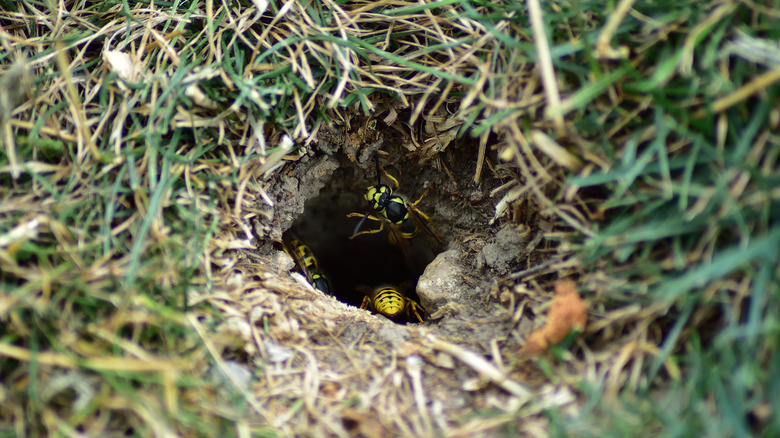
Have you been noticing more and more yellow-and-black striped winged creatures coming in and going out your yard? If yes, there's a good chance that you're dealing with a yellowjacket nest on your property. But before you take any action, get your binoculars and distinguish between a yellowjacket and a wasp since the remedial actions are distinct for both. Although they look similar, the former is significantly more hostile and has a slightly broader waist than paper wasps. Once you're sure you've been clocking the aggressive one in your yard, pinpoint their nest's location to get rid of yellowjackets.
Hinting at spots you may find it, John D'Abruzzo, Florida Lawn and Insulation Division Manager at Truly Nolen as well as an Associate Certified Entomologist, tells Hunker exclusively, "They usually build their nests underground, where they can stay undetected and their colonies can number in the thousands." So, you'll usually find them under your patio steps, in the gaps in your home's foundation, at the base of the trees in your garden, or the siding of your property. Though aerial nests are rare, you might find one in a tree branch or the eaves of your house. "A homeowner may only notice yellowjackets are there when they enter or exit a spot in the ground," says our expert, since you wouldn't normally check these areas for unwelcome nests. So, keep an eye out for a large group favoring a particular spot. After you spot their nest, cordon off the area and maintain your distance since you don't want to give them an opportunity to sting you. Now, you can either contact a professional, remove them yourself, or learn to cohabitate with them.
Should you worry about a yellowjacket nest in your yard
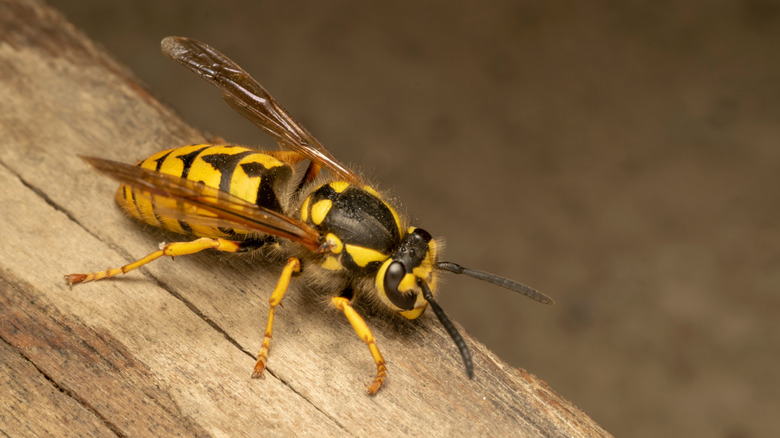
Even though yellowjackets are infamous for being combative, they won't attack you willy-nilly. Confirming this in his exclusive chat with Hunker, John D'Abruzzo states, "Yellowjackets become aggressive when their nests are disturbed and are able to sting several times when they feel threatened. Two major causes of disturbance are lawnmowers and pets." So, if you can steer clear of their nest, these housemates are unlikely to give you any trouble. Plus, unlike termites, they won't cause any structural damage to your house. "Yellowjacket wasps are considered 'beneficial' insects because they kill flies, caterpillars, beetle larvae, and other insects," adds our expert. Considering this, you may leave them to their devices, especially if the weather has started turning cold. This is because the workers and other male members often die during winter, with only the females hibernating. And they don't tend to start a colony in the same nest the following year.
But only go this route if you're 100% certain you can go without disturbing them. Our expert agrees and mentions, "They are not to be taken lightly by humans." Explaining the reason behind his warning, he shares, "Most of the time, their stings just cause extreme pain and swelling. Nevertheless, at least 15 to 20 persons are reported to die each year in the United States as a result of anaphylactic shock." Even if it doesn't come to this, getting stung multiple times by yellowjackets defending their nest and queens may have you battling nausea, fever, vomiting, diarrhea, and convulsions. Given the severity of their venom, it's best to take remedial action if you have pets or kids running wild in your yard.
How to deal with a yellowjacket nest in your yard
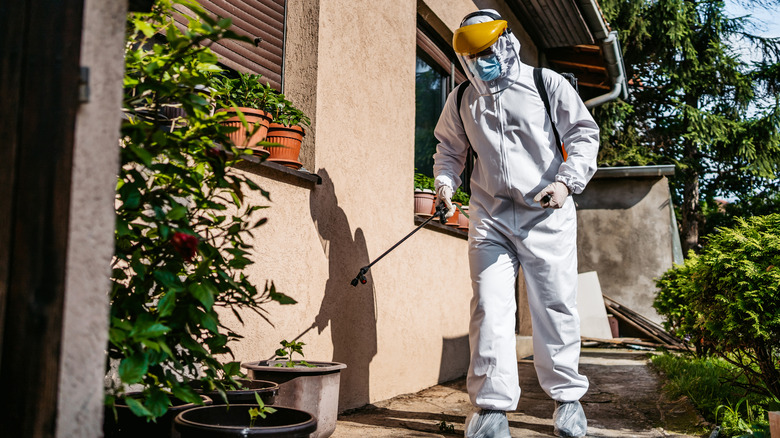
Since yellowjackets are aggressive by nature and follow the sting-first-ask-questions-later strategy, it's best to prepare yourself before facing a colony. In his exclusive interview with Hunker, John D'Abruzzo recommends, "If it becomes necessary to destroy a yellowjacket wasp nest, wear protective clothing such as a bee suit." Once you're suited up, wait for the sun to set. Revealing the logic behind this, our expert opens up, "The best time to control them is after dark when foraging activity has ceased and most workers are in the nest. The entrance of their nest can be located with a 'red light' which cannot be seen by them. The underground colonies are easily killed by treating the entrance holes with an insecticidal dust or aerosol."
That being said, our expert says there's an important warning to keep in mind: "A single sting from an alarmed yellowjacket wasp can excite others in the nest to attack, causing multiple stings." So, missteps here can be costly. In case you aren't prepared to risk it, D'Abruzzo suggests contracting a professional pest controller and letting them deal with these creatures. However, don't forget to ask a few questions before hiring a professional pest control company. Take steps to ensure yellowjackets don't nest again in a different spot. "[Maintain] good sanitation around the home through proper management of garbage; this denies scavenging yellowjacket wasps the opportunity to find readily available food sources, which is required for colony growth," advises D'Abruzzo. Additionally, outfit all your outdoor trash cans with an airtight lid. Finally, he adds, "Treat the inside surface of the garbage container with a microencapsulated insecticide," like MGK's Onslaught liquid.