

Only '60s Kids Will Remember These Classic Household Items
We may receive a commission on purchases made from links.
From the Space Race to the Summer of Love, the 1960s rewrote the rules of technology, music, and design. The transformative effects of the post-War era were well underway, with suburban expansion and booming consumerism paving the way for all of the hip and happenin' inventions that were brought into pads across America. While today's advances come in the form of data centers and artificial intelligence, '60s kids will remember when classic household items like hovering lawnmowers and colorful "boob tube" TVs were the height of technology.
Decor trends in the 1960s changed rapidly to keep pace with the dramatic cultural shifts that were underway. At first, the decade carried forward the clean lines, sleek woods, minimalist shapes, and earthy color palettes characteristic of 1950s Midcentury modern design. Within just a few years, Beatlemania and Pop Art converged to influence and intensify more saturated color palettes, while changes in metal and plastics manufacturing led to popular new houseware and furniture designs. As consumers began to tune in, turn on, and drop out in the late 1960s, many began to wholly reject the aesthetics and materials of old in favor of beaded curtains, lava lamps, and other household decor items reflecting the psychedelic tastes of the time. Many '60s kids will remember it as a really groovy time.
Lava lamps
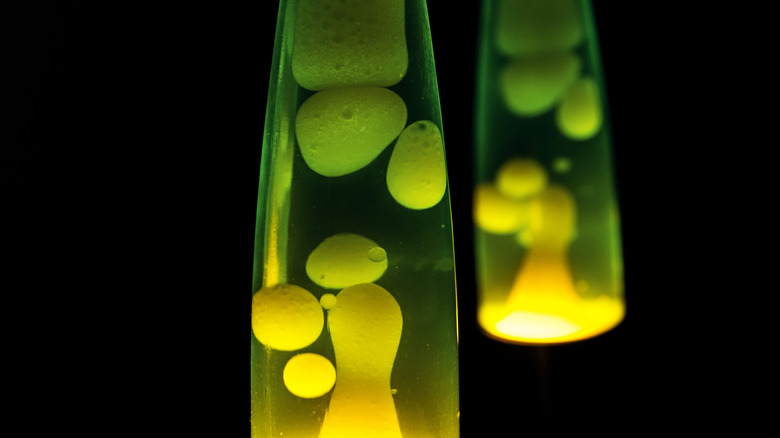
Invented in 1963, the lava lamp quickly took the world by storm after appearing in popular television shows like "Dr. Who." Housed inside heat-resistant glass with a hidden lightbulb below, lava lamps feature melted paraffin wax that bubbles slowly inside colored liquid to create mesmerizing movement. Unlike spiky Sputnik chandeliers, another retro '60s lighting trend that's making a comeback today, lava lamps create a vibe that's decidedly more mystical than otherworldly, which is one of the many reasons they continued to gain popularity as counterculturalists embraced surrealism and psychedelia.
Rotary phones
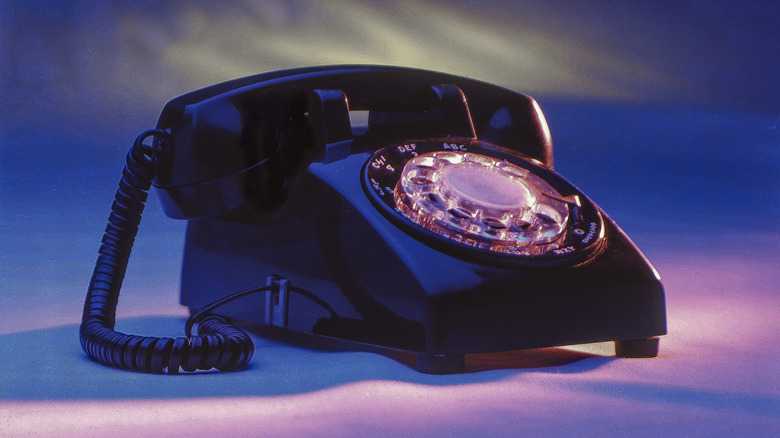
It's hard to imagine not having a phone in your pocket at all times, but that's how it was in the 1960s. Then, communication centered on a single rotary phone, often situated on a hallway desk next to a pad and pencil for taking messages. Although phones were invented more than 70 years earlier, most 1960s homes had only one, in some instances connected to a shared party line! Touch tone technology was introduced at the Seattle World's Fair in 1962, but despite speeding up the dialing process, many homes continued to use their '60s rotary phones for several decades before making the switch.
Wood cabinet TVs
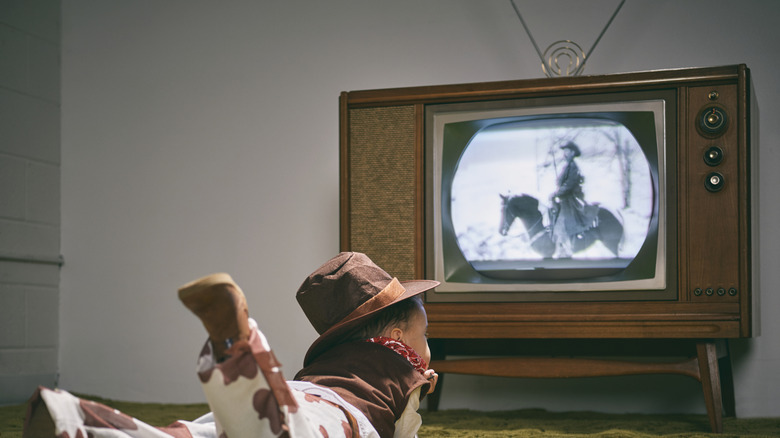
There's simply no need for bulky entertainment centers anymore, but in the 1960s wooden cabinet televisions were seen as the height of luxurious living. Millions of people brought TVs into their homes during the era, including new models that prompted broadcasters to start delivering programming in color. From "Batman" and "Bonanza" to the 1969 moon landing, many '60s kids will remember being enraptured by shows playing on behemoth wooden cabinets that contained not just the heavy glass tube televisions that took a few minutes to heat up before playing, but speakers, radios, and records, too.
Beaded curtains
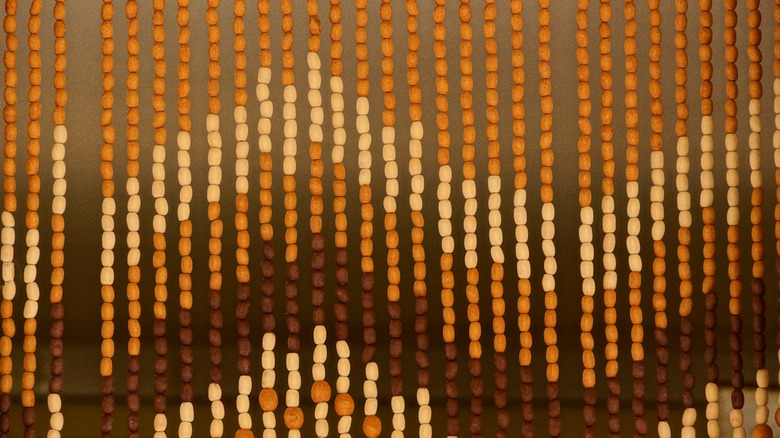
Beaded curtains were a perfect home decor option for many emerging lifestyle trends in the 1960s. Available in natural wood or kaleidoscopic colors and providing plenty of twinkling sound, they were ideal for communal living spaces as an inexpensive way to provide a gentle sense of separation and privacy and remained popular throughout the '70s. Although they fell out of fashion as the 1980s ushered in ballooning swag curtains and vertical blinds, breathe a sigh of relief if you're one of the '60s kids wondering, "Can beaded curtains be cool again?" Designers say the highly-tactile accessory is trending in 2026.
Atomic aluminum cups
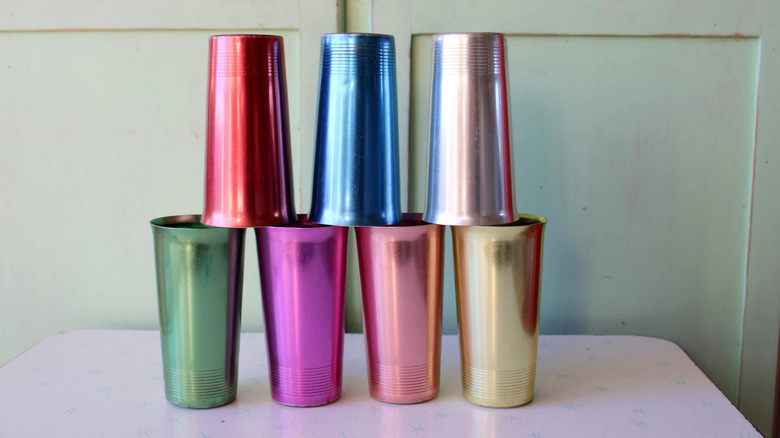
As World War II drew to a close, manufacturers started reinventing aluminum for consumers, using the lightweight material in everything from Christmas decorations to hors d'oeuvre platters. But nowhere was it used more memorably than in collections of atomic aluminum cups, a patio staple during the 1960s. The Midcentury modern drinkware was often acquired through grocery store coupons or giveaways. While '60s kids are likely to remember their favorite color, their parents probably recall the prismatic cups as practically indestructible.
Rotary lawnmowers
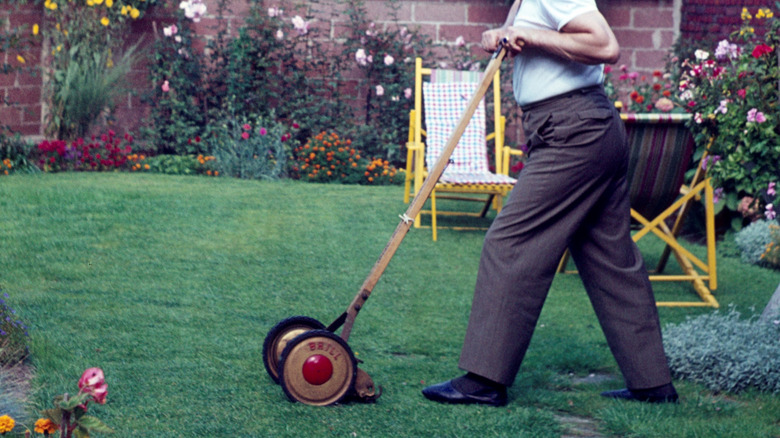
Rotary lawn mowers were still getting established as a suburban must-have during the 1960s. Unlike today's riding lawn mowers with all the bells and whistles, '60s kids may remember Saturday morning chores involving either a heavy metal push mower or, if they were lucky, one of the newly-released plastic models that were lighter and easier to maneuver. Some may even recall the famous Flymo. Inspired by a hovercraft, the distinctive, no-wheel mower was first released in the U.K. in 1965, before eventually making its way stateside thanks to a partnership with Toro.
Colored toilet paper
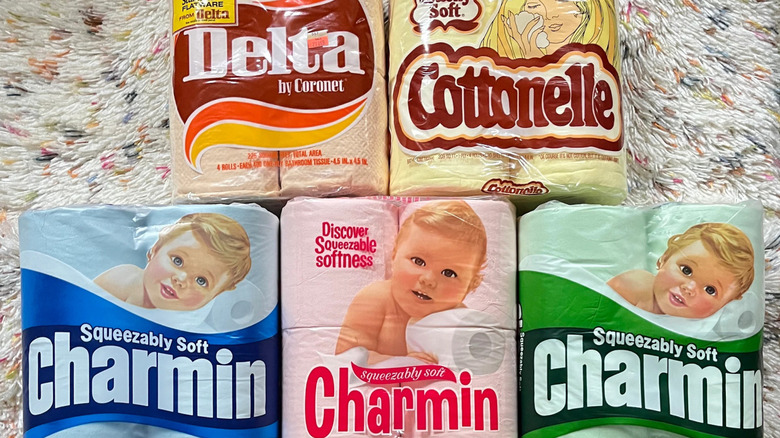
There are so many hidden toilet paper storage hacks floating around today that you may be surprised to discover the classic household item used to be prominently displayed. Bathrooms underwent a major transition during the 1960s, from sterile spaces to colorful ones featuring Venetian Pink fixtures and Ming Green vanities. Manufacturers like Charmin and Cottonelle contributed to the colorful trend by producing toilet paper in a wide range of hues including blue, lavender, lemon, and peach. The trend faded as doctors began warning consumers that the dyes could be harmful to their family's hind ends.
Ashtrays
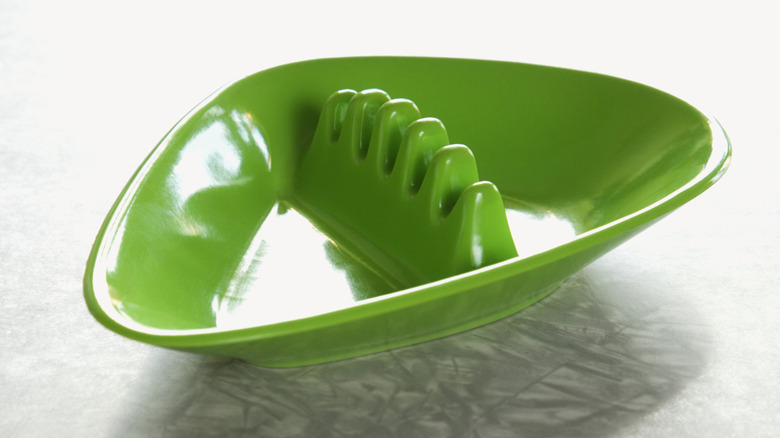
In the 1960s, nearly half of all Americans smoked cigarettes. That's why '60s kids will remember spotting ashtrays practically everywhere. Although the decade also saw a Surgeon General's report that finally warned the public about tobacco's health hazards, ashtrays were commonly found in homes and cars, as well as hospitals, restaurants, and other public spaces. Although they have been in use since antiquity, 1960s versions echoed Midcentury modern trends: abstract and organic shapes, and pop art, psychedelic, and futuristic materials. Today, some stone and glass versions are highly collectible, with rare ashtrays selling for over $1,000.
Perpetual calendars
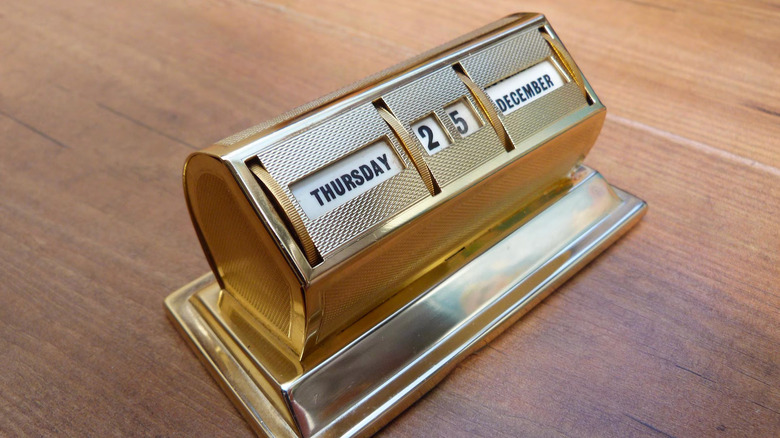
Perpetual calendars are another invention that, despite being around since antiquity, saw a boom in popularity during the 1960s. Often given as business gifts or promotional items, the unassuming wood or metal devices typically contained three mechanisms inside that controlled the month, date, and day of the week. While some were operated manually, others would automatically update each day to the fascination of '60s kids who may remember patiently waiting to watch the spectacle happening time and time again on their mantle.
Panton chairs
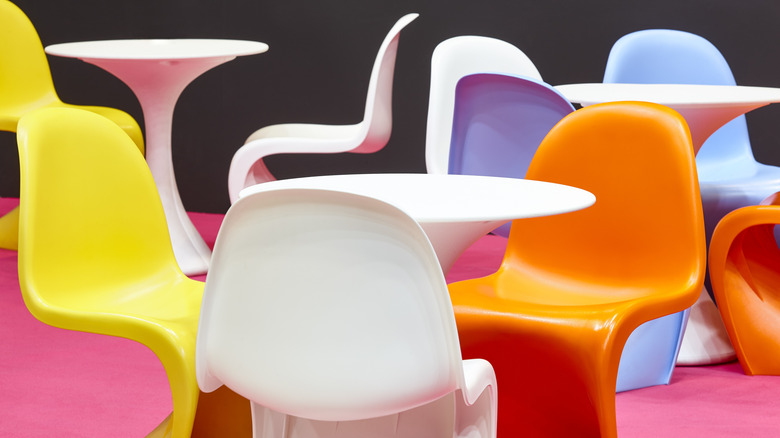
It could be said that wicker and rattan ruled the halcyon days of the early 1960s. Others may remember Space Age-inspired ball and egg pod-shaped seats showing up during their favorite shows. However, nothing defines seating in the late 1960s quite like the Panton chair. A seemingly gravity-defying feat, the S-shaped molded plastic seats were the cantilevered brainchild of Danish designer Vernor Panton. The first all-plastic chair, its stackable convenience and sleek design make the Panton an iconic household item '60s kids will definitely remember.