

Skip Standard Gravel — There's A Cheaper, Weed-Resistant Landscaping Option
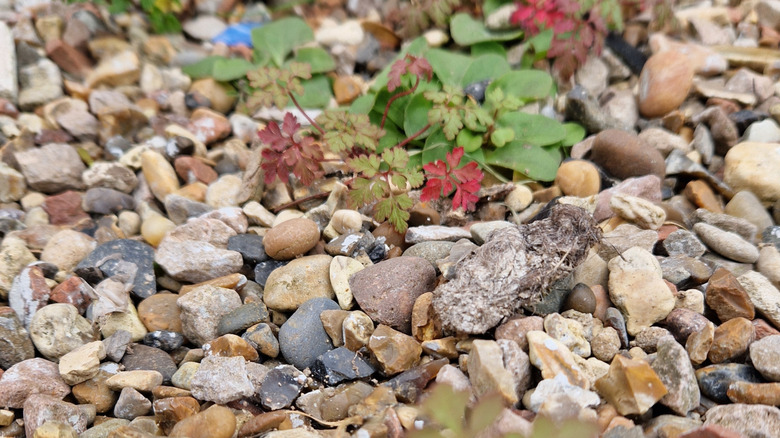
If you're looking for an affordable way to pave your driveway or landscaping, standard gravel is one of the cheapest options that's easy to install. Depending on the size and complexity of the project, gravel can cost between $600 to $3,500. Not an insignificant chunk of change, but certainly less than brick or concrete. However, there is an even cheaper, more weed-resistant landscaping alternative to gravel that could be just the material you need for your next project.
Crusher fines are a byproduct of the gravel-making process. Consisting of a mixture of rock dust and smaller crushed stones measuring about ⅜ of an inch, crusher fines cost between $15 to $85 per cubic foot. Quarries use heavy-duty crushing machines to turn larger stones into gravel. The smaller crusher fines, also known as quarry dust, can come in a variety of colors based on which rocks have been processed. This is not to be confused with decomposed granite, which is another landscaping alternative that is stylish and affordable for patios and walkways, specifically made of naturally eroded granite stone.
Crusher fines are also not rounded like decomposed granite, instead relying on flat, jagged edges that interlock with one another when compacted to create a surface equally as durable. Owing to the fact that no light and little air will get through this area, it makes crusher fines particularly good in the fight against pesky weeds growing in your walkways.
Crusher fines make handsome surfaces but can be messy
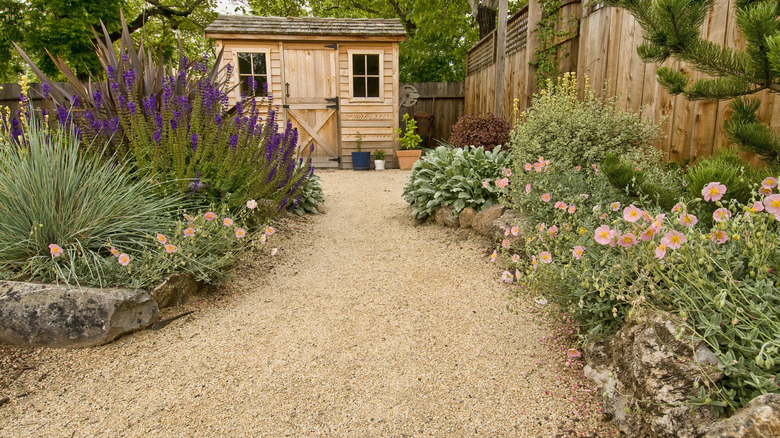
Like other aggregate surfaces, crusher fines are simple to install with a little elbow grease and a free weekend. In a standard gravel or paver installation, the crusher fines would serve as part of the sub-base on which the finish paving material sits. Where you're just using crusher fines, you still need to establish a 6 to 12-inch deep base to allow for proper compaction. 4 to 6 inches of loose crusher fines will compact down to a 3-inch deep pathway. This will be enough to suppress those weeds, but you should aim for at least 4 inches of compacted surface to create stability.
One of the main downsides to crusher fines, as is the case with any aggregates, is that they can be a little messy. Small pieces can get locked onto shoes, and heavy wind or rain can even wash away parts of the paths and into your natural landscaping beds. To remedy the latter part, make sure all of your paths are properly edged to provide a barrier to contain the crusher fines. You can use pavers, bricks, or landscape timbers for this, or pound-in edging for a dynamic paver alternative.
Overall, crusher fines make a very handsome surface for driveways or other landscaping projects. The material is also permeable, which is important for preventing erosion or material runoff.