

Not Pyrex, Not CorningWare: The Overlooked Kitchenware Brand To Look For At Thrift Stores
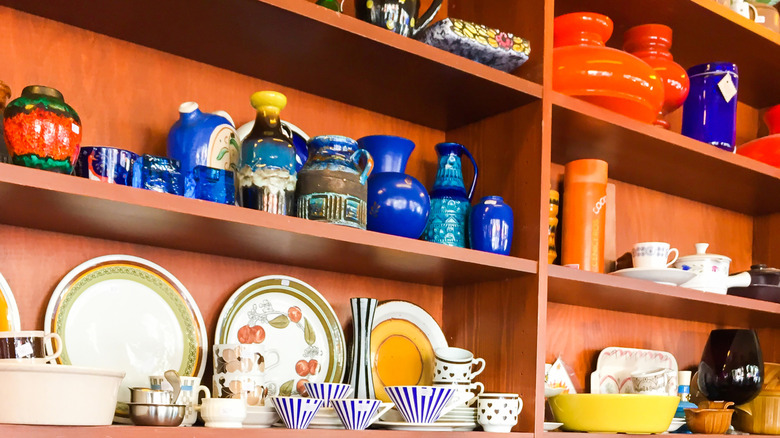
Who doesn't appreciate a little vintage flair in the kitchen? Now that cooking spaces are embracing a cozy, lived-in ambiance, retro accents are the star of the show. With that in mind, eagle-eyed thrifters are scouring shelves for the hallmarks of valuable vintage dinnerware pieces: CorningWare's blue cornflower, Pyrex's Pink Gooseberry glassware, and the rare discontinued Le Creuset set in Elysees Yellow. As beloved as these accessories might be, thrift store shoppers would be remiss to overlook coveted Cathrineholm throwbacks.
The Norway-based Cathrineholm factory opened in the early 1900s, originally focusing on ironworks. As a different mission took shape, the company began producing enamel cookware like saucepans, casserole dishes, tea pots, and beyond. Its most sought-after design is none other than the mid-century modern lotus flower, a touch of nostalgia any '60s enthusiast will appreciate. Artist Grete Prytz Kittelsen is responsible for the brand's many designs, and though she's credited with the lotus-adorned enamelware, Arne Clausen is really the one who is responsible for the look. Kittelsen actually disliked the floral touch, and respectfully, shoppers have no choice but to disagree.
Nowadays, the rich colors and lotus flower emblem are seeing a resurgence, and a pricey one at that. While some vintage pieces are accessible, like a $50 saucepan or a $60 baking pan, other Cathrineholm eBay listings ascend well into triple-digit territory, like a $250 8-quart casserole dish and a $300 spice shaker set. Keep your eyes peeled for white lotus flowers on a colorful background and a vibrant French blue, two of the more difficult looks to come across.
How to spot and style lotus Cathrineholm kitchenware
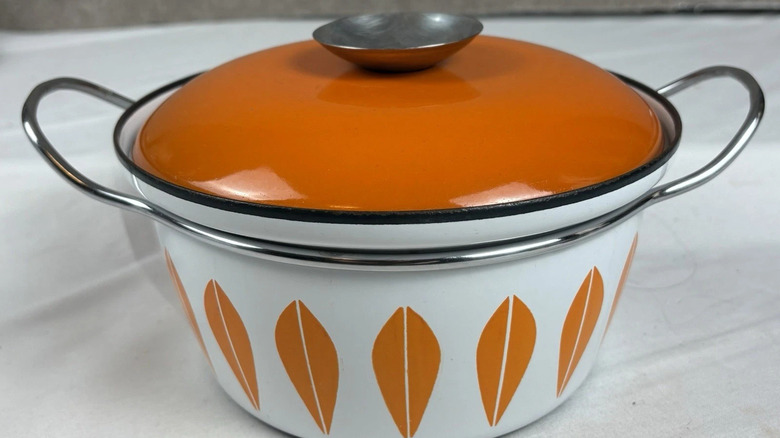
Now that you know Cathrineholm enamelware are prized pieces not to overlook when shopping at an estate sale or thrift store, you have to learn how to spot them. This can get a bit tricky, as some accessories include a logo, and others do not. But any good thrifter up for the challenge knows there are other factors to consider. For one, the Cathrineholm factory did not include enamel coating on rims of their kitchenware to avoid nicks and cracks. Additionally, the shape of the lotus flower is a telltale sign of a genuine antique, as the flowers are bulkier on the top and thinner towards the bottom. Should you come across neon colors or subdued pastels, the piece is likely a dupe, as the line mainly includes rich primary colors and earth tones.
Once you've found the Cathrineholm of your dreams, it's time to style the '60s statement-maker with similar retro trends of the decade. Consider placing your selection near a color-blocked cabinet and wooden tones, both of which reigned supreme back in the day. Although Cathrineholm pieces are durable — heck, shoppers are buying them six decades later — they should not be put in the dishwasher, microwave, or on the stovetop. That said, it's best to keep these pieces as a decorative accent on open shelves or floating along your countertop.