

This Driveway Material Costs Less Than Concrete And Holds Up Better Than Gravel
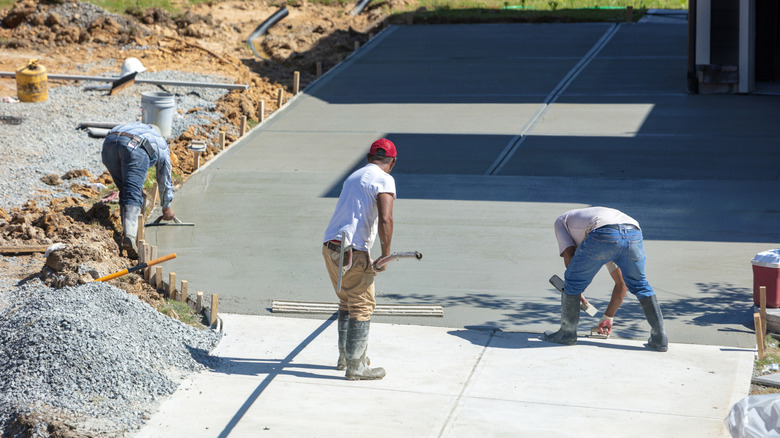
If you are staring down a driveway replacement, cost is going to be the first thing on your mind. The material you choose to pave with is going to be determined by your budgetary constraints. While concrete is one of the most readily available and popular methods of driveway construction, it is by no means cheap. The average cost for a concrete driveway hovers around $6,400. If that number is too high, you'll want to consider a tar-and-chip driveway. It's less expensive than concrete, and will hold up better than straight gravel.
Tar-and-chip paving combines three different materials: gravel, asphalt (tar), and loose stones. The process of laying one is incredibly simple. A primary layer of gravel is set down and then coated with a hot layer of asphalt. Before the asphalt is set, a final layer of loose stone chips are set atop the hot tar and then compacted using a roller. The average cost of a driveway made of this material is $1,600, and some can even be as low as $200, making tar-and-chip one of the cheapest ways to pave your driveway.
Unlike concrete, which requires excavation and proper site work before being poured, tar-and-chip can be laid over your driveway. It can also be an affordable fix for a beat-up driveway. The only thing different about the process is that the gravel layer is omitted. Still, your cost savings are going to be magnificent, even if your driveway needs to be totally replaced.
Is tar-and-chip right for your driveway?
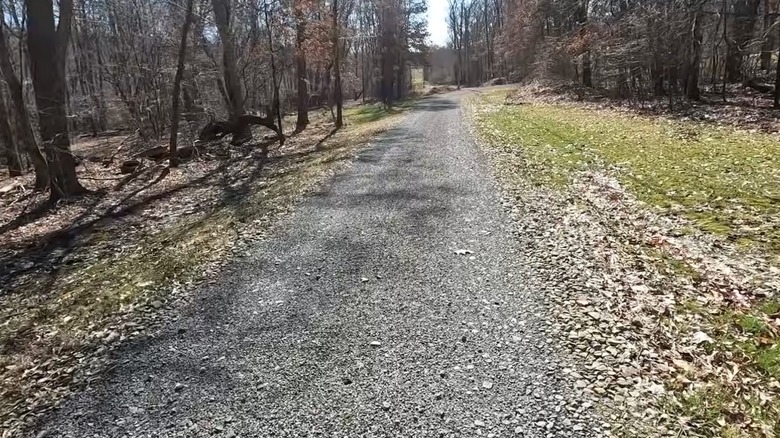
Just because tar-and-chip is cheaper doesn't mean that you sacrifice on quality. It's structurally sound, being far less prone to common concrete driveway issues like cracking or sinking. Though it's made using gravel, the fact that the stones are compressed into the asphalt means you are going to have less maintenance repairing dips and potholes than straight gravel. Resealing the stones once every two years is going to increase the life of your tar-and-chip driveway, making it last anywhere from 10 to 20 years.
Though cheap and durable, there are some downsides to tar-and-chip driveways that you will want to consider. First off, they can be easily damaged by heavier vehicles, especially snow plows. Excessive heat can damage the driveway too, softening the tar underneath and causing the stones to stick to shoes or tires. The result can be unseemly. As such, the best kinds of driveways for tar-and-chip are rural ones that don't see a lot of consistent heavy traffic.
Owing to tar-and-chip being a more specialized practice, the availability of contractors who perform it might be limited based on your area. You'll also want to research local ordinances to see if this type of driveway is even allowed in your neighborhood. It could be that you can't even use this material to pave, meaning you'll have to find other affordable alternatives like straight gravel or eco-friendly seashells for driveways.