

Plant These Two Flowers By Your Birdbath In May And Thank Us Later
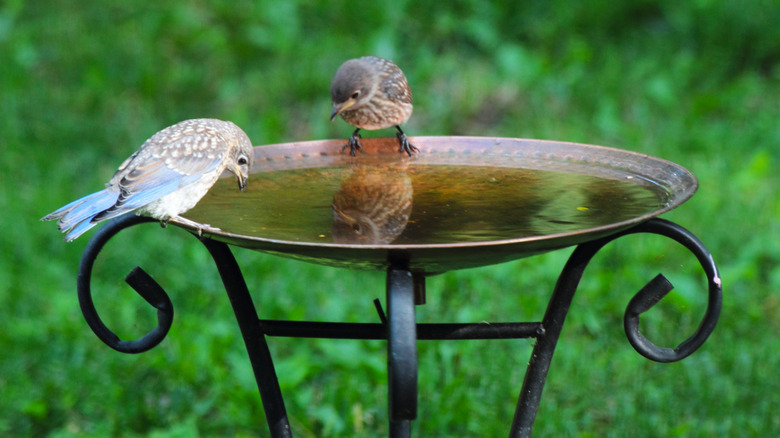
If you want a singing mass of birds to populate your yard, one of the things you absolutely need to do is put in a birdbath. It doesn't need to be fancy. A simple DIY birdbath will be enough to get birds to your yard. However, if you really want them to flock to your backyard in droves, you need to plant flowers around your birdbath. And some of the best flowers to sow around your birdbath in May are coneflowers (Echinacea spp.) and lavender (Lavandula spp.).
Coneflowers and lavender make good bedfellows in the garden because they share similar growing conditions and climate zones. Coneflowers are hardy between USDA zones 3 through 9, giving them a wide range. Lavender differs depending on the type. English lavender (L. angustifolia) is more tolerant of lower temperatures in zones 5 through 8, while French lavender (L. dentata) prefers warmer zones 8 to 11. As such, gardeners who live in the zones 5 through 9 will have the best luck growing these two near each other.
Another reason coneflowers and lavender are good companions is because they share similar soil conditions — sunny spots in well-draining soil — and will not compete with one another for space or nutrients. They are also both drought-tolerant and will bloom at the same time, giving you extra beauty alongside the colorful birds that will be flying into your yard.
Why May is the ideal time to plant coneflowers and lavender
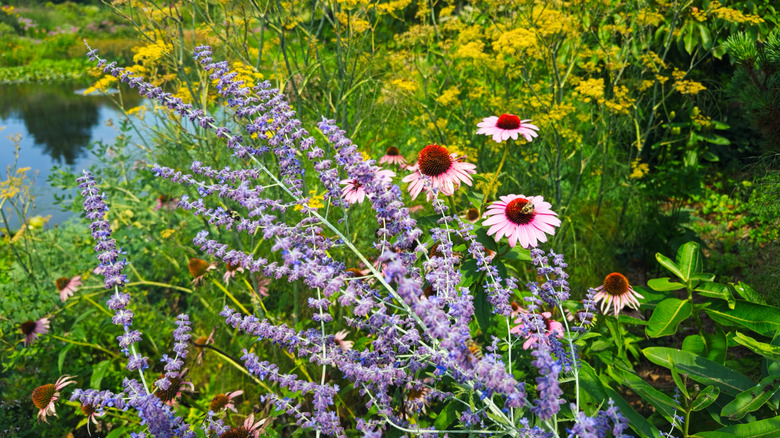
The reason you'll be thanking us for planting both of these flowers in May is because, for most of the country, it is the month when the chance of frost has passed. Based on the 5 to 9 zone range we've already established for growing lavender and coneflowers together, the last average frost date for the lowest end of the range is the middle of May. This means planting at these times will reduce the chance of your young flowers being harmed by a frost.
Now, it's important to realize that if you are sowing in the ground directly from seed, you might not see flowering results right away. Coneflowers may bloom in their first year if you started them in late winter, and lavender can sometimes take up to six weeks just to germinate. So, if you're looking for immediate blooming this summer, you should purchase established starter plants from a local garden center. You can then transfer those starters directly into your garden.
Another reason May is ideal for planting lavender and coneflowers is that both need warm soil temps above 65 degrees Fahrenheit in order to grow. As the frosts have passed and temperatures rise in May, it is the perfect time to start growing these two flowers. Starting at this time also allows the plants to establish their roots before the stressful heat of summer arrives.
Why coneflowers and lavender are a perfect combo for birds
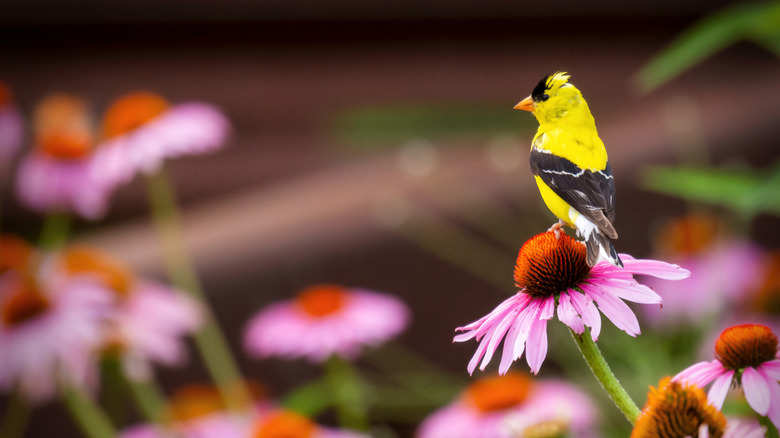
On their own, coneflowers are enough to attract a wide range of songbirds to your birdbath. They are primarily attracted to the seeds of the coneflowers, which are filled with nutrients that birds need in order to store up energy for the winter. That said, the coneflowers don't reveal their seeds until they are dying back during the fall. However, when paired with lavender, the coneflowers serve another purpose for the birds: attracting pollinators.
Insects are another excellent source of food for birds, and both lavender and coneflowers draw them in abundance. Pollinators like moths, butterflies, and bees – who benefit the garden in their own way – are attracted to the mixture of sugars present in the coneflowers and lavender, as well as their scent and color. The bathing birds will take the opportunity to eat the bugs present in the garden.
The birdbath itself also plays an important role here. One of the reasons many think twice about putting birdbaths in their yards is that the water feature will also attract a number of other animals and insects looking for hydration. However, many of these pests, like mosquitoes, are also food sources for birds. As such, by planting both coneflowers and lavender next to your birdbath, you are creating an environment in which the birds can bathe and eat. And you get to enjoy watching them do it.