

Turn Your Birdbath Into A Bird & Butterfly Magnet By Planting This Flower Near It
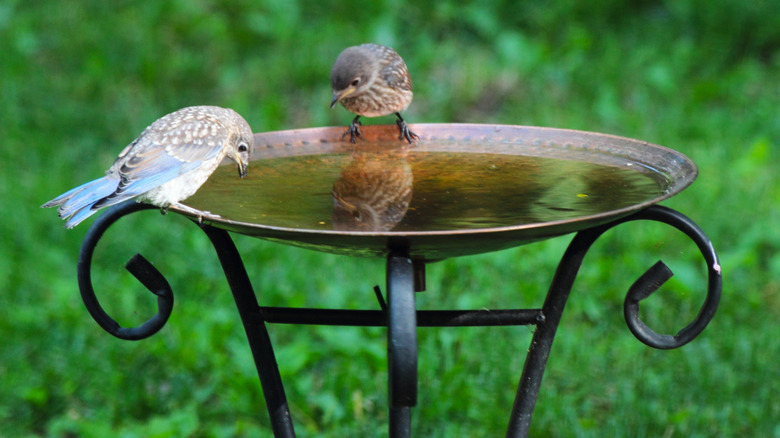
On a hot day, you're likely to visit a pool or the beach to cool off. It's the same for birds — they're looking for a place to chill, get a cool drink, and rest when the temperatures climb. A birdbath gives them just that, but first, they need to find it. If you want birds to flock to your birdbath, you need to plant the right flowers around it.
Planting salvia (Salvia spp.) is the secret to attracting hummingbirds, butterflies, and other birds to your birdbath. Available in dozens of varieties, salvia blooms can range from deep purple to scarlet red to brilliant blue — colors that encourage more hummingbirds to visit your garden. The flowers of salvia aren't just bright and eye-catching, they are also long-lasting and nectar-rich, making them a gold mine for pollinators including birds and butterflies. Depending on the variety you choose, salvia can bloom throughout the spring or from the summer into the fall, offering food and shelter to pollinators for months on end. They'll come for the food and stay for the pool!
Need some more convincing? While salvia will attract pollinators to your garden, it's generally deer-resistant and doesn't have serious problems with pests. Plus, depending on the variety you plant, you may be able to use its leaves in cooking. Sage (Salvia officinalis) and rosemary (Salvia rosmarinus) are both members of the salvia family. Whatever variety you plant, expect the leaves to have a pleasant aroma, making your garden appealing not just for the birds and butterflies, but for you, too.
How to plant salvia to attract birds and butterflies
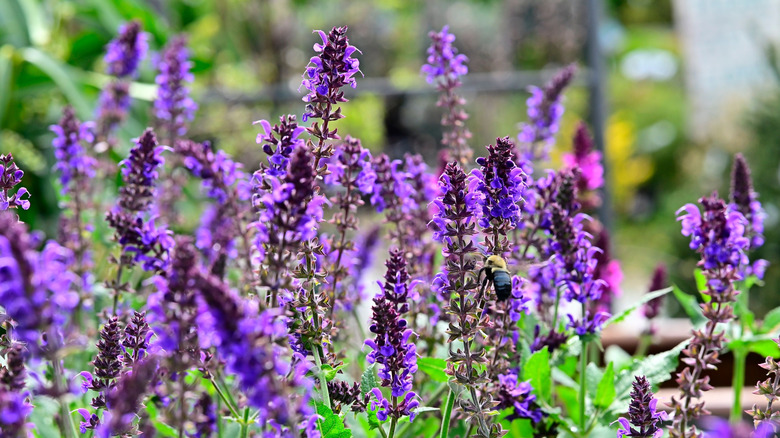
There are two ways to grow salvia, from seed or from transplants. You can start the plant from seed indoors, or wait until the last frost has passed and plant directly in the soil outdoors. If starting with a seedling, plant it outdoors after the last frost, when soil temperatures are consistently above 55 degrees Fahrenheit.
To thrive in your garden, salvia needs two things: plenty of sun and good soil. The plants do best directly in the garden bed, rather than in containers. To improve your soil and make it more appealing to salvia, add sand or compost, which will also improve drainage. You'll need to deadhead salvia, or remove spent blooms, as the season goes on to encourage the plant to keep flowering. Deadheading salvia keeps the flowers from going to seed.
To make your garden even more of a butterfly and bird magnet, create a welcoming environment for them, with pollinator-friendly flowers and habitat features. Calendula (Calendula officinalis), for example, attracts a variety of birds and pollinators to your yard. A patch of soil provides a place for ground-nesting birds to burrow while bee boxes provide a cozy home for pollinating bees.