

Ditch The Birdbath: There's A Better Way To Provide Water For Hummingbirds
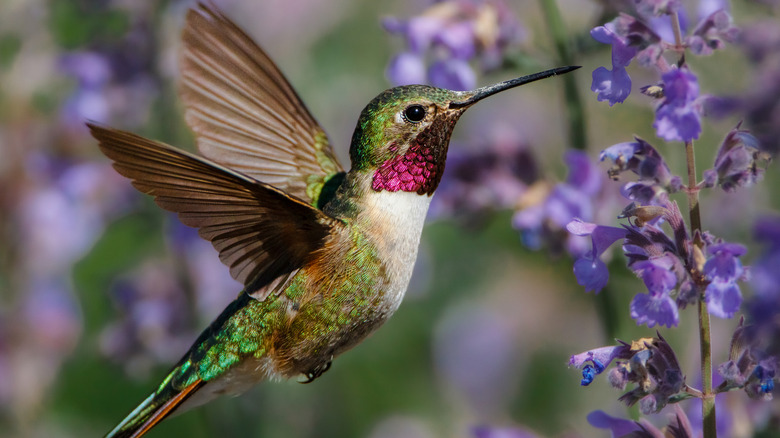
Gardening has its benefits, and one of the beloved perks of digging and planting is a visit from nature's finest: hummingbirds. These little stunners zip around at speeds of up to 30 miles per hour in search of flowering plants and a refreshing respite from the heat. If you've noticed that you're bringing hummingbirds to your garden with sweet-smelling plants but can't get them to take a dip in the bird bath, don't worry — they actually prefer cooling off in the sprinkler.
Using birdbaths to attract hummingbirds is a common misconception. While they're not going to reject that water source entirely, there are a few reasons why they might feel put off. For one thing, hummingbirds might find your birdbath to be too deep, and they don't want to submerge themselves in water as it can throw off their ability to fly. They're more inclined to opt for shallow bathing areas and running water sources over still ones, making the sprinkler a more desirable choice. Plus, if you haven't changed the water in your birdbath for a few days, they're certainly not going to want to soak off in hot, dirty water. (You can't blame 'em.)
How to use your sprinkler to attract hummingbirds
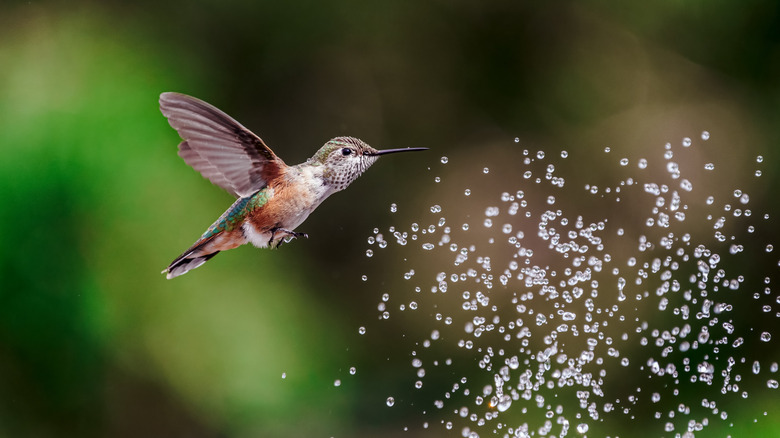
There are a few things to note when you're setting up the sprinkler in the garden for your hummingbird. First, make sure that it allows for movement, ideally allowing you to control the spray direction and distance. Keep in mind that hummingbirds are equivalent in weight to a marshmallow, so you don't want to use the system on full blast. After a few hummers stop by for a quick misting session, make sure to clean the nozzles of debris to keep things fresh. You can also use colors to attract hummingbirds to your yard with a red, orange, or yellow sprinkler, as these warm hues affect the birds' eye sensitivity and signal that nectar is nearby.
After their baths, hummingbirds have a bit of a maintenance process to tend to, much like humans' skincare routines. Instead of flying off into another garden, they tend to stick around, so you'll want to take advantage of that. Add a nearby place for them to perch while they're preening their feathers. Even something as simple as an old tree branch is enough to give them support — just make sure the branch is securely fastened onto the ground or a gardening container. With a few easy tweaks, your backyard is bound to become a hummer's haven in no time.