

The Downsides To Concrete Driveways You'll Wish You Knew Before Investing
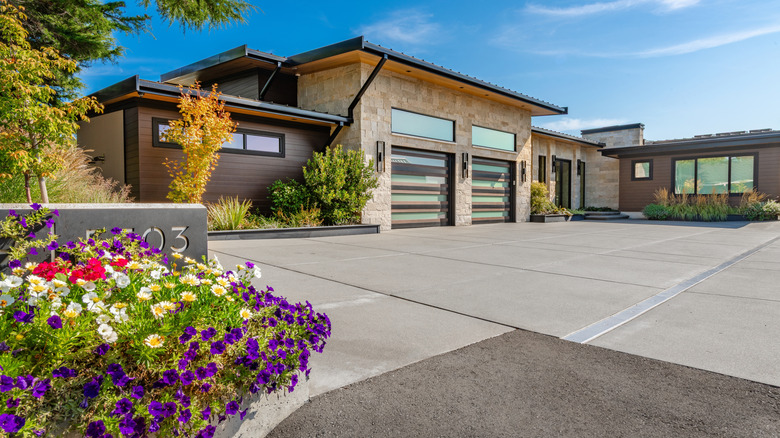
Concrete is made from a mixture of cement, water, and aggregates like sand or crushed stones. The chemical reaction that occurs between these ingredients creates a solid mass that strengthens over a curing period. For use in driveways, concrete is typically poured as a series of slabs reinforced with rebar. In 2026, the average cost to install a concrete driveway hovers between $8 to $20 per square foot. Depending on the size of the driveway, that can set homeowners back anywhere from $2,700 to $14,500.
While concrete does have numerous advantages in longevity, durability, and load bearing capabilities, there are some significant downsides to concrete driveways that you will want to know about before investing in one. The two main issues, which will be explained in more detail, are that concrete is susceptible to cracking, and that it can become aesthetically unappealing if not properly maintained. If ignored, these issues could cause irreparable damage that could lead to your entire driveway needing replacement, which as we've seen, is not a cheap paving solution.
Other minor issues, such as surface flaking or staining, can all indicate one of or both of those two aforementioned problems. Thankfully, concrete stains are easily removed with a simple old-school mixture of soda crystals and water, while flakes can be brushed away and patched. Still, the major downsides are common enough that you'll want to understand them before making any kind of investment in a concrete driveway.
Concrete is susceptible to cracking
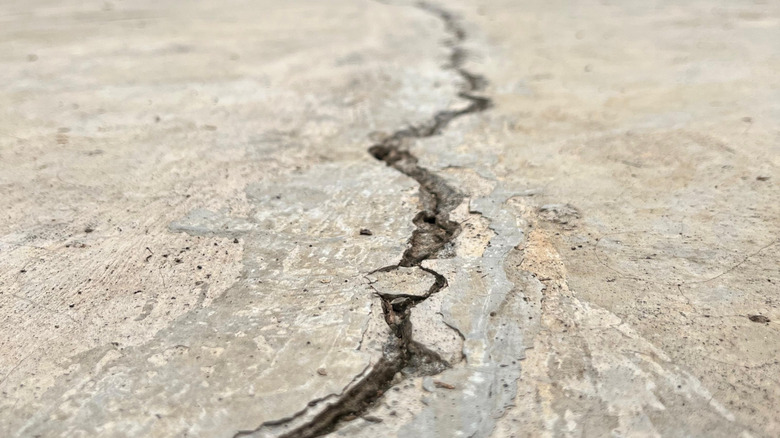
Cracking is among the most common concrete driveway issues to repair. While smaller cracks can easily be filled, deep cracking is a sign of something more serious. Weather is one of concrete's worst enemies. Periods of high heat followed by cold can easily break the concrete due to excessive expansion and contraction.
Water is another enemy of concrete that can cause cracking, and even driveway collapse. Owing to concrete being porous, pooling water caused by poor drainage can cause water to seep in and pool underneath the concrete, loosening the soil beneath. As the soil moves, the concrete can crack to adjust to the stress of the uneven surface. Water in those cracks can also cause mold and mildew.
Thankfully, there are solutions to this problem. One of the best is to use practical permeable pavers in place of solid concrete. The pavers allow water to pass between gaps and into an underground reservoir that filters the water and steadily disperses it into the surrounding soil. If you already have a solid concrete driveway, make sure you are sealing it and keeping up with surface maintenance to prevent any water infiltration. Other drainage solutions, such as french drains, gutters, and culverts, could also be used.
Aesthetic issues to consider
The aesthetic issues with concrete have less to do with personal taste than with the physical properties of the material itself. Since concrete is a porous substance, it's prone to staining from things like motor oil, rust, gasoline, and other household chemicals. While these can be cleaned and taken care of, they do leave unsightly patches in the concrete itself. Long term exposure to this can also be detrimental to the structural integrity of the concrete.
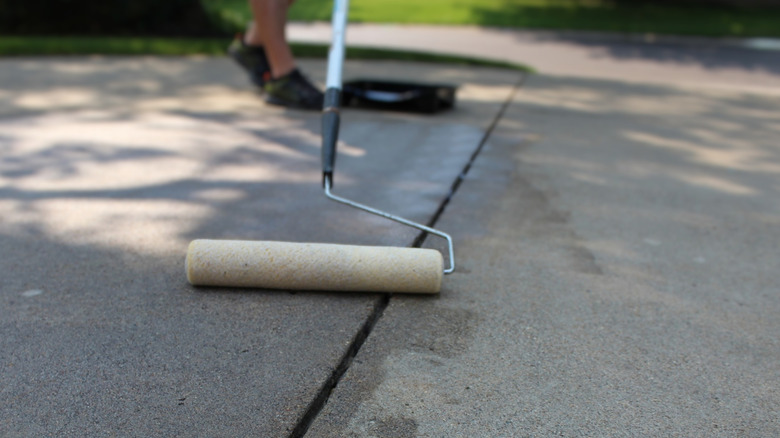
Another common aesthetic issue is concrete can flake or scale. This is common in areas that see a high usage of corrosive road salts to de-ice during winter. The key to preventing most of these issues is to seal the driveway. If the driveway is not properly sealed after its initial curing, it's open to all of these damaging issues, which in turn, make it less aesthetically pleasing.
While this might make you consider brick pavers, which are more durable and aesthetically pleasing than concrete slabs, you can keep the original sheen on your driveway if you keep it clean and sealed on a 1 to 3 year basis. Wash the driveway with a pressure washer and degreasing solution, then coat it with a deep penetrating sealant that will protect the surface as well as the interior. This treatment will help make your concrete worth the investment, and keep it looking great for years to come.