

Keep Your Snake Plants Healthy Through Spring And Summer With These Simple Tips
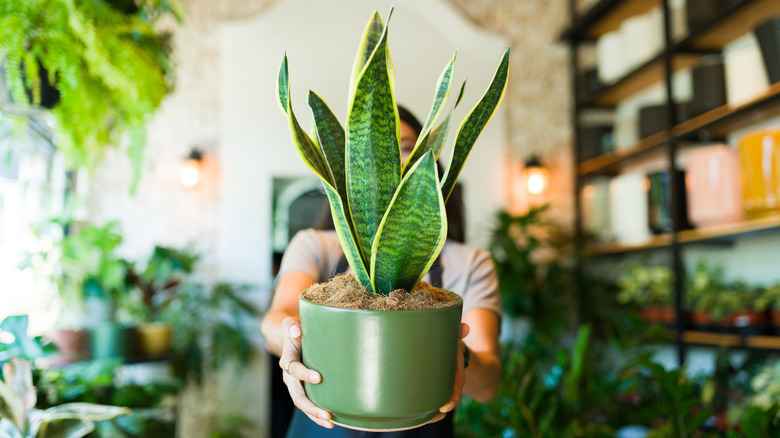
Caring for snake plants (Dracaena trifasciata) is a lesson in seasonality. During the winter, they remain dormant, so the only care a snake plant needs to stay alive is warmth, light, and occasional watering. Spring and summer, on the other hand, require more involvement. During these seasons, your snake plant is waking up and entering its growing season. This is an exciting time — and by following just a few simple tips, you can help keep it healthy all season long.
Snake plants are a type of sturdy perennial that grow as tall green leaves that can stand up to several feet high. They make for excellent low-maintenance indoor houseplants, but can also be planted outdoors in USDA hardiness zones 9 to 11. Regardless of the time of year, your snake plant will always require light, heat, and water. Increase watering to once every two weeks during the spring and summer, but be sure to do so only if the soil is completely dry: Being desert natives, snake plants are tolerant of drought. Also, whether indoors or out, snake plants need plenty of indirect sunlight to stay healthy.
However, there is more to do in spring and summer than just provide light and water to your snake plant. Fertilization, repotting, and propagation are all best done at this time of year as the plant is actively growing, and performing these tasks in the right order will help ensure your snake plant maintains its overall vibrancy.
Spring is the time for fertilizing and repotting
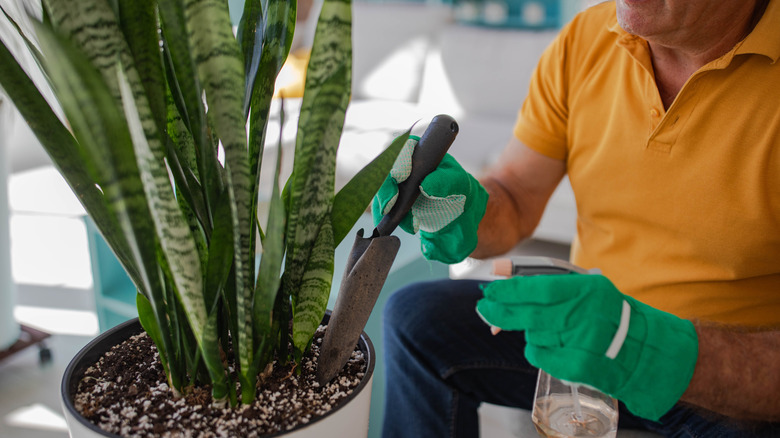
Snake plants enter a period of dormancy from the late fall through the winter. This break means that they're not in need of any kind of fertilizer to encourage growth. In spring, however, fertilizer provides your snake plant with an extra boost of nutrients to help kick off its growing season in a positive way.
The best means to accomplish this would be to use a 10-10-10 balanced fertilizer that is 10% each nitrogen, potassium, and phosphorus. This can be applied as either slow release granulated fertilizers or as a liquid fertilizer. If using the latter, make sure the liquid is diluted by half so as not to shock the plant. These are naturally low-nutrient plants, so too much fertilizer might actually harm them by burning their roots.
Spring is also a great time to repot your snake plant. One of the common problems with snake plants is that they can become rootbound, which means their roots have taken up all available space in the soil. Symptoms of this problem include stunted growth and cracks in the pot. To remedy this, transfer the plant to a larger pot so the roots have room to spread. Ideally, you should do this in the early spring to prevent transplant shock — but healthy, unstressed plants can be repotted at any other time of year if they need to be.
Fertilize again and propagate in summer
Summer care for your snake plants is similar to spring. If you chose to use liquid fertilizer, you will need to apply it once a month in order to ensure the plant is getting the nutrients it requires.
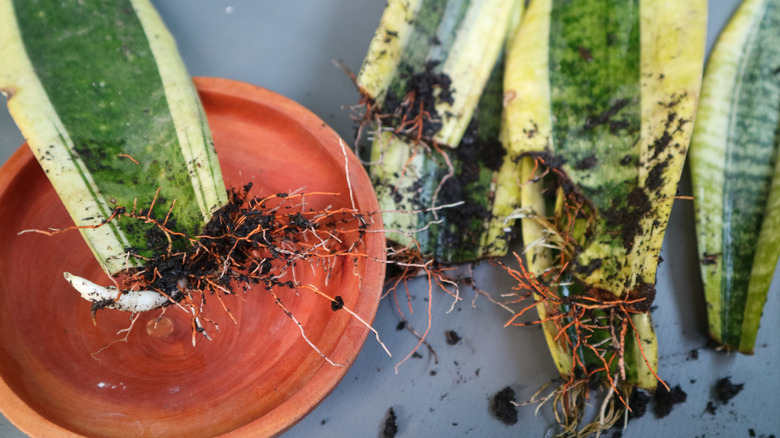
Another thing you can do during the summer is turn your snake plant leaves into entirely new plants via propagation. This means dividing up the mother plant into a number of smaller plants. Since the plant is now actively growing, dividing it and replanting it in the summer will allow the roots to take hold in the new soil very quickly. They can therefore continue growing with minimal to no transplant shock. The warm temperatures are also ideal for encouraging growth.
Also, whether indoors or out, summer means you'll need to clean any dust and debris off your snake plant's leaves. Dust on the leaves can keep the plant from breathing and photosynthesizing properly, which will affect its overall health. This can be fixed with a quick wipe down with a damp cloth.