

We Tried Using A Pool Noodle To Stop Winter Drafts And In One Word: Genius
Insulating the gaps beneath doors is an eco-friendly heating tip to save money during winter. This is especially true for doors that lead to areas outside your home, particularly if you live somewhere known for its chilly winter temperatures. I do live in such a place, and I have a massive sliding glass door that leaks lots of heat in the winter. Long story short, sitting near it in January can be a very drafty experience. To remedy the problem, I tried a hack that transforms a pool noodle into a draft stopper for a glass slider. There are all kinds of clever uses for these long foam tubes that have nothing to do with floating in a swimming pool or instigating a sword fight at a splash pad. They range from making floral centerpieces to helping boots stand up straight in a closet. I've even fixed saggy couch cushion filling with a pool noodle, so turning one into a draft stopper seemed entirely reasonable — and proved effective.
This project was inspired by a few different blogs that share instructions for insulating windows with pool noodles. A sliding glass door is essentially a large window, so I adopted a similar approach in an effort to keep warm air from escaping and cold air from entering near its bottom edge. Turning a noodle into a draft stopper — or a draft snake, as it's sometimes called — starts with measuring the gap at the bottom of your glass slider and cutting the foam to that length. Then, you push the noodle into the gap, making sure it fits snugly. Some people dress up the foam with fabric or yarn, too.
Building our DIY draft stopper
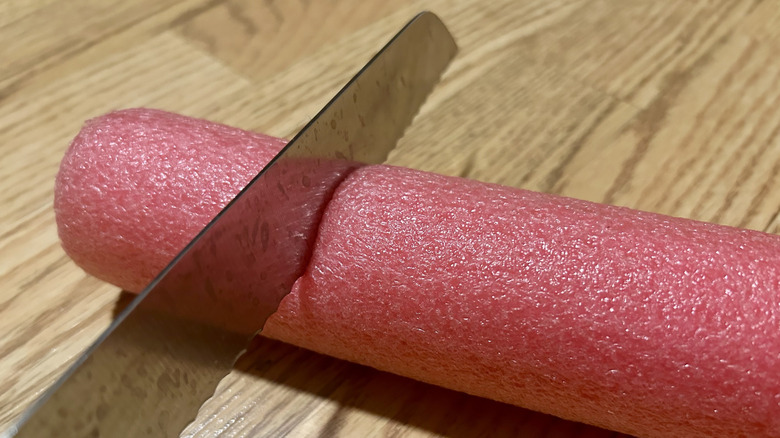
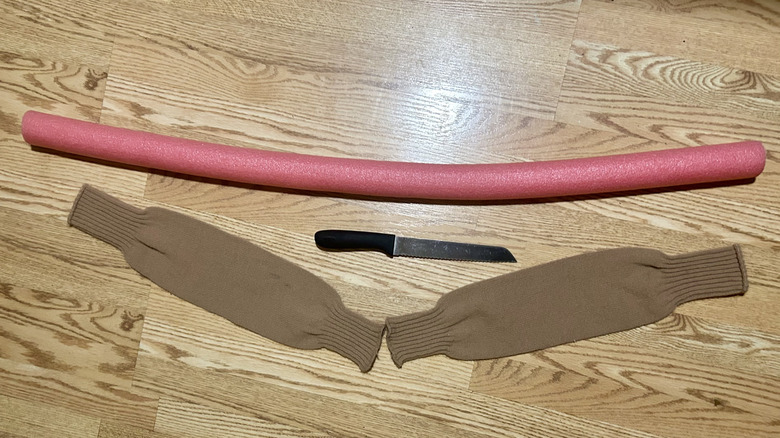
My main supplies for this project were a gifted pool noodle and thrifted leg warmers. I spent a total of $2 on these items. Since I knew that a long, serrated blade tends to slice through thick pieces of foam cleanly and easily, I selected a large bread knife for cutting the noodle.
While measuring my glass slider for this project, I was surprised to learn that it's oversized. In fact, this door is so wide that I needed the majority of the noodle to fill the gap at its bottom. The bit of extra foam I lopped off was just a few inches long, but I was determined not to waste it. I knew I could try a genius way to upcycle pool noodles for plant parents, popping this piece into the bottom of a large planter to decrease the amount of potting mix needed to fill it, making the container lighter to move and less expensive to maintain.
The knitted yarn leg warmers I bought were just the right diameter for the pool noodle I happened to have. Plus, their material is somewhat stretchy, which led to a nice, tight fit right off the bat. In other words, I didn't need to use staples, tacks, glue, or other tools to attach these fabric tubes to the noodle. This means I can remove the leg warmers and toss them into the washing machine when they get dirty. I was also able to stretch the leg warmers all the way to each end of the foam piece so the whole length of it was well covered. This keeps pink foam from peeking out of the finished product.
Unexpected challenges and lessons learned
Overall, cutting off a section of pool noodle, covering it with a leg warmer, and popping it into the sliding door's drafty gap was pretty easy. Sourcing the pool noodle was surprisingly hard. I scoured Dollar Tree and Walmart stores in several Michigan cities but couldn't find one as fall transitioned into winter. Autumn pool noodle shortages may also strike other communities that get very cold in the winter, and that close their outdoor pools from Labor Day to Memorial Day. Stocking up in the summer would be wise if you live in one of these areas. Shoppers in the Upper Midwest tend to seek snow gear rather than swimming supplies when fall enters the picture, even if they have access to indoor pools.
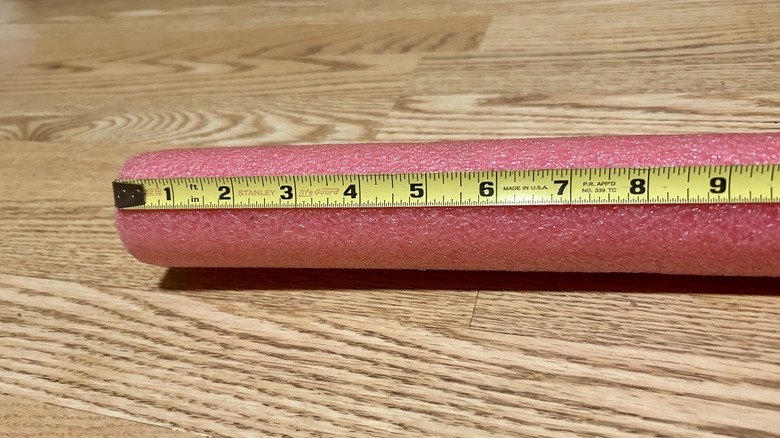
Since we didn't want to order a huge pack of pool noodles on Amazon, we procured a single one from a relative. This noodle was about 2½ inches in diameter. It seemed adequate for my project, but I'd choose a thicker model if I DIY another pool noodle draft stopper to keep my home warm in winter, as it would probably provide superior insulation.
The other challenge I faced had to do with measuring my slider. This isn't difficult per se, but I wasn't as precise as I needed to be the first time I attempted it. Long story short, the person who came up with the proverb "Measure twice, cut once" was onto something. I'll be sure to embrace this wisdom in the future. Thankfully, my noodle section was a little too long rather than a little too short, so I was able to slice off the excess foam rather than start over.
Our opinion of the hack
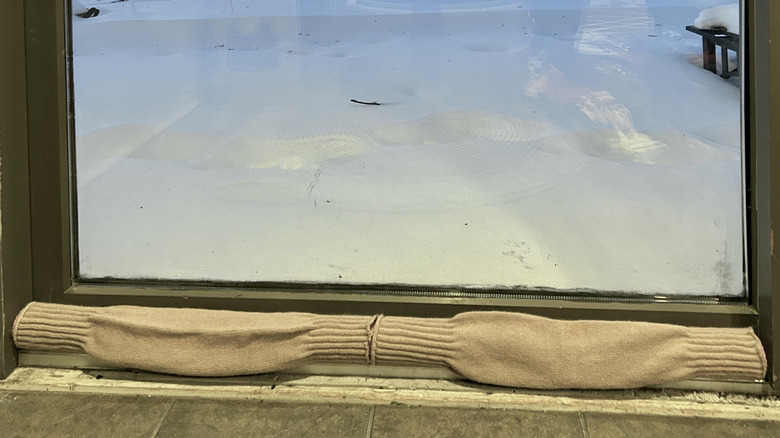
All in all, the winter pool noodle hack I tested has made my home more comfortable. The room containing the sliding glass door is warmer than it was before I added a homemade draft stopper. On several occasions, a thermometer attached to the wall has shown that the room's air is a few degrees higher than it used to be, even on cold and windy days. Plus, I don't see evidence of a draft when I hold a piece of tissue paper by the door gap or feel a breeze when I place a bare hand nearby. The wildcard in this equation is a second glass slider on the other side of the room, which I didn't outfit with a draft stopper. I may do this in the future to see if it makes the room even warmer. Additionally, I might create similar draft stoppers for a pair of windows in the mudroom attached to this part of the house. The better these openings are insulated, the more my heating bills are likely to decrease.
In addition to shopping for a pool noodle during the summer and buying one with thicker foam to minimize heat loss, I'd like to experiment with different types of coverings when making more draft stoppers. The knitted leg warmers on the current draft stopper are a sandy shade of tan that complements my decor, but something more vibrant or whimsical would make the room extra welcoming. I'm considering outfitting a noodle section with a pair of colorful striped socks I've crocheted and styling it to look like a caterpillar, which my insect-loving kids would enjoy.