

10 Plants To Prune In February For A Healthier, Flourishing Garden In The Spring
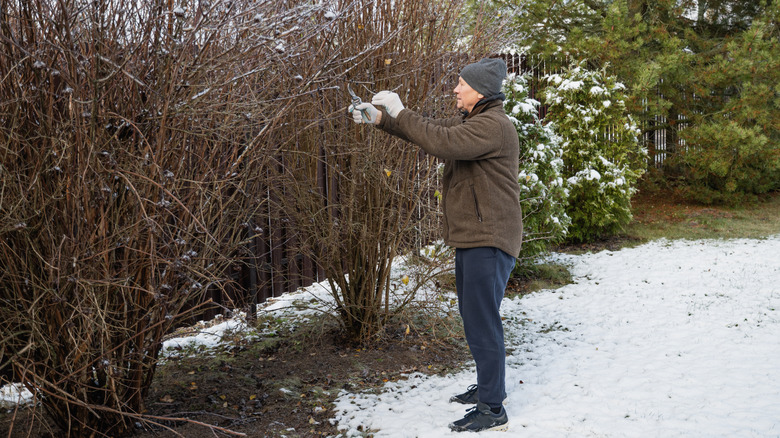
Even though perennial plants are still at rest during February's waning days of winter, you still have work to do if you want to ensure a healthy, flourishing garden in the spring. That work, to be specific, is pruning. In February, plants are still dormant. No new growth is happening, so the branches that need pruning are easier to see and remove without harming or stressing the plant. The question is, which plants should you prune at this time of year?
Many trees, shrubs, and flowers benefit a great deal from pruning in February. For certain fruit trees, pruning at this time will help ensure a better harvest come spring and summer. For many flowering shrubs, it means you'll get fuller blooms. And almost all plants benefit from the general shaping and removal of dead or diseased wood that could harm the plant later on.
The one thing you must be cautious about when pruning in February is to keep an eye on the weather and make sure any chance of hard frost or subzero temperatures has passed. Lots of February pruning will occur in warmer climate zones but can also happen in colder ones if the conditions are right. Just be aware that pruning in a frost can severely damage or even kill the plant if you're not careful. So, check your local forecast and plan accordingly.
New wood hydrangeas
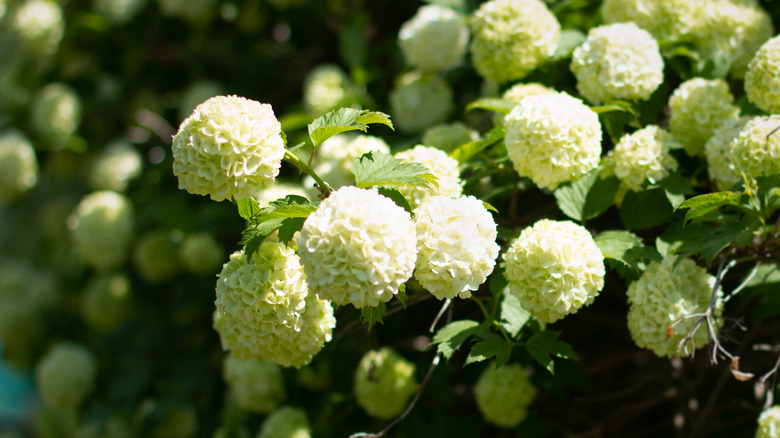
Many hydrangea varieties are called "old wood" hydrangeas because they form their buds underneath the wood before the end of summer. Therefore, we don't advise pruning these in winter, as this opens the blossoms up to frost and cold. However, new wood hydrangeas such as the panicle (H. paniculata) and smooth-leaf 'Annabelle' (H. arborescens) varieties bloom from new growth every spring. Therefore, you can prune these hydrangeas in February or even as early as January depending on where you live. Prune these flowering shrubs for shape and size, and for bigger clusters of flowers come summer.
Apple and pear trees
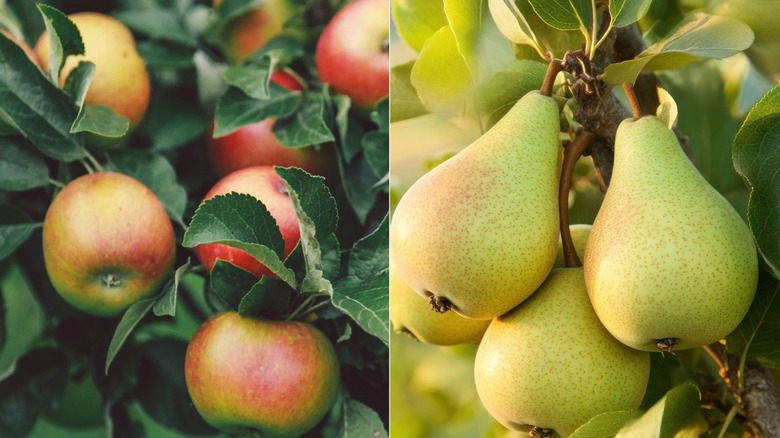
Apple (Malus domestica) and pear (Pyrus communis) trees are among those for which pruning is paramount in the winter months. Unlike peaches or cherries, whose disease-sensitive natures require pruning in warmer months, apples and pears are hardy enough to be pruned in winter to remove dead or diseased branches and maintain general size and shape. New growth from the previous season can be pruned back by a third or even up to a half. This allows the tree's energy to focus on vigorous fruit production as opposed to leafing out young growth.
Shrub and climbing roses
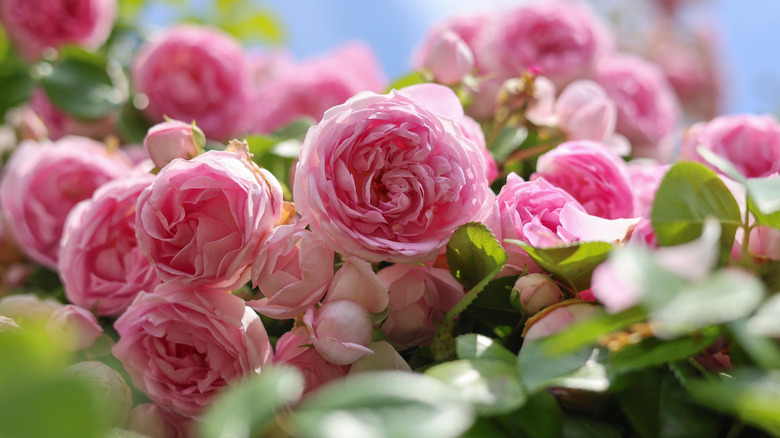
Roses (Rosa sp.) are a notoriously finicky flower whose pruning can be difficult to judge. As we noted earlier, you don't want to prune roses if there's a chance of extreme cold or frost, as the weather could end the life of this exceptionally beautiful flower. Instead, for growers in Zones 8 and 9, wait until you're sure any hard freezes have passed to prune both shrub and climbing roses back at a 45-degree angle above an outward-facing bud. Be sure to remove any damaged, diseased, or dead canes to ensure optimal growth and flowering in the spring.
Everbearing raspberries
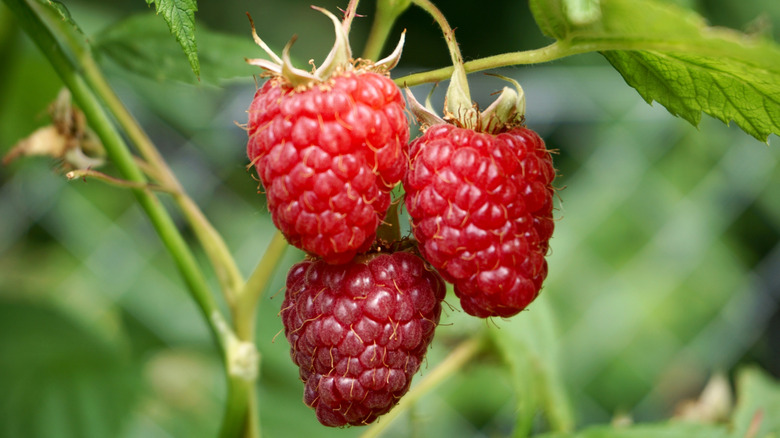
Known as everbearing raspberries, this type of fruit, scientifically classified as Rubus idaeus, is a type of raspberry that fruits out of new growth every year from late summer until the frost. This is different from summer-fruiting raspberries, which grow out of two-year-old shoots that only fruit in early to mid summer. Prune everbearing raspberries all the way back to the ground in February and fertilize them to ensure good growth once spring and summer arrive. Doing this will remove old growth and help the new shoots grow thicker and produce more berries.
Hellebores
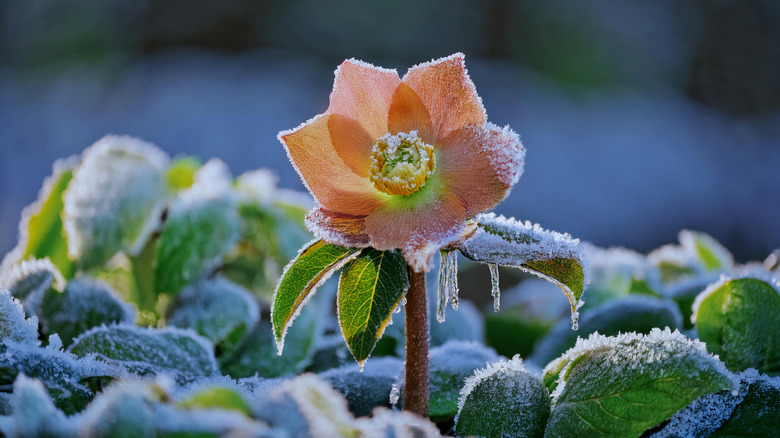
There's a reason why this stunningly beautiful flower is nicknamed the Lenten rose. Hellebores (Helleborus spp.) are one of the few flowers that actually bloom in mid February, which is traditionally the beginning of the Christian season of Lent leading up to Easter. While you don't want to prune these flowers when they're in bloom, see if there's any leftover growth from last year and trim that back before new growth occurs. You should see more vigorous hellebores popping up out of the snow in no time, and their long-lasting blooms make them perfect candidates for any cottage garden.
Deciduous grasses
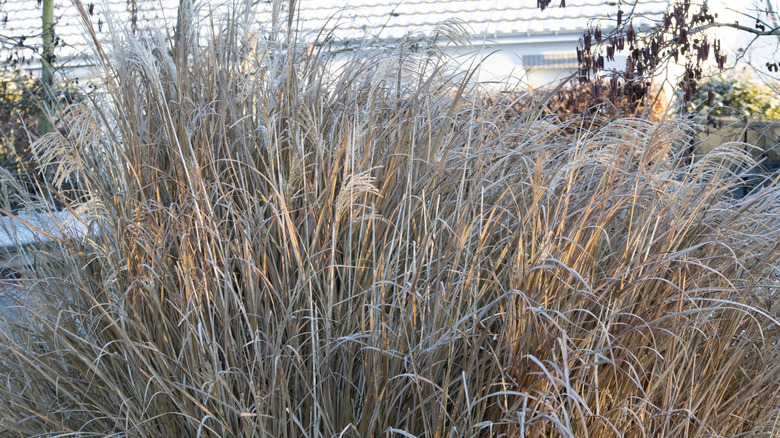
Nearly all types of deciduous ornamental grasses, such as purple fountain grass (Pennisetum setaceum "Rubrum") and 'Elijah Blue' fescue (Festuca glauca 'Elijah Blue') can be trimmed back in February to encourage new growth in the spring. Unlike standard lawn grass that requires regular trimming for health, ornamental grasses only call for annual pruning to attain optimal growth. Cut these grasses back to about 4 inches off the ground, being careful to avoid any new shoots that may have emerged. You can then repurpose the old stems as compost fuel.
Wisteria
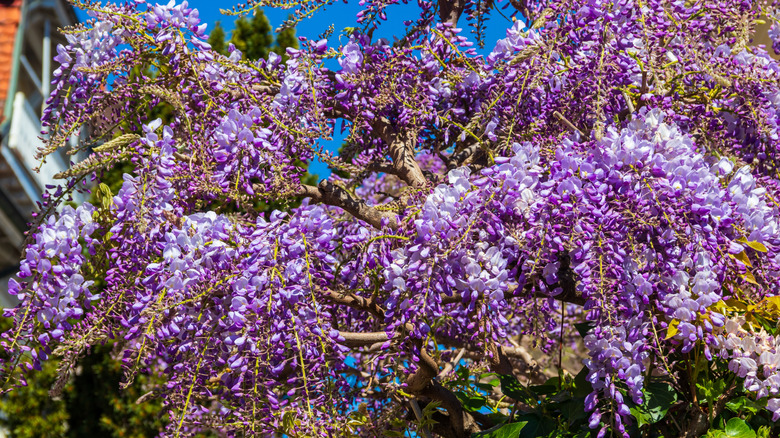
While wisteria (Wisteria spp.) has the potential to bring some unwanted snakes into your garden, you won't have to deal with them during the February pruning season. This is just the right time to prune this plant because wisteria bleeds sap in the spring, as all of its energy is going toward new growth and flowers. Pruning in February prevents this, and you can cut the vine back pretty seriously without doing much damage. Trust us, it'll grow back. If you're looking to increase blooms, cut the branches back until you have about three to five flower buds from the main vine.
Grape vines
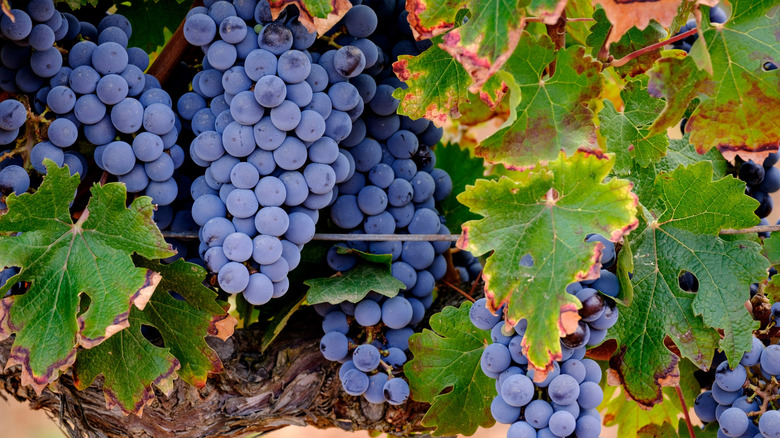
Whether you're growing them to make wine or just to eat as a tasty snack, grapes (Vitis vinifera) require pruning in their dormancy in order to stay healthy. Like the aforementioned wisteria, they bleed sap if pruned too late in the season. However, you can't prune them too early, either, for fear of frost damage. Wait until late February or early March to prune one-year growth back to three to five nodes per vine spur on mature vines. This will help invigorate the plant to grow more fruit while also keeping it at a healthy, manageable size.
Currants
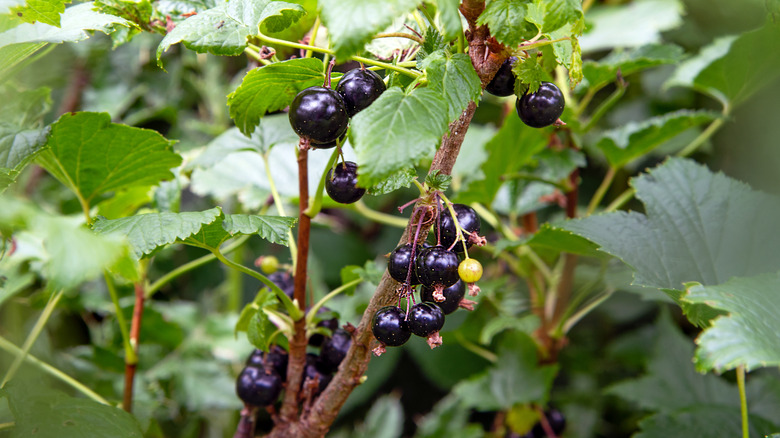
Currants, whether they're red (Ribes rubrum) or black (Ribes nigrum), are among the more forgiving of all the plants on this list when it comes to winter pruning. Similar to the apple and pear trees we discussed earlier, currant shrubs are hardy and can withstand winter pruning with ease. And since they grow best out of branches that are two to three years old, the best practice is to prune a third of the oldest branches away in order to encourage more fruiting energy to the younger branches, thereby enhancing your overall harvest.
Group 3 clematis
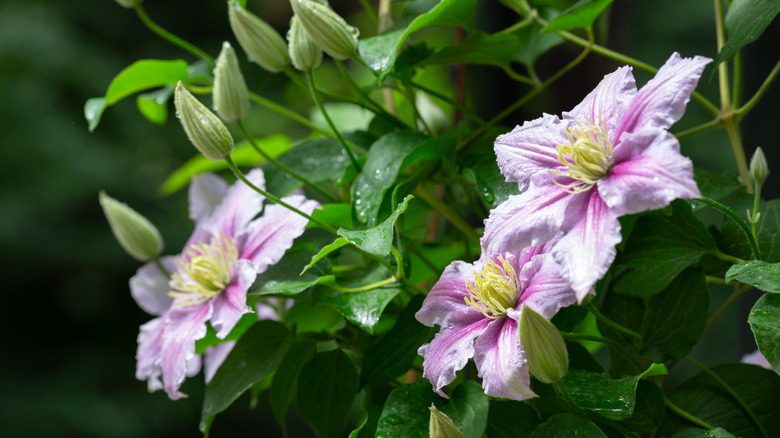
Clematis flowers are split into three different group classifications. The first two groups grow out of old wood that blooms in the early spring and summer. As we've learned, the old-wood buds form shortly after the blooming season is over, and winter pruning would expose and kill them. Group 3 clematis, such as 'Sweet Autumn' clematis (C. terniflora), grows out of new wood every summer/fall and should be cut back 12 to 18 inches in February to ensure vibrant new growth and longer-lasting flowers. Be sure to leave a few healthy stems to ensure positive regrowth.