

This Indoor Plant Has Striking, Unique Leaves And Thrives Without Direct Sunlight
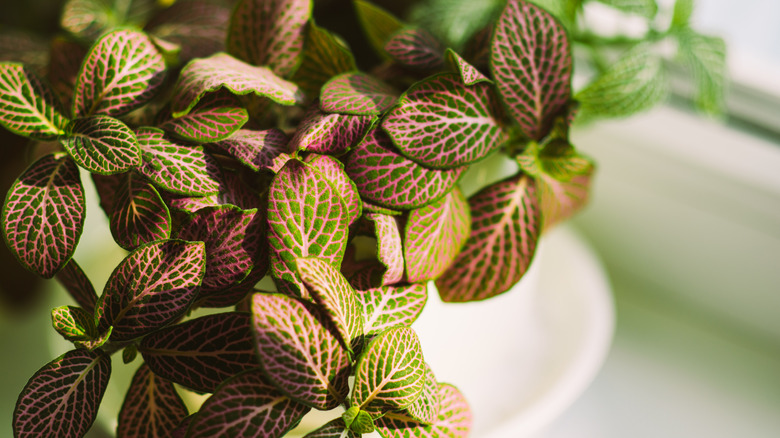
Light is important for all plants. It is the primary engine of photosynthesis, the process by which plants grow and remain healthy. When it comes to indoor plants, however, light requirements can get tricky. They still need it in order to grow, but they are not nearly as demanding as outdoor plants. In fact, there are a number of different houseplants that can thrive on little to no direct sunlight at all. The nerve plant (Fittonia albivenis) is one of them.
Attaining its name from the complex network of veins that map their way along the leaves, the nerve plant grows in clumps of thick foliage that can sometimes grow in excess of 8 inches tall. The leaves come in several different colors, including green, pink, silver, and lavender. The veins also offer a kaleidoscope of color combos. It is not uncommon to see green leaves with red veins or silver leaves with white veins. They make a great visual statement and serve to brighten up any room they are put in.
And, yes, we mean any room in the house because the nerve plant does not need direct sunlight in order to maintain its vibrancy. In its natural rainforest habitat, nerve plants receive filtered sunlight from the canopy above. Therefore, even if you have the shades down or keep the plant relatively far away from the window, it will serve as one of the best low-maintenance houseplants you could ask for.
How to care for a nerve plant
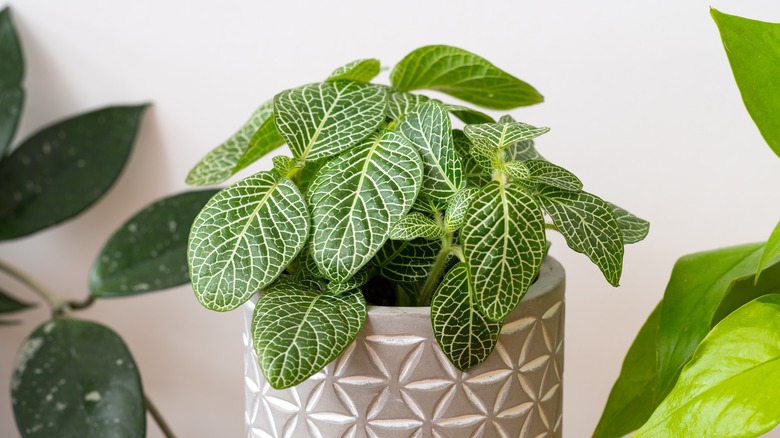
Because the nerve plant needs indirect or filtered light, it cannot be placed in areas where there is a heavy amount of direct sunlight such as sunrooms, south-facing windowsills, or bright covered porches. Direct sunlight can very easily burn the leaves. If you do want to have your nerve plant in a room with strong afternoon sun, add a sheer curtain to achieve that filtered light effect. The nerve plant will also survive in low-light conditions, though it might not grow as thickly.
Another crucial element you need to monitor is how often you water your nerve plant. They require well-draining soil that remains consistently moist. Soil that is too soggy will easily lead to root rot and a yellowing of the plant's leaves. Conversely, if the soil becomes too dry, the plant will wilt and potentially die. Keep an eye on it in the winter time because, although the plant is dormant and requires fewer waterings, the dry air inside could lead the soil to dry out faster.
To see if your plant is too dry, test the first inch of the soil. If it is still moist, there is no need to water. If it is dry, water the plant until that first inch becomes spongy. While not overly high maintenance, you still need to keep an eye on this plant to keep it from losing its amazing natural colors.