

The Hidden Danger Of Mixing Vinegar And Hydrogen Peroxide For Cleaning
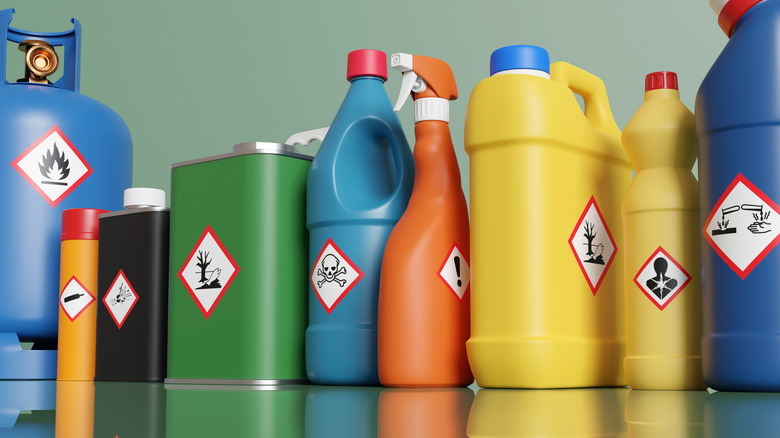
What happens when you mix vinegar and hydrogen peroxide together? The answer is a dangerous disaster! The problem is basic chemistry, as the two mixed together create a different, dangerous chemical: peracetic acid, which can cause corrosion and burns. But why would you want to mix them together? Is the result really that bad?
The use of vinegar as a cleaning agent is as popular as it has ever been. It is an organic product that is safe for you, your family, and your pets. It is inexpensive and most importantly, effective. White vinegar contains acetic acid with a pH range reportedly as low as 2or 3 on the 14-point pH scale. It's that acidic nature that makes vinegar an effective cleaner, as it erodes the composition of substances like grease and oils, which are generally pH-neutral. Vinegar's acidic composition also disinfects.
Hydrogen peroxide, primarily available in a 3% solution, is another popular household product that is a great cleaning agent. Hydrogen peroxide is a gentle bleach with a pH of around 4 or 5. It cleans by breaking down organic compounds. For example, dirt, which is mainly minerals, also has organic compounds mixed in; breaking down those organic compounds loosens the dirt and allows it to be washed away. It also disinfects by breaking down the shells of bacteria and viruses, effectively killing them. So, why doesn't mixing these cleaning products together supercharge their effectiveness? Science.
Don't mix vinegar and hydrogen peroxide together

It is not uncommon on the Internet to find advice recommending cleaning mixtures that may be questionable, simply ineffective (mixing vinegar and baking powder renders them both ineffective), or dangerous (hydrogen peroxide and vinegar). When you have two such effective household cleaning products at your fingertips, a seemingly logical next step would be to mix them together to double up their effectiveness. As it turns out, that would be a big mistake. Vinegar mixed with hydrogen peroxide will create peracetic acid (and water) through a chemical reaction.
Peracetic acid is caustic and unstable and can burn your skin. The reaction also develops a gas byproduct during the reaction that irritates your eyes and respiratory system. Peracetic acid is used in some medical situations as a disinfectant, but is not safe to use at home. Under no circumstances should you mix these two substances together.
Another combination that you should never mix is chlorine bleach and vinegar, another tempting and logical-seeming idea. Those two mixed together will generate chlorine gas, something so dangerous it was used as a weapon in WWI. Don't do it. Let this advice help you research your cleaning choices and keep you and your family safe from harm.