

24 Tasty Herbs You Can Easily Regrow From Cuttings Right In Your Kitchen
We may receive a commission on purchases made from links.
Growing herbs in your kitchen is an easy way to have fresh seasonings at your fingertips year-round. Frost dates are irrelevant, droughts aren't a concern, and deer would have to pick your locks to devour your plants. Propagating herbs from cuttings is one of the most cost-effective methods for creating this type of indoor garden. It produces a copy of the parent plant, so it's also a way to preserve the best characteristics of your favorite culinary plants. In many cases, it's also a faster route to new plants than germinating seeds. Plus, it doesn't require lots of tools or specialized knowledge.
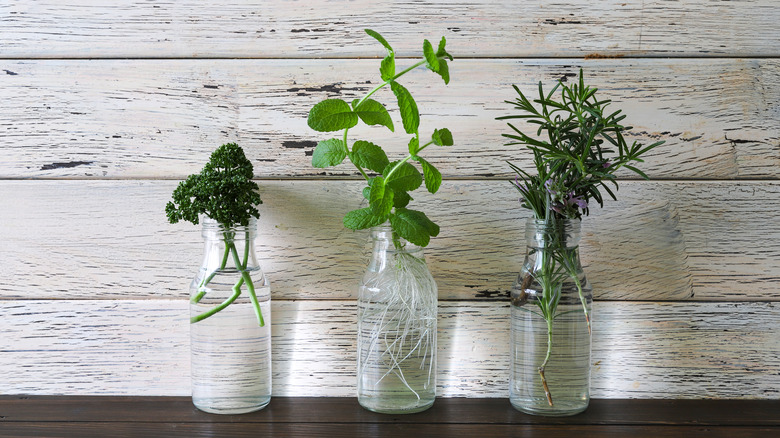
Make your cuttings with sharp and clean garden scissors when the parent plant is growing new foliage, and then place them in farmhouse-style mason jars, vintage vases, or even repurposed glass yogurt jars filled with fresh water and perhaps adorned with gingham ribbon. In addition to sprouting the roots they need to become full-grown plants, which you can eventually transfer to potting soil, your cuttings can function as fragrant little bouquets of greenery that brighten up your surroundings as you cook, clean, or simply gaze out of your kitchen window. A window that faces south or west will offer the type of sunlight most of your herb cuttings need.
Basil

If you're constantly wondering what's eating the leaves of your outdoor basil plants (Ocimum basilicum), consider moving some of these herbaceous beauties indoors. You can do this by growing basil from cuttings. Find the leaf nodes on a mature plant, which look like rounded bumps, and then make an angled cut just below one that's about 6 inches from the end of a firm stem'. Remove the lower leaves and place the cutting in a glass of water near a window that receives indirect sunlight. Move the cutting to a small container of potting soil once 2-inch roots appear.
Oregano

Oregano (Origanum vulgare) is the ultimate kitchen garden resident because it delivers lots of flavor but requires little maintenance. What's more, this herb is unlikely to attract many pests that target houseplants. Taking a 6-inch stem cutting from an existing plant is one of the quickest ways to grow oregano indoors. Pull off the bottom leaves and place the stem in a glass of water until it forms roots, a process that usually takes a week or so. Then, plant it in an 8-inch-deep pot. Keep your oregano by a sunny window and spritz it with water daily.
Cuban oregano

Cuban oregano (Plectranthus amboinicus), sometimes called Mexican mint, smells like true oregano when its foliage is smashed, but it's botanically different. It also has a strong flavor reminiscent of oregano, so it's sometimes used as a pizza seasoning. Cuban oregano tends to do well indoors since it likes growing in containers and somewhat shady outdoor spots. This fuzzy mint relative is also happy to trail from a hanging planter in your kitchen. You can treat it like basil when taking cuttings. When it comes to caring for Cuban oregano, water sparingly since it prefers hot, dry conditions.
Dill

Learning how to grow dill (Anethum gravolens) from cuttings isn't hard. In addition to developing rapidly, dill will quickly form roots when you place stem pieces in a glass of water near a bright kitchen window. Your cuttings should be taken from young, flexible stems on plants that aren't bolting or flowering. Each piece of stem should be about 6 inches long and snipped slightly lower than a leaf node. Strip away all leaves except a few near the top of the stem. Be sure to change your cuttings' water weekly, which helps stave off rot-promoting bacteria.
Fennel

Fennel (Foeniculum vulgare) is best cultivated in containers since it spreads so readily through self-seeding. It will thrive indoors if you provide a very bright window or at least 12 hours a day under grow lights. To grow fennel plants in your kitchen, cut off the bottom inch of a mature bulb and put it in a water-filled dish. Once roots and shoots sprout, move this cutting to a soil-filled pot with drainage holes. Make sure the pot is large enough to accommodate the plant's lengthy taproot. A container that's 12 inches wide and deep is a good start.
Tarragon

Cuttings are generally the best way to grow tarragon (Artemisia dracunculus). That's because a low percentage of its seeds tend to germinate. Choose young, flexible stems and slice them off at an angle, which provides more surface area for root growth. Like many herb cuttings, tarragon stems benefit from being dipped in a product such as Garden Safe TakeRoot rooting hormone, which contains indole-3-butyric acid. This compound kick-starts rooting because it mimics auxin, a hormone that tells roots to form. Put the cuttings in a warm, humid area and keep their soil damp when you move them to pots.
Cilantro

You can also grow cilantro (Coriandrum sativum) from rooted stem cuttings. Snip off a 4-inch piece of stem from a healthy plant, aiming for a point just below a leaf node. Place the cutting in a water-filled glass. Or, use another clear container that's easy to set by a window, perhaps a vase or a mason jar. When the roots that emerge are a couple of inches long, transfer the young plant to an 8-inch pot of damp potting mix. Make sure the pot has drainage holes, and keep the soil moist but not sopping wet for optimal growth.
Culantro

A common element of Puerto Rican cuisine, culantro (Eryngium foetidum) is a cousin of cilantro with a similar but stronger flavor. Also called spiritweed and sawtooth coriander, this herb is native to Central America, South America, Mexico, and the Caribbean. It's ideal for a kitchen-based garden because it's relatively small and thrives in pots. Plus, just as you can regrow your cilantro, you can regrow your culantro from cuttings. In spring or summer, clip off a 6-inch stem section that's near a leaf, then place its bottom 2 inches in damp potting mix. Roots should emerge within two weeks.
Sage

Growing fresh sage (Salvia spp.) in your kitchen provides a renewable supply of a seasoning that's found in many traditional Thanksgiving dishes. You can have new sage plants in as little as a month if you regrow cuttings rather than planting seeds. First, snip off 4 to 6 inches off a young stem. Next, pluck off the leaves on the bottom 2 inches of your cutting. Then, place that 2-inch section of stem in water or damp potting soil. A spot with indirect sunlight and a temperature around 70 degrees Fahrenheit is just right for encouraging roots to grow.
Parsley

Parsley seeds germinate slowly, so cuttings are ideal if you want to enjoy new plants as fast as possible. You can grow parsley (Petroselinum crispum) from cuttings in any part of your kitchen that gets indirect sunlight. The process resembles what you'd do for basil and oregano: Cut a 6-inch stem section at a node and remove the lowermost leaves, put it in water, and transplant it when the roots are about 2 inches long. After moving the cutting to a soil-filled pot, place a plastic bag over the top to create warm, humid conditions that further fuel growth.
Thyme

If you know a few rules of thumb — or green thumb, perhaps — you'll find growing thyme (Thymus vulgaris) simple. The best method for creating more thyme plants is rooting stem cuttings. It's relatively quick, whereas getting thyme seeds to sprout is not. Snip off 4 inches of a tender green stem and remove the leaves from the bottom 2 inches. Then, slide the stem section into a glass of water. When roots appear, deposit the plant in a small container filled with potting mix. To keep the parent plant healthy, don't excise more than ⅓ of its foliage.
Rosemary

With vibrant green foliage and an enticing aroma, rosemary (Salvia rosmarinus) can enhance your cooking space in no time. Introducing it to your kitchen is easy since you can use stem cuttings to propagate this plant. Consider making 6-inch clippings when splitting large rosemary plants. Before placing a cutting in a glass of water, get rid of the leaves on its bottom half. Pop the glass onto a bright windowsill and watch for roots to debut. Once this has happened, plant each cutting in a pot of its own, provide a sunny spot to grow, and water lightly.
Marjoram

Growing marjoram (Origanum majorana) in your kitchen is an enjoyable project whether you love to cook or simply appreciate the calming presence of plants. Marjoram stem cuttings can be a little shorter than those of many other herbs. About 3 inches is plenty for propagating a new plant. Make sure the stem has a couple of leaves and snip just below a leaf or its node. Pop your cutting into damp potting mix and keep it in a sunny spot as roots unfurl. Spritzing the young plant with water a few times a day will help it thrive, too.
Peppermint

Peppermint plants (Mentha x piperita) are useful additions to your countertop herb lineup, and not just because they bring freshness to all sorts of foods and beverages. For starters, indoor mint plants can repel spiders from your home. Growing peppermint in kitchen-based containers is also smart because this vigorous grower can take over in-ground gardens, preventing other types of plants from thriving there. Find a non-flowering plant and make stem cuttings that are 4 to 6 inches long. Strip off the lower leaves and let the bottom inch of each cutting rest in water to tease out new roots.
Spearmint

Spearmint cuttings (Mentha spicata) love forming roots in water. They'll happily do this near a window with direct sunlight, unlike many other herbs, which can't handle the intensity. As with peppermint, you can grow this mild-tasting mint in water indefinitely, saving space on your kitchen counter. Make cuttings like you would with basil or peppermint, including at least 3 leaf nodes when possible. Change your spearmint's water every few days to boost its oxygen levels and discourage problem-causing bacteria from accumulating.
Tulsi

The tulsi plant (Ocimum tenuiflorum) is such a botanical wonder that it's nicknamed holy basil. This herb has a long history of spiritual and medicinal uses, and it emits a spicy aroma that enchants many gardeners. Plus, as a member of the mint family, it can give tea an invigorating hint of freshness. You can regrow tulsi from cuttings by following the same process you'd use with basil. If possible, place tulsi near a window on the south side of your house, which should deliver the correct sunlight intensity. For best results, keep the temperature above 70 degrees Fahrenheit.
Perilla

Want to mix things up in your herb garden? Try growing perilla leaves (Perilla frutescens), also known as shiso. They're less common than basil and rosemary but just as versatile, especially if you love Korean cooking. Growing this mint relative in your kitchen is ideal since it spreads aggressively outside of pots. It's crucial to avoid planting it in the ground in Kentucky, Tennessee, Virginia, and West Virginia, where it's considered an invasive species. To propagate perilla, plant a 4-inch-long stem cutting in a pot filled with damp perlite, and then cover the container with a clear plastic bag.
Lemon balm

Like several other mint relatives, lemon balm (Melissa officinalis) is a good choice for your kitchen since it may overtake your outdoor garden. Its citrusy scent brings a bit of aromatherapy to your cooking space, while its equally citrusy flavor can add brightness to soups, stews, teas, and more. To grow lemon balm indoors, adopt the same cutting process you'd use with basil and provide the plants with indirect light since direct sunlight can burn their tender leaves. Start giving your new lemon balm a monthly serving of liquid fertilizer when you're confident it has formed strong roots.
Lemon verbena

Growing lemon verbena (Aloysia citriodora) is satisfying because it has so many uses, from adding lemon-like flavor to foods to lending an invigorating scent to homemade bath products. Generally speaking, you can treat lemon verbena like parsley when making and potting your cuttings. If you have the right supplies at hand, give the cuttings a dip in rooting hormone. Since lemon verbena is an herb that craves constant moisture, top its container with a plastic bag to lock in water droplets. You'll need a 12-inch-wide pot for each full-grown plant, but you can start smaller when transplanting cuttings.
Lemongrass

Growing lemongrass (Cymbopogon citratus) in your kitchen is a must if you're fond of making Southeast Asian curries. It's also an ideal plant to regrow from the grocery store. To propagate it this way, purchase a half-dozen lemongrass stalks that are attached to their bases. Pop them into a jar filled with 4 inches of water. Submerge the base of each, plus a bit of tissue above it. Station the jar in bright, indirect light and watch as leaves and roots poke out of the stalks. Place the plants in potting mix when their roots are 3 inches long.
Bay laurel

Bay laurel (Laurus nobilis) is a Mediterranean tree that can be grown as a houseplant. You can nurture it in your kitchen if you have space for a 5-gallon pot and ample humidity. Or, grow it elsewhere in your home, near a south- or west-facing window supplemented with grow lights. Sometimes called bay leaf or sweet bay, this plant's foliage can flavor soups as they simmer but shouldn't be ingested. A simple way to propagate bay laurel is making 6-inch cuttings of young stems, rooting them in water, and moving them to potting soil when the roots reach ½ inch.
Chives

Growing chives (Allium schoenoprasm) in the kitchen isn't common, but it's very doable. You can propagate this onion-flavored plant for free by taking cuttings from outdoor specimens. As with many other herbs, the best time to take cuttings is during the plant's growth period, which encompasses spring and early summer. Each cutting should be 6 to 8 inches. Fill a container with damp potting mix, make a 2-inch-deep hole for each of your cuttings, and then introduce the future plants to their new home. Leave a couple of inches between each hole to give your chives room to expand.
Lavender

Growing fresh lavender (Lavandula spp.) can turn your kitchen into an aromatic paradise. Pieces of mature, woody stems aren't as prone to bacterial problems, so aim for these if you're making cuttings in the spring, summer, or fall. Each cutting should be 4 to 8 inches long and taken from a non-flowering stem. In addition to stripping the leaves from the bottom 2 inches of every cutting, scrape off ½ inch line of the stem's skin. Place your cuttings in 6-inch pots filled with equal parts vermiculite, compost, and sand. Then, water the cuttings and cover the pots with plastic bags.
Catnip

Growing catnip (Nepeta cataria) for feline friends adds some much-appreciated spice to their lives. Catnip is low-maintenance, so it's ideal for a beginning gardener's kitchen herb collection. Trimming this plant regularly prevents it from getting leggy. Consider making a few 6-inch stem cuttings as you tackle this task. Pluck off the leaves on each cutting's lower half, and then pop the tips into damp potting soil. A south-facing window that provides 6 or more hours of direct sunlight is an ideal spot for catnip, and a nearby dish of water should keep humidity levels in its preferred range.