

Keep Your Lawn Mower Deck Clean With An Essential Tool You Already Own
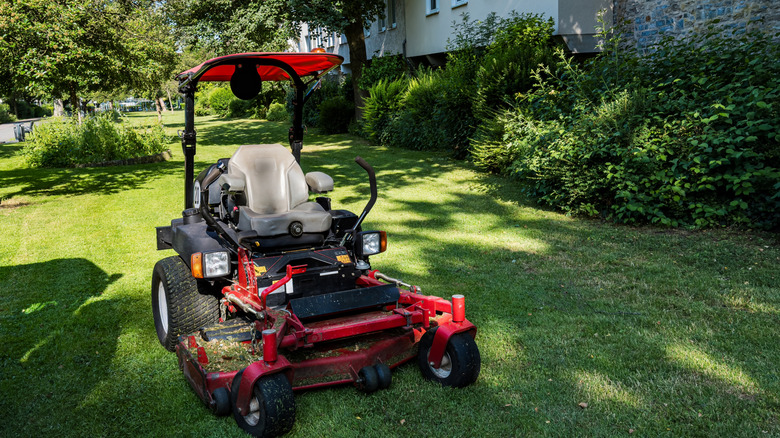
Keeping a tidy, well-kempt lawn is no easy task. While typical care focuses on maintaining a healthy mowing, watering, and fertilizing regimen, all of it will be for naught if your mowing equipment is dirty. During mowing, mud, debris, and grass clippings stick to the deck's underside, get inside the discharge chute, and claim the pulleys. As such, if they're not swept off after the session, they can harden and gum up your equipment. Over time, such mowers will struggle to cut evenly and may even overheat, resulting in poor performance. So, if you're hoping to stop grass from clumping on your mower and keep the deck clean, bust out your leaf blower.
Chances are if you keep a lawn, you also own this essential tool, since it helps disperse grass clippings across the turf, away from water sources, pavement, or your neighbor's yard. In fact, apart from blowing leaves — as its name would signify — many homeowners employ it year-round and use a leaf blower to remove snow from the driveway, clean out gutters, dry cars, or clean string trimmers. Though you may groan at the extra work, it's important since grass clippings are mostly water (we're really hoping you aren't mowing wet turf), and they allow rust to set in on metal parts when left on too long. The result? A lawn mower that doesn't last long. So, to extend your lawn mower's life and keep it from malfunctioning suddenly, it's better if you break out the leaf blower.
How to use a leaf blower to clean your mower
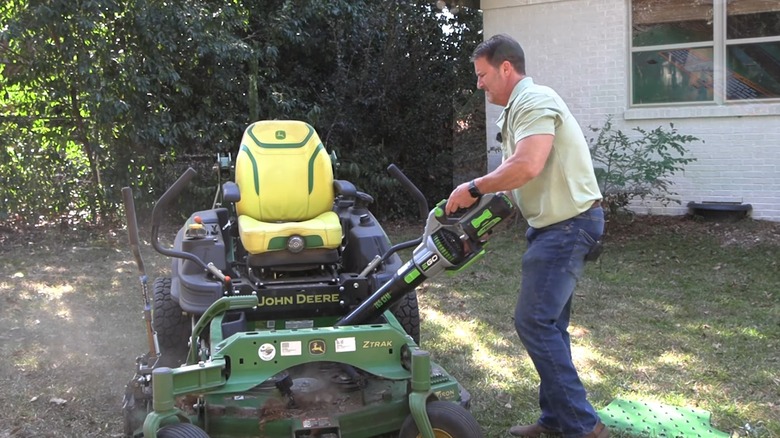
Before you start, note that the cleaning mechanism will vary across mowers. Generally, you should let the equipment cool down before you try cleaning it. This translates to cutting off the spark plug for a gas mower, or it may accidentally ignite and cause damage. On the other hand, remove the battery from your electric mower. If your machine has a front-mounted deck that automatically lifts high, you're in luck since you can get through the process without much elbow grease or time. If not, then you'll need a jack to lift up and access the deck, unless it can be taken off fully. Unscrew the mower blades as necessary to reach tight spots.
Run your leaf blower over the murky bits, around the engine, radiator, front grill, and blades, dusting away any caked-on grass clippings and dirt. Remember, leaf blowers, albeit powerful, can't fully get rid of gunk that's congealed on the unit from previous sessions. So, if debris is particularly stubborn, scrape it off with a putty knife or a wire brush. When tilting the deck to blow at the undercarriage, do so with the air filter side facing up.
Follow up with a light water spray. But make sure not to get it on any electrical parts, the engine, or the filters. Dry it by running the leaf blower again or wiping it with a rag. This helps avoid further rusting. When you're done, spritz a little WD-40, cooking spray, or a silicone spray on the deck to prevent grass from sticking. Such routine cleaning also helps in staying on top of maintenance, as any worn-out or damaged components in dire need of replacement become instantly noticeable.