

Sidewalk Chalk On Metal Files: What It's For And Why It's Recommended
We may receive a commission on purchases made from links.
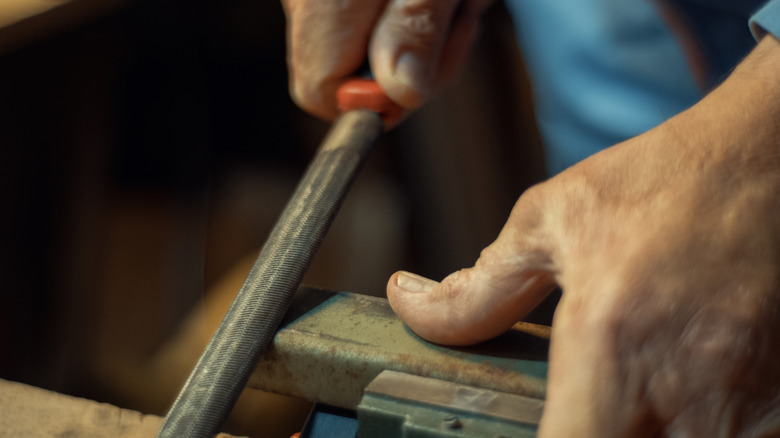
Shaping metal, be it steel, copper, brass, or aluminum, can be done using a host of differing techniques. Regularly, the final step in finishing a piece of metalwork will be filing. Using a metal file is not difficult to learn how to do, but one thing that many craftspeople forget is to chalk the file before you use it. Putting sidewalk chalk, which is made from calcium carbonate or calcium sulfate, on the face of your file will prevent a problem called pinning. This occurs when tiny bits of metal literally weld themselves between the teeth on your file. Those pins will cause the surface you are working on to be rougher and much harder to polish; a significant problem. Rubbing a light layer of sidewalk chalk (of the right type) will prevent pinning and make your work much easier.
The chalk, in addition to keeping those tiny metal particles from wedging themselves into the teeth of the file, acts as a dry lubricant, reducing the friction between the file and the metal. The layer of chalk prevents the small bits of metal from touching the body of the file. Using chalk means when you use a file card to clear the teeth, those pieces will easily be removed. With no chalk, those pieces are tremendously difficult to get rid of. They will abrade and harm the surface you are smoothing. So, the chalk makes your work easier in a couple of ways and improves the finish of the metal you are working on.
How to use the chalk and which chalk should you choose
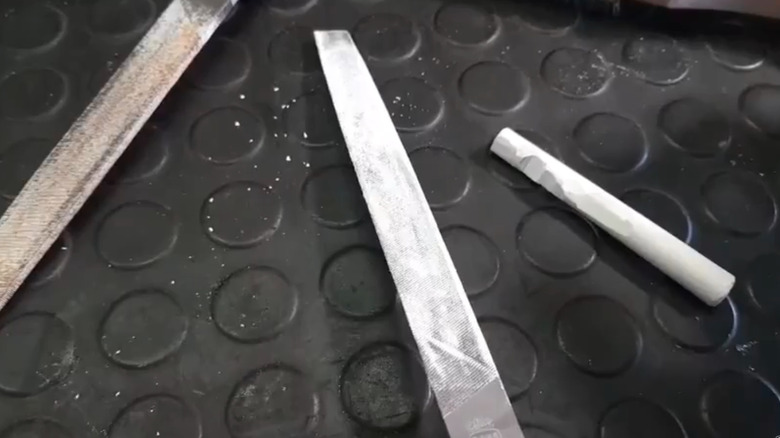
Before you apply any chalk to your file, you need to be sure it is in pristine condition. Use a file card or wire file brush to clear the teeth of the tool. If there are already small bits of metal welded into the tooth grooves, it will take some work to get them out. Next, rub the chalk over the face of the file, leaving a light thin coating. The type of chalk matters. If your sidewalk chalk has wax or other resin additions to it, it will not work for this purpose. The less ingredients in the chalk, the better, as you don't want the chalk to fill the teeth with a sticky substance. For example, Urban Infant's Non-Toxic Sidewalk Chalk comes with five colors per pack, the primary set available for around $12 on Amazon. Blackboard chalk will also work well.
The metals most likely to cause pinning problems are the softer ones, like copper, brass, and especially aluminum. When filing them, you should re-chalk every five to 10 strokes. While the task will interrupt your filing, it will make it more effective and likely faster. Removing metal pins from your mill file is difficult and time consuming. Keeping your metal files in top shape using chalk is a great home shop technique.