

A Brush For Your Metal Files: What It's For And Why It's Recommended
We may receive a commission on purchases made from links.
When browsing through the tool section of a hardware store, you may come across something that looks like a hairbrush with very stiff, very short bristles. It isn't a hairbrush at all ... it's something called a file card. As a longtime user user of files for deburring pipes, sharpening lawn mower blades, and shaping wood, it's something I've kept and used in my landscaping and handyman businesses for over 40 years.
The file card I have looks just like this Haohuoduo file card and brush that you can buy on Amazon for $7.69. Some file cards come with an attached soft-bristle brush, which can be handy for clearing away wood or plastic shards, but I just have the basic one with no brush, and it works fine. I just clear away debris with a rag when I'm finished using it.
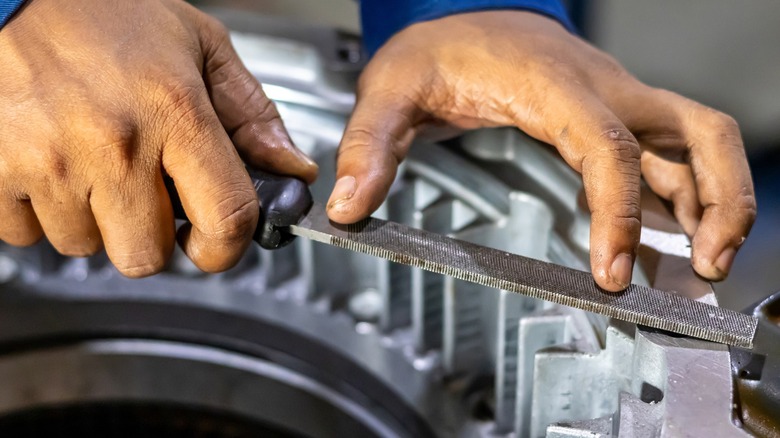
I always bring a metal file with me to plumbing jobs, and I use it to deburr copper and PVC pipes after cutting them. Nothing gums up a file faster than plastic shavings, so I also bring the file card to large jobs that call for a lot of work to keep my files clean. It has a handle like a brush, and the way I use it is to lay the file flat on a work bench and brush it vigorously. It usually takes less than a minute to get all the shavings out and restore the cutting action of the file.
A file card is a useful tool with a strange name

A file card looks a little like a pet brush for getting rid of fleas, but its bristles are too stiff for that. They can wear away wood, though, and some woodworkers use file cards to smooth rough edges on custom hardwood projects. This isn't what file cards are for — coarse files and rasps do a much better job — but when you don't have the exact tool you need, a file card can work in a pinch. Repurposing tools is nothing new for crafty people; after all, some use screwdrivers as pry bars.
To clean a file with a file card, it's important to first examine the tooth pattern on the file. You want to brush the bristles in the direction of the pattern, because that's the most efficient way to get rid of excess debris. Some patterns run diagonally across the face of the file, so filing in the opposite diagonal direction will be counterproductive. But pay attention: The diagonal direction isn't always the same on both sides.
I often use a file to sharpen lawn mower blades, even though there are faster ways to do it. When the file is sharp, I can feel the teeth biting without much downward pressure. When the file seems to glide over the edge of the blade without offering much resistance, I give it a treatment with the file card. If that doesn't help, it's usually because the file is worn out and needs to be replaced.
How a file card is better than a wire brush
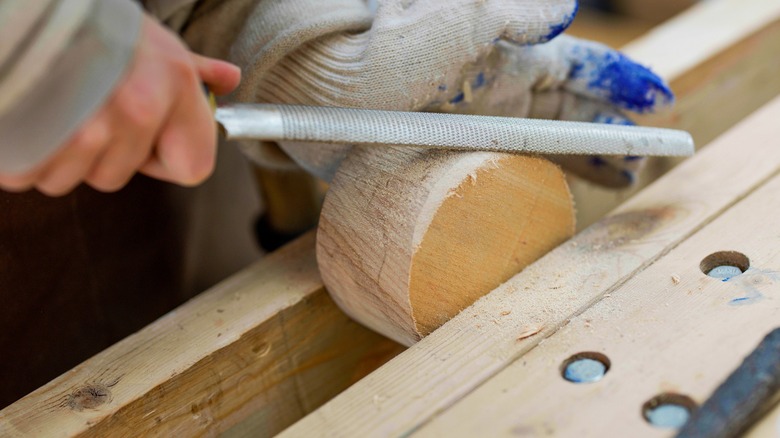
Metal files are great for metal, but their teeth are too short and closely spaced to make much of an impact on wood. Because I also do woodworking in my shop on occasion, I have a wood file and a rasp for knocking down and rounding wood edges and doing utility jobs such as paring wood off the edges of doors to make them close more smoothly. Wood readily sticks between the teeth of the file, so I use my file card frequently to keep it clean. It does a good job of this.
Any file, no matter whether it's meant for wood or metal, will eventually clog, and a clogged file is a pain to use. You might be able to use a wire brush to unclog a wood file, because the file's teeth are spaced far enough to accommodate wide bristles. But please keep in mind that a wire brush is no substitute for a file card for cleaning out the fine spaces between the teeth of a metal file. So because it will unclog any file, I consider a file card to be a must for anyone who uses files as part of their craftsmanship process.