

Wood Vs. Metal Files: What's The Difference And Which Is Best For Your Project
We may receive a commission on purchases made from links.
It may seem odd, but all hand files don't work on all types of surfaces. They look so similar that the idea of them being specialized may be kind of weird, but as a professional woodworker with over 40 years of experience, I can tell you that the difference is real, no matter how strange it seems. The proper names of the files meant specifically for metal and wood help explain it. Files made for smoothing metal are called mill files, and the act of shaping metal is called milling. Files made for shaping wood are properly called rasps — but no, woodworking is not called rasping!
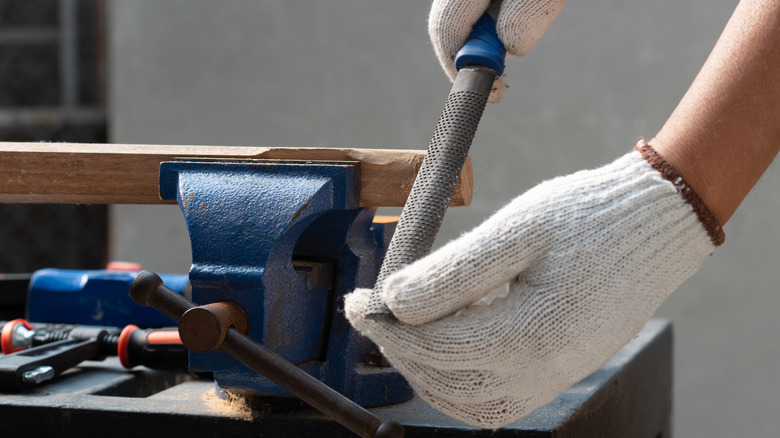
Compared with rasps, like the one in the photo above, will have much finer "teeth" — the cutting edges ground into files and rasps. Rasps have much larger teeth. Rasps are only effective for shaping wood and similar soft material, so if you use a rasp on metal, you'll dull it quickly. Mill files, on the other hand, will shape and smooth metal (and are also very useful for sharpening garden tools). They can also smooth wood, but not as effectively as rasps, because their teeth get clogged with sawdust.
Lots of names can be confusing
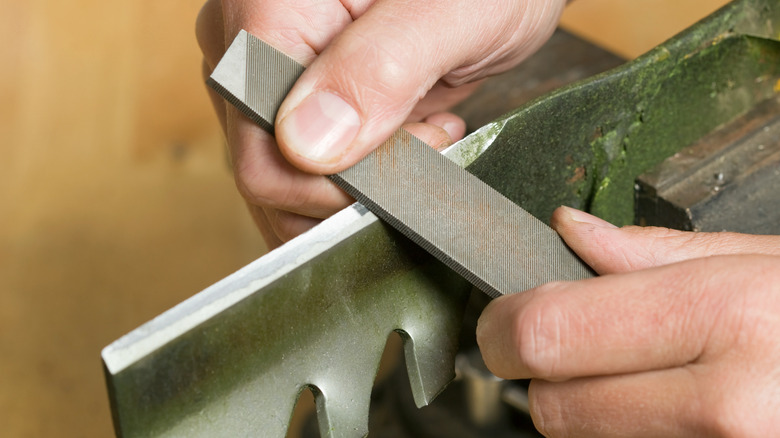
In my opinion, the reason this topic can be confusing is that there are many colloquial names for files and rasps, and those names can be both useful and confusing at the same time. A mill b*****d file, sometimes just called a b*****d file, is a type of mill file with medium-large teeth (at least, for a mill file). The word b*****d in this case is an antiquated use of the word, meaning irregular rather than illegitimate. Flat mill files come in single- and double-cut tooth styles, with the coarseness, from rough to smooth, going in order of rough, coarse, b*****d, second-cut, smooth, and dead smooth. Metal files can also come in a triangular shape, and specialty files are also available for crafts like jewelry making.
Among the various types of wood-shaving tools, you'll also find various types of rasps. There are a few tools woodworking beginners need, and these are important additions to the set. The most common rasps are flat, half-round, and round, with a tapered round rasp sometimes being called a rat tail rasp. My favorite rasp is called a four-in-hand with multiple cutting surfaces, two flat and two convex, like this Xaqishire 4 Way Wood Rasp File. This is very handy, letting you switch cutting surfaces with a flick of the wrist.
The bottom line is, mill files are made to shape metal and come in several styles. While they'll also smooth wood, their teeth will clog quickly when used this way. Rasps are made specifically for shaping wood, with larger teeth that won't quickly fill with swarf. Just don't use them on metal!