

Not The Lawn Mower: Shred Fall Leaves Manually With Handy Tools You Already Have
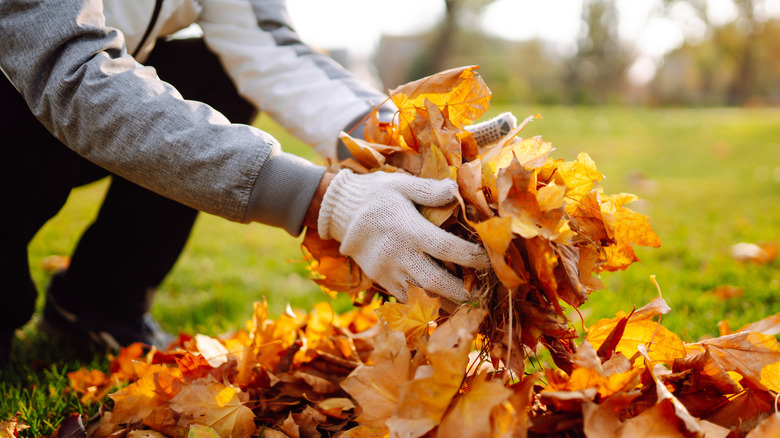
Picturesque bright orange, yellow, and red leaves are a fall wonder — until they turn brown and cover your yard. It's time to get them off the lawn, and one of the best solutions for your garden (and the planet at large) is to keep those leaves on site. While using whole fallen leaves as mulch could be a bad idea, shredding them up can be a substantial benefit for your landscaping. Don't fret if you don't have a lawn mower or power tool to chop them up either — you just have to bust out the loppers and shears to turn those dead leaves into a beneficial cover.
Natural mulches provide your garden with essential nutrients and crucial weed control while also helping retain moisture. Mulching leaves saves space in landfills, reduces greenhouse gases, and allows leaves to decompose naturally instead of rotting in bags. In the lawn, it gives the grass room to grow without a heavy barrier of matted, wet leaves blocking sun and rain. All you need to process those leaves is one of the sharp tools in your gardening arsenal — long-bladed hedge shears, loppers, pruners, and other types of garden clippers. If it chops and cuts, it can be used to mulch leaves. Then, you just need a container, such as a 5-gallon bucket, to hold them in one place as you rapidly chop through them.
Shred fallen leaves into mulch with manual garden tools
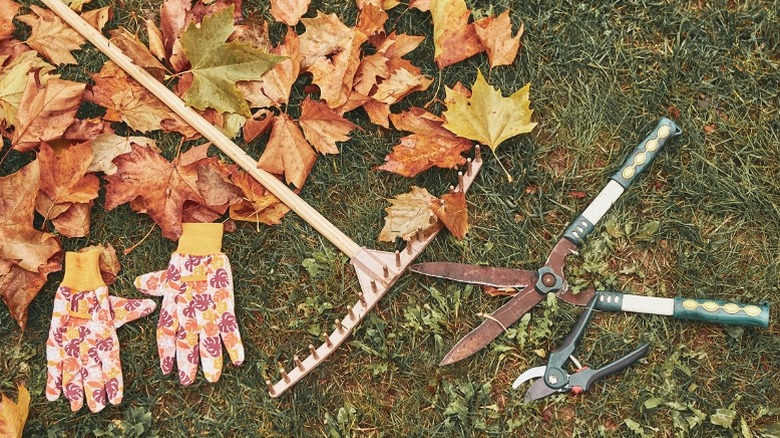
Rake the leaves into piles, and transfer them into a deep bucket. If needed, sharpen your garden tool of choice, and put those loppers or shears to work; simply use the tool to chop up the leaves inside the bucket. Mix the shredded leaves with grass clippings, or spread them on your garden beds. The dry fall leaves could also be added to compost bins as part of the carbon-rich "brown" materials.
Manual garden tools aren't as efficient at mulching fall leaves as using a string trimmer and edger inside the bucket or running a lawn mower on your leaf pile to shred the leaves. Then, there are leaf shredders, neat tools for chopping up fall leaves that do all of the work for you. But since it's the matted and wet layers that cause problems, any shredding could be good shredding. Worried that you missed some leaves? The University of Wisconsin-Madison notes that as long as you can see the grass underneath, a few leaves may not be a problem for your lawn. Rake on occasion to move excess leaves into piles, and chop them up as needed to reintroduce and break them down to help your grass and garden plants.