

How Clever DIYers Use Concrete Blocks For A Durable Bee Hive Base

If the sound of buzzing bees and the sweet taste of honey sounds idyllic, you might be interested in beekeeping. There's more to it than collecting honey. The bees and hives have to be cared for. Part of that includes keeping the hives off the ground so the wood doesn't rot and predators don't have easy access to the hive. Even DIY hives like this simple glass jar bee hive often have a wooden base. While there are a number of ways to build bee hive stands, concrete blocks are an effective solution that's popular with many DIYers. The concrete blocks raise the hive off the ground, provide a level base, and can be moved if you need to shift the hive. If you want to build your own, you'll need concrete blocks and wood boards or timber to lay over the top.
Concrete blocks are a popular choice in part due to how affordable and easy to work with they are. They can be found at most home improvement stores and their regular shape makes them easy to stack. Plus, they're large enough that you don't need too many of them to lift your hive a decent way off the ground. However, it's their durability that makes concrete shine over materials like wood. While concrete can break over time, it's much more resistant to the elements. If you have cinder blocks and are wondering if concrete blocks and cinder blocks are the same or different, don't worry. You can use either for the base.
Using concrete blocks as a bee hive base
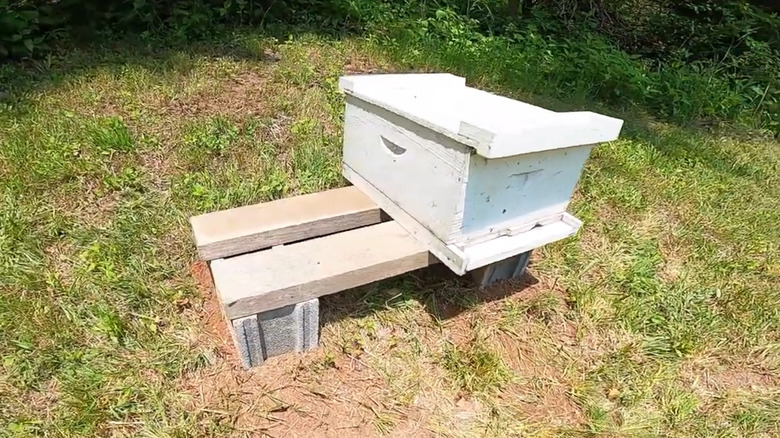
Start by inspecting the area that will become your apiary and measuring the space. You'll need enough room for each of your hives, plus at least a few feet between them to give you room to work. This will give you an idea of how many concrete blocks you need, as well as how much wood. For a single hive, you'll need two stacks on concrete blocks and several wood boards that are at least a few feet long. The shape is similar to building a bench out of concrete blocks, if that helps you picture it. The exact measurements will vary according to existing space and the size of the beehive.
The ground doesn't need to be perfectly flat, but you don't want the hives tipping over. Remove any large obstructions and smooth the ground out so it's fairly level. If you're planning on the beehives being there long-term, dig into the ground and tamp it down, giving your concrete blocks an even steadier base. Digging will also help give you a level base if you're trying to start a hive on a hill. Just make sure the bottoms of the holes are at the same level. Place your concrete blocks and ensure the tops are level with each other, then lay your wood boards or timber across the top or through the holes in the blocks. If you like, you can attach the wood to the blocks or reinforce the whole structure with rebar. Concrete blocks are durable enough to last for decades, so your new beehive stand should last quite a while.