

Are Concrete Blocks And Cinder Blocks The Same? What You Need To Know
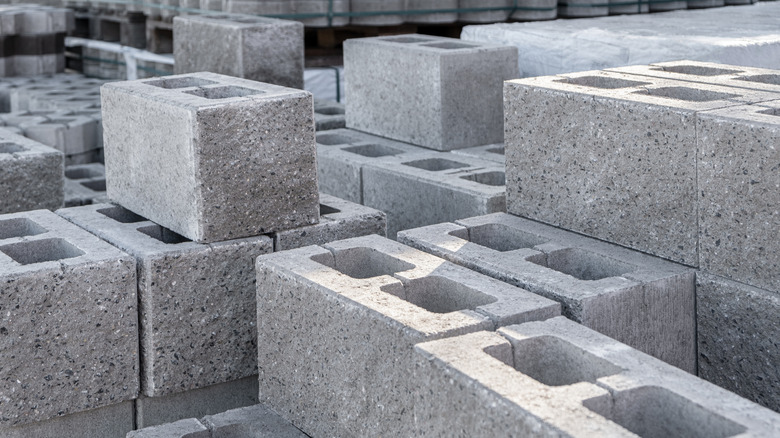
When you're planning a DIY project, it's important to use the right materials for the job. And if you need to pick between concrete blocks and cinder blocks, you may find yourself wondering what the actual difference is. The answer is a bit complicated, as how the terms are used has changed over time. Originally, cinder blocks and concrete blocks were similar but distinct products. However, traditional cinder blocks aren't commonly produced anymore. Instead, the term "cinder block" may be used to describe either all cement-based masonry blocks or concrete blocks that are lighter than standard ones.
Traditionally, cinder blocks were made from cement mixed with water and cinder aggregates, hence the name. This made them somewhat lighter and less expensive to produce and use than concrete blocks. Concrete blocks tend to have gravel or crushed stone mixed into the cement instead of cinders. The gravel makes them more costly, as stone needs to be quarried and crushed, whereas cinders are a natural byproduct of burning coal or wood. However, gravel also adds weight and durability, as stone is harder than cinders. If you look at the properties of concrete blocks, they're often sturdier and more robust than either cinder blocks or plain cement blocks, making them better suited for serious construction projects. Cinder blocks can crumble due to heavy use or water damage, however, which is part of the reason why companies began moving away from them once more durable and lightweight options became available.
Do you need concrete or cinder blocks for your project?
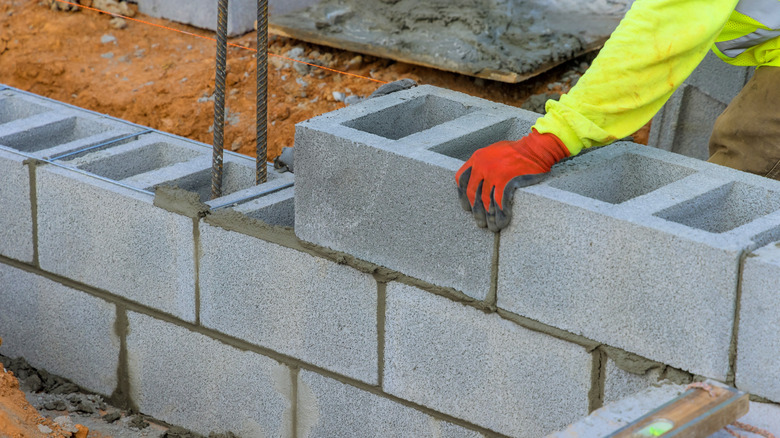
Since most companies use the terms interchangeably to refer to concrete blocks, the simple solution is to choose your masonry blocks based on other factors. Consider the size and shape of the block, as well as whether or not they're hollow. Hollow blocks are lighter than solid blocks, while solid blocks are heavy duty and incredibly sturdy. If you were considering using traditional cinder blocks for your project, hollow concrete blocks are likely what you're after. When in doubt, look at the product details to see what the blocks are best used for — or ask an employee in store for help.
The distinction between these materials may be more important if you're buying older blocks secondhand, or if you have a local manufacturer that still makes traditional cinder blocks. In these cases, consider where and how the blocks will be used. You can decorate with cinder blocks or use them for light, non-structural projects like raised garden beds, borders along a footpatch, or even small tables. The cinder blocks should be durable enough for those types of projects, and you can save some money since they're the less expensive option. However, if you need the blocks to form a load-bearing part of the project, like the foundation of a new patio, then the extra durability of concrete is worth the higher price.
If you still aren't sure, ask yourself what would happen if the blocks crumbled. If crumbling wouldn't be an issue, or would be a slight inconvenience, then cinder blocks are probably fine. If the blocks cracking would be a major problem or cause for alarm, then go with concrete.