

Not Plywood: The More Affordable Material For A Custom Backyard Shed
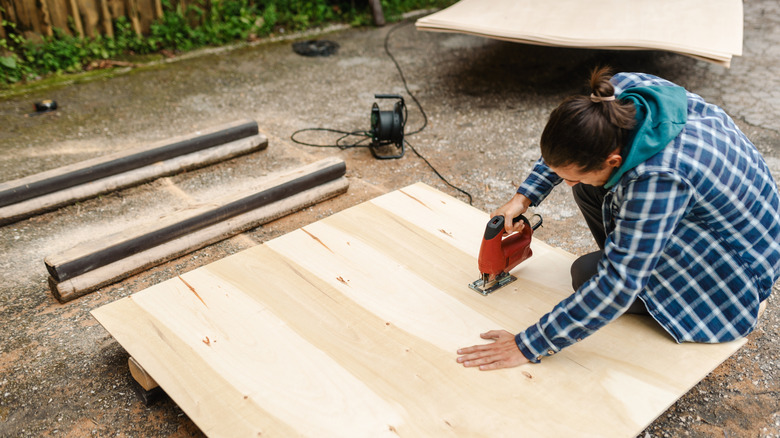
Let's face it, you're going to be spending money on a custom shed build. Sure, you could shell out cash for a prefabricated shed from Lowe's, but a custom shed made specifically for your tools and property size is a backyard upgrade well worth the price it takes to build. Still, you want to be getting the most bang for your buck when it comes to the materials you choose. And while plywood is a common and sturdy shed-building material, oriented strand board (OSB) is a far more affordable alternative worth considering.
While they may look the same from a distance, there are many differences between OSB and plywood. Where plywood is constructed from cross-laminated sheets of solid veneer, OSB is made from a combination of cross-oriented layers of rectangular wood strands and adhesives. The result is a solid, heavy board that can be used to frame in your shed's floor, roof, and walls.
According to United Built Homes, OSB costs between 15% and 30% less than plywood. For further proof of this, all you need to do is compare the costs of the two at Home Depot. As of this writing, a 4-by-8-foot sheet of OSB sheathing runs for just under $13, while plywood of the same size costs closer to $30.
OSB is cheaper, but does that make it better?
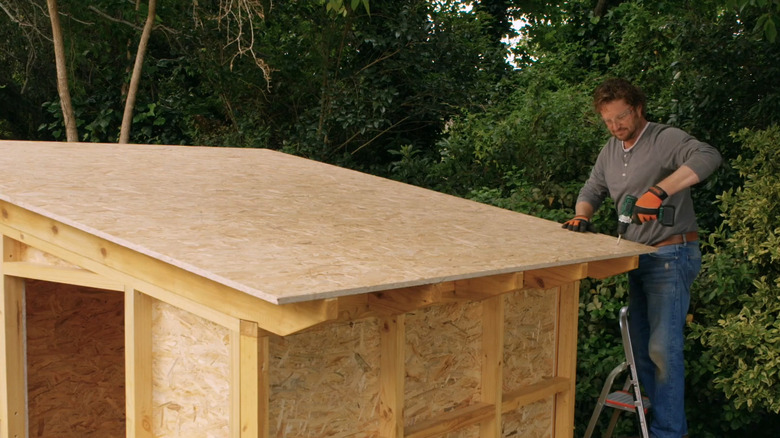
The reason OSB is cheaper than plywood is all in the construction. Since plywood is made with large sheets of solid veneer, those sheets need to be processed from larger, older trees. OSB, meanwhile, can be constructed from chopped-up smaller trees that don't need to grow for as long as the ones required for plywood. As such, it can be manufactured faster and more sustainably, as many of the trees used to make OSB are farmed poplars.
That said, while you will be spending less money using OSB to build a shed, does that mean it is an overall better material? Well, there are a lot of pros to OSB besides its cost-effectiveness. It's in the same structural category as plywood, meaning that it is sturdy enough to provide rigidity. OSB can also be manufactured in larger sheets of up to 8 by 24 feet (unlike plywood), so you'll need less of it for your shed project.
However, OSB has a major weak spot: moisture. Once OSB gets wet, especially along the edges, it will swell and remain permanently swollen, creating uplift in any materials that have been laid over it, such as shed flooring or roof shingles. Even so, if you're on a tight budget for your perfect shed build, OSB can save you cash and give you a solid shed, so long as it's made watertight.