

Keep Grass Out Of Gravel Driveways With A Durable Edging That Looks Good
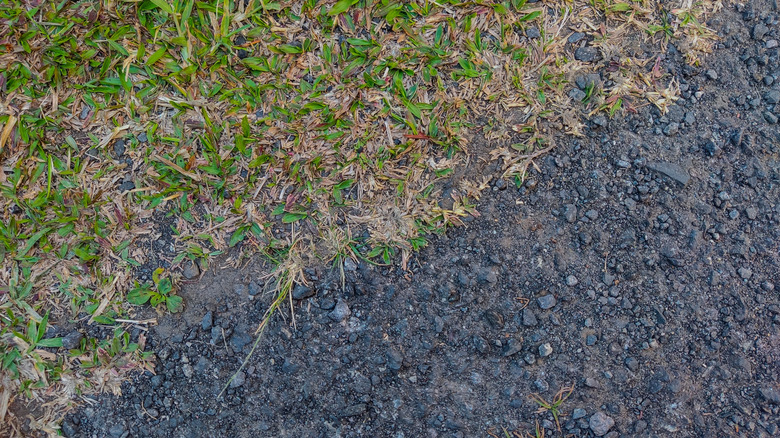
It seems that grass and gravel are destined to be mortal enemies. No matter how hard you try, grass and weeds will try to grow through the gravel or encroach on it from the lawn. The former can be remedied with regular weeding and replenishment of gravel. Fixing the encroachment of your lawn can be a little more difficult, depending on how much frontage it has along your driveway. Thankfully, you can say goodbye to grass growing in your gravel driveway by using durable and stylish granite edging.
Granite is a natural igneous rock that's popular for landscaping, indoor tiles, and countertops. Its density, low porosity, and high heat tolerance allow it to consistently withstand outdoor elements. This makes granite a reliable choice for driveway edging. It'll help prevent materials like gravel from spreading and, at the same time, provide a definitive border that keeps grass out, assuming proper installation.
Apart from being a practical addition to your front yard, granite edging is visually appealing. The natural minerals and organic patterns present in this rock give it a textured surface, creating clear definition between aggregate gravel and lush grass. Available in a variety of colors — including white, dark gray, and red– granite can also work well with any driveway style.
Types of granite edging for your gravel driveway
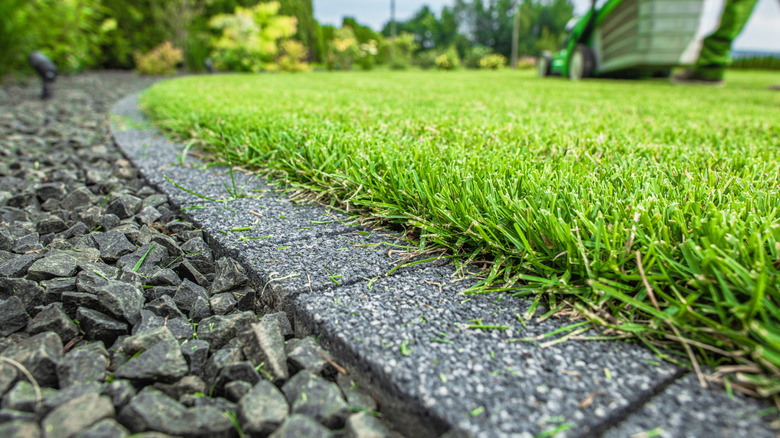
When choosing what type of granite to use as a border for your gravel driveway, you need to consider the driveway's length and shape. For a straight driveway, granite curbing offers clean lines for seamless alignment. These units often come in 4-foot lengths, so a 20-foot-long driveway with lawn bordering both sides would only require 5 curbing blocks per side, for a total of 10 blocks.
Alternatively, you can select granite cobblestones or Belgian blocks, which come in smaller, individual units that fit many driveway shapes and provide a more traditional, rustic quality than granite curbing. The edging should be sunk at least 4 to 6 inches into the soil to prevent underground grass runners and left 2 inches above ground to keep any surface growth at bay. Therefore, a standard 10-by-7-by-4-inch cobblestone paver will need to be installed vertically in order to achieve this.
If you don't want either curbing or cobblestones, you can line your gravel driveway with durable granite boulders. These can be sourced for free from your own property if you happen to live somewhere like New Hampshire, where granite rocks are abundant. The main issue with this option is that, depending on their size, the boulders could be difficult to move. Regardless, all these types of edging will serve the additional purposes of framing your driveway and helping prevent erosion.