

Not Bricks, Not Pavers: The Durable Driveway Edging Idea That Upgrades Curb Appeal
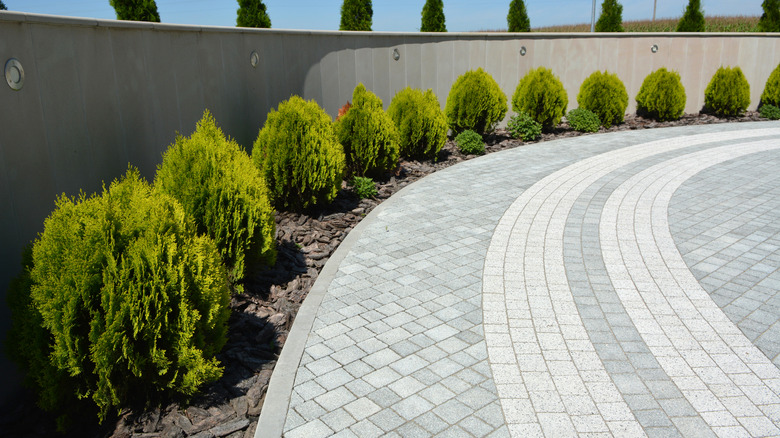
There are two main things that driveway edging needs to accomplish. First, it needs to protect your driveway. It does this by holding loose paving materials — like gravel — in place to prevent erosion and by providing a place for water runoff for solid surfaces like concrete. Second, it needs to boost the visual appeal of your driveway. Classic edging materials like bricks or pavers make for a clean, sophisticated look. However, neither of these can compare to the durability and aesthetics of boulders.
A landscaping boulder is any rock greater than 16 inches in diameter. If there are plenty of boulders already on your property, you can simply use these for your edging. If you don't have any, they are readily available for purchase. You might even get lucky and find free stones in local Facebook groups. Common types include limestone, river rock, sandstone, fieldstone, quartzite, and granite. The availability of these rocks is also dependent on where you live. For example, granite is highly common in New England, whereas sandstone is more prevalent in Colorado.
Pricing for landscaping boulders can vary greatly based on the type, size, and weight of the boulders. On average, boulders cost $250 per ton. Now, that could be the price of a single large boulder. Depending on how many you need, plus their size, you could end up paying thousands. However, the higher price might be worth it because of the fact that boulders are durable in just about any weather and require next to no maintenance once installed.
How to use boulders to edge your driveway
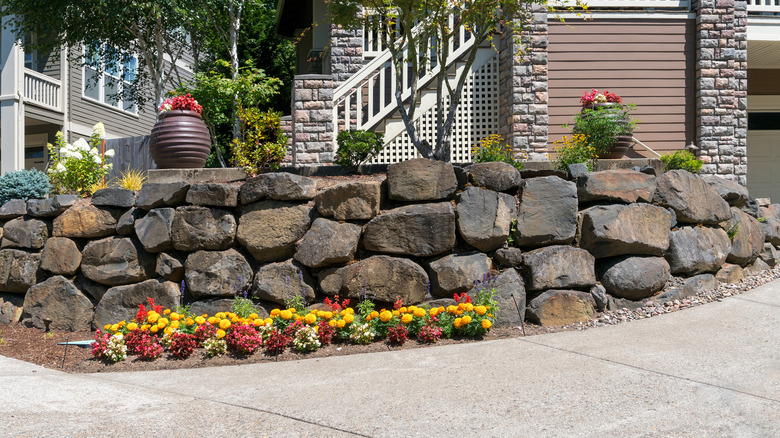
When using boulders to edge your driveway, it's important to style them correctly. Not only should you choose boulders that complement your home's exterior, but you should also arrange them in a way that makes them look like a natural part of the landscape. You can do this by layering different sizes of boulders in clusters and by adding additional edging like smaller stones or gravel. While you're at it, consider integrating low-growing ground cover plants or shrubs to add organic value.
Just as important as the boulders themselves is the ground on which they will sit. The ground needs to be graded in order to ensure proper water runoff. As far as placement goes, boulders work incredibly well on sloped driveways because they are strong enough to hold soil in place, even during periods of heavy precipitation.
In terms of installation, it's possible to move these large rocks by yourself. However, getting a professional landscaping company with the right equipment to lay your driveway edging might be a safer option, especially if the boulders in question are especially massive. This will be an additional cost, but again, it could be worth it to make sure that the job is done correctly.