

Keep Your Old Paint Can To Build The Easiest Bird Feeder
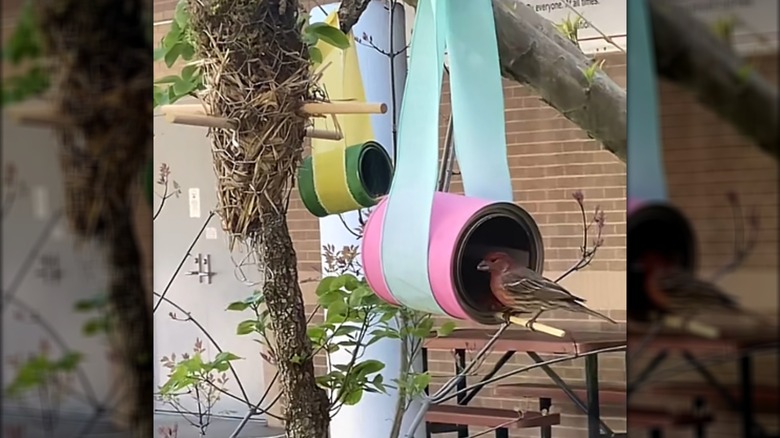
Ready to open a bird bistro in your backyard? It doesn't require a hefty investment in mass-produced supplies. There are plenty of foolproof ways to attract birds to your yard without buying a feeder. In this case, you can make one using an old paint can with inspiration from That STEM Guy on TikTok. The creator did this simple project with a group of kids in a school setting. Each bird feeder consisted of an old paint can turned on its side and a large, wide ribbon attached to create a simple hanger.
The obvious advantage here is saving money over buying a bird feeder. Plus, it's a good way to clear some of those old paint cans from your garage shelf without sending them to the landfill. You might not think about the added benefits of putting a bird feeder in your garden when you make this paint can upcycle. Seeing birds nibbling from the paint can feeder you make could boost your mental health, and all those birds could eat insects in your yard, too. So it's eco-friendly in multiple ways.
Paint cans come in different sizes, with common options ranging from pints to gallons. This makes it possible to create bird feeders of different diameters. Pint-sized cans are usually a little under 4 inches in diameter, quart cans are about 4¼ inches in diameter, and gallon-sized cans are around 6 ½ inches. As long as the can's opening is large enough for the bird's head, it should work, as you'll add a perch to the outside.
Create budget-friendly paint can bird feeders
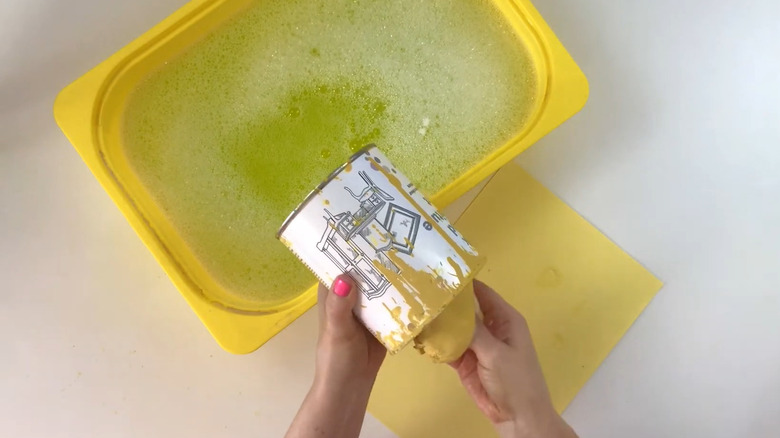
Cleaning the paint out of the can might be the most challenging part of this project. Warm, soapy water should remove a lot of the paint, and letting it soak can also help. Using a scouring pad or scraper can help clean off dried paint. Avoid using any harsh chemicals to remove the paint. The birdseed goes inside the can, so you don't want any harmful residue on the surface.
@that_stem_guy DIY Paint Can Bird Freders: Perfect little Earth Week STEM project. Students checked out AllAboutBirds.org and played some fun learning games & watched some live nest cams while their paint dried! #stem #elementaryschool #teachersoftiktok #engineering #diy #birdfeeder #earthday #birds
Now that the paint is out of the can, add a coat of fresh paint on the outside to make the feeder look pretty. Go with a solid color, make stripes with painter's tape, or freehand designs on the can. Using exterior paint or applying a sealer over it can help prevent peeling. Glue a thick, sturdy twig or dowel rod inside the can, so it sticks out a few inches to create the perch. If you want to create a collection of feeding spots with a similar design, turn empty soup cans into adorable feeders, too.
To hang the paint can feeder, glue a wide ribbon around the center of the can, and make a loop to hang over a branch or hook. You can also twist wire around the can — using two pieces, one at each end, gives the feeder more stability. Or, screw the can to the top of a wooden post to secure it. Another option is to screw or glue the bottom of the can to a fence or a board. Then, pour birdseed into the opening.
Ways to upgrade or customize your paint can bird feeder
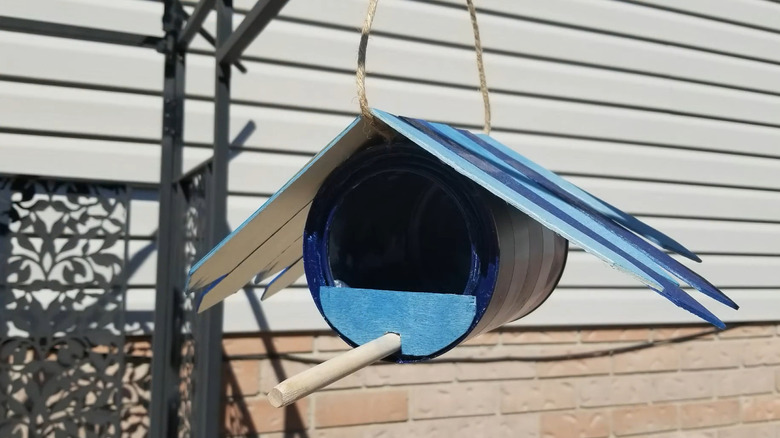
The original design is the easiest version of the paint can bird feeder, but you can upgrade it if you want to spend a little more time on the project. On the YouTube channel DIYS at the Schwowin's Nest, the creator adds a small piece of wood near the perch to help hold the birdseed in. She also adds a roof by gluing several wood planks along the top of the can. This can help keep rain out of the birdseed if you make an overhang to protect the opening.
Another way to adapt the project and serve more feathered friends is by creating multiple paint can bird feeders. You can hang them individually in different trees or group them together. Attach a row of the can feeders along a fence or on a long board, for example. Or, glue multiple cans side-by-side to create a hanging row. To create a dual feeder, glue two cans with the flat bottoms together, so there's an opening on each side. You can also achieve a double-sided feeder by removing the bottom from the can and attaching a perch onto that end as well.