

Everyone Had It In The '30s — Now It's The Vintage Floral Vase We Want In Our Homes
We may receive a commission on purchases made from links.
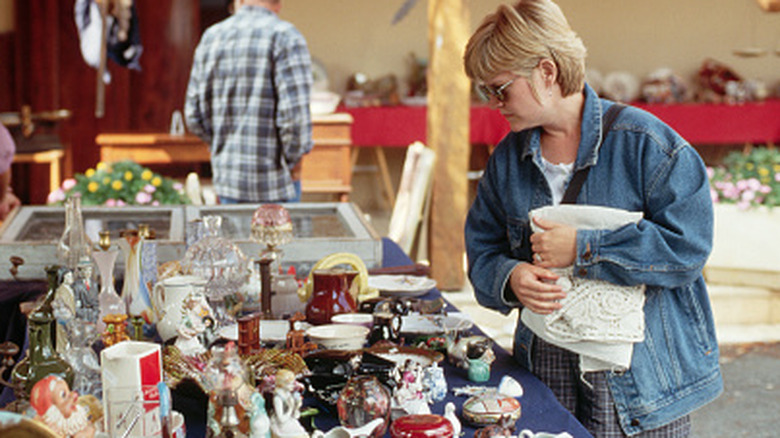
No home is complete without a hint of greenery, but if the blooms in your bouquet could use some oomph, now is the time to double down on flower arranging hacks. The biggest game-changer is a flea market find that at first glance might look more like a paperweight than a botanical helper. You've seen them: the circular ceramic, bronze, and glass accessories with holes or beehive-like grids. Perhaps you've seen the pincushion-like accessory with small spikes. Those are flower frogs, which keep stems perky, and in turn, your bouquet full and well-organized. Flower frogs stole the show in the 1920s and '30s, but the vase's rich history dates back much further.
In the 14th century, Japanese flower arranging — the art of ikebana — took hold, and it required intricacy. To achieve the perfect aesthetic, flower "frogs," round pieces of iron with openings, were placed at the bottom of a vase and stems were separated within the grid. The small tool eventually evolved into different materials and motifs, but the name "frogs" likely came from Americans when they took interest in the accessory in the late 1800s. As a result, flower frogs from that time embodied their original foundation, but newer versions added an Art Nouveau touch with ceramic dancing lady figurines in nature-inspired colors. Those flower frogs are valuable items you shouldn't overlook at flea markets and thrift stores.
How to spot and style a flower frog vase
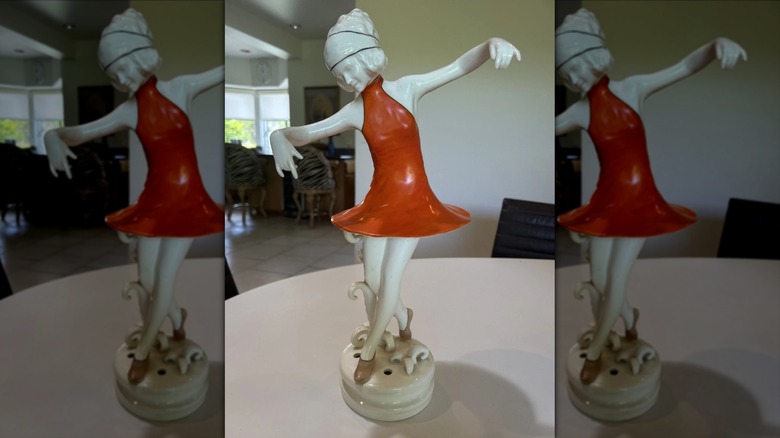
Part decor, part floral organizer, the dancing girl with drapery flower frogs were a staple in homes everywhere in the early 1900s. You can spot them fairly easily in thrift stores due to their elegant appearance, unique colors, and air of sophistication — as well as the holes for stems. When checking country of origin, bear in mind that these statements made their way abroad, too. In addition to American companies creating the balletic piece, artisans in Japan and Europe, particularly Germany and the Czech Republic (then Czechoslovakia), also created these highly-sought-after gems. Today, it's not uncommon to see prices for these vintage pieces start around $50 and average around the $100 mark on retailers like eBay. As the pieces evolved in the 1900s, animals were thrown into mix (this style being particularly popular in the 1930s) and shapes began to change; as a result, prices nowadays can climb into the hundreds, and in some cases up to $1,000.
Not only is this valuable vintage pottery piece one for the books, but it's also a green alternative to using foam squares to organize stems. Plus, it's a nod to a rich history many of us did not experience firsthand. Keep it on display where it can make a statement, and opt for florals in complementary colors that will accentuate the girl's drapery. If you have a few to display, consider lining a shelf or mantel with different pieces in various heights and mix up the florals for a fun pop.