

The Unique Mason Jar That Collectors Love Finding For Its Vintage Charm
We may receive a commission on purchases made from links.
Mason jars have earned their place in the home. They're handy, and can help you organize your kitchen or other household items. Perhaps best of all, they're usually affordable. Some can actually be worth collecting rather than filling with spare buttons. If you spot an old aqua or amber-colored Mason jar while thrifting, add it to your cart. It could be something worth holding on to.
The story begins with John Landis Mason, who patented an improvement to screw-neck bottles and jars back in 1858 to help prevent farmers with food spoilage. In 1882, Henry William Putnam patented a version of the wire-bail closure for the Mason jars. Instead of twisting off a metal cap, you release a wire fastening that holds a glass lid against a rubber gasket. That quick action of the closure gave them the nickname "lightning jars."
That wire hardware is part of the appeal, and some examples come with a collector's price tag. The more common clear and aqua lightning jars can run around $50, but amber is the standout here. Mason jars of this rare color are a highly sought thrift store find, with some worth around $300 a pop. Of course, that number will all depend on the individual jar's age and condition. If you found one and aren't looking to sell, these jars work perfectly in a farmhouse kitchen as decor, while the rare amber jar is worthy of showing off among other vintage glassware. Whether you're putting them on display or reselling a rare find to put toward next month's rent, these charming jars are worth the time spent scouring the thrift-store shelves.
How to identify a vintage lightning jar
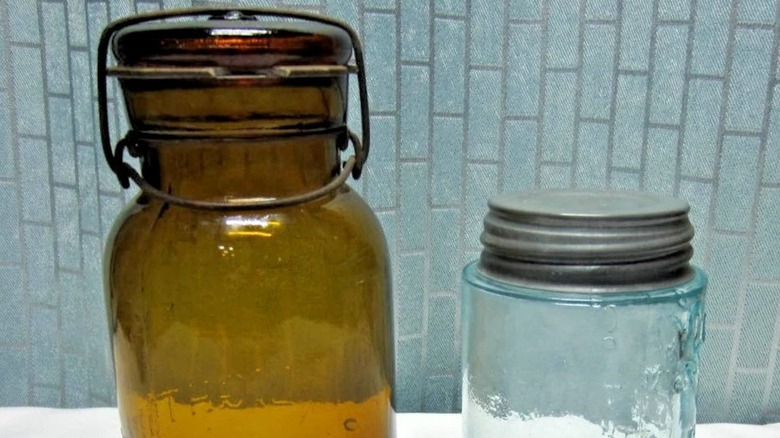
Think you've found something that's not your average Mason jar? Start with the closure to help narrow down what you're looking at. Look for a glass lid held down by a wire bail and lever. On older examples, a wire circles the neck and anchors the fastening mechanism to the base of the jar. Later versions may have molded dimples in the glass to support the wire instead.
Next, turn the jar around and check underneath. A lot of Putnam examples have "Trade Mark Lightning" embossed on the front and "Putnam" with a mold number on the base. Others carry the wording entirely underneath or use the initials "H.W.P." You might assume those numbers are production dates — they're not. They actually serve as an identifier to different molds. Reproductions do exist, including jars made in shades that resemble desirable antique examples. Collector websites specifically caution collectors about modern reproductions in unusual colors, so lettering and color alone won't authenticate your find. If the asking price is substantial, it might be best to consult a specialist before buying.
Finally, give the rim, lid, and body a quick once-over for chips or cracks, and note missing or replaced hardware. If you're thinking of purchasing, quickly search and compare recently sold examples with the same markings and condition of your jar so you don't get scammed. If you definitely have a lightning jar and want to sell it for a profit, take photos of any identifying numbers and damage, as potential buyers will be interested.