

Old Mason Jars Of This Rare Color Are A Highly Sought Thrift Store Find
We may receive a commission on purchases made from links.
Time was, if you didn't preserve your garden bounty in the fall each year, you were going to be very hungry throughout the winter. There are a lot of ways to keep food fresh today, but food preservation was once a tricky business, taking early scientists years of trial and error to figure out safe storage in the era before refrigeration. In 1858, a 26-year-old tin smith named John Landis Mason patented a glass jar that quickly became the go-to for safe canning. This jar was revolutionary because it had a tightly fitting screw-on cap that kept out air and bugs and all the things that would spoil stored food. These antique "Mason's jars," whose modern versions are still used for canning and food storage today, now line thrift store shelves in a variety of fun colors. Mason jars were often manufactured in blue, green, and purple, which helped reduce how much light and UV rays could penetrate the glass, helping with food preservation. One rare jar color has become a valuable stand-out on resale and antique sites, fetching top dollar: olive amber.
Brands Atlas and Ball, who in the late 1800s and early 1900s were the main manufacturers of these jars, made them in a variety of hues. Jars of olive green are considered some of the rarest and most valuable, and many in this color family have sold on resale and auction sites for hundreds of dollars. One quart-sized Ball jar described as being "golden olive amber" sold on eBay for $250, and another olive jar with yellow hues sold for $320, although more commonly these jars go for between $50 and $100.
Value comes from more than just color
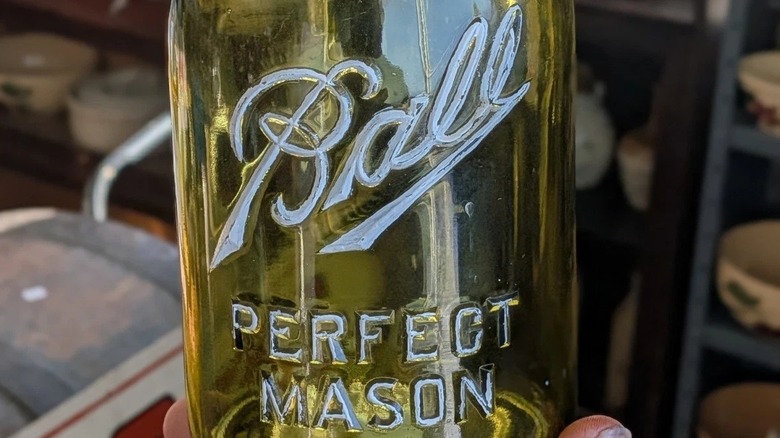
Whether you are looking for one for its resale value, or just want a fun color to use for for some clever Mason jar kitchen organization, don't pass up a jar of olive amber. But remember to look at other aspects of a thrifted green jar to make sure it is a worthy purchase. Age is important, and you can often tell when a jar was made by the label embossed on the glass. For example, Ball jars labeled "improved," "special," or "perfect" were made in the late 1800s to early 1900s. Older jars made by the Hazel-Atlas company will simply have "Atlas" as their manufacturing label, and won't have seams. Jars with in tact, zinc, or integrated glass lids typical of antique jars will also fetch more on the resale market than lidless or more modern screw top jars.
Most older Mason jars also have a number on the bottom, which corresponds to the type of mold used in their production. While this won't help you determine age, Ball jars with the uncommon Mason jar mold number 13 can fetch a pretty penny due to a story that moonshiners destroyed these jars because they were considered unlucky. If you are curious about whether a jar is valuable, peruse what has recently sold on online auction sites or check out the Red Book of Fruit Jars for guidance.