

Not Your Average Mason Jar — This Vintage Find Is A Collectible Worth Hundreds
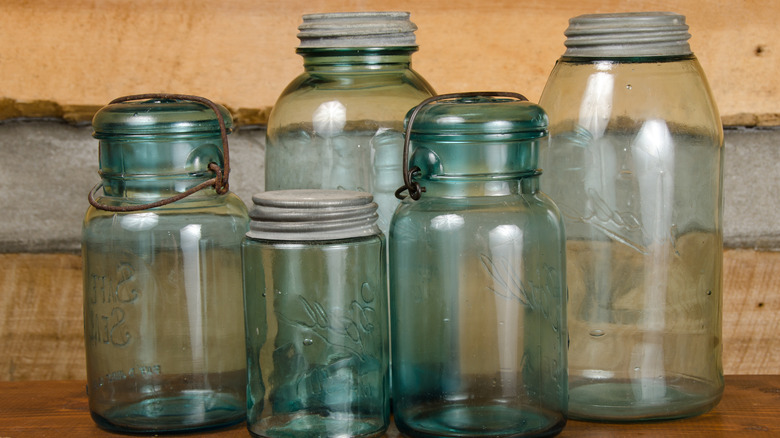
Mason jars are the perfect collectible for new and seasoned thrifters alike. They come in an array of sizes and colors, and look gorgeous when you line them up on your windowsill with fresh-cut flowers, or place them on a shelf filled with pantry essentials. You can even transform old Mason jars into beautiful bathroom countertop décor and storage. While they offer a practical way to hold on to an iconic piece of American history, some of these canning jars are more valuable than others.
Mason canning jars were invented in 1858 by the Ball Corporation, as a way to preserve crops before home refrigeration became a thing. The simple design and easy application revolutionized food preservation. Because they are durable and last, canning jars are easy to snag at garage sales, thrift stores, and antique malls often for just pennies.
Before beginning your search, it's a good idea to learn what exactly to look for. Among the most valuable and interesting variations is the legendary upside-down Mason jar. Produced in the early 1900s, this jar has sparked debate on its very existence. Some say the jar was a factory misprint, while other collectors argue that the jar was intentionally printed that way to store coffee and attach to a special grinder. Regardless of its origin, this jar is one of those rare pieces that can easily turn a thrift store run into a profitable treasure hunt, with some jars bringing as much as $1,000 at auction.
Knowing what features to look for can help you spot a valuable jar
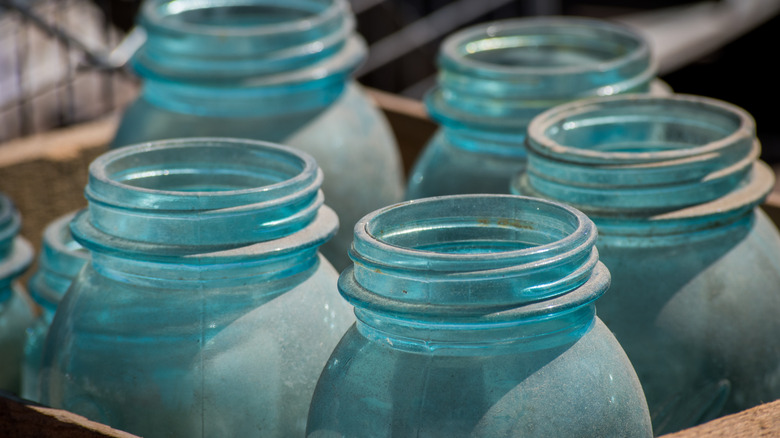
When shopping for vintage Mason jars, first look for rich cobalt blues, ambers, and deep olive glasses, which are often worth much more than standard clear or pale aqua jars. Inspect the glass carefully for cracks and chips that can significantly affect the value. You should also flip the jar over and look on the bottom to see if you can find the number 13, which is an uncommon number on thrift store Mason jars.
Check the front logo for unique embossed lettering, as this can help date the jar. From 1895 to 1896, the Ball logo appeared as blocky letters. The first script logo appeared in 1895, but in a straight line, and the "B" in the logo was an open loop. The closed loop "B" didn't appear until 1969, which is what is still produced today. The upside-down Mason jar has the Ball logo with the open "B" and the script with a line underneath. Mason will be embossed in block letters underneath. Both lines of lettering are completely inverted in comparison to standard jars.
Finally, most vintage upside-down mason jars come in quart size and feature a distinctive, heavy glass base. As with all mason jars, you'll note a mold seam running along one side, and the bottom will be perfectly flat. The bottom of the jar may have a series of numbers, which indicate the specific mold used in manufacturing. Mason jars are just one of many valuable antique and vintage containers to look for at thrift stores and estate sales, so always be on the lookout.