

Is October Too Late To Aerate A Lawn?
As spring arrives many of us have visions of a lush, green lawn. But what if that emerging spring grass would have benefited from some attention way back last fall? Homeowners often are confused as to when to aerate their lawns. The answer to this question depends on the type of grass you have growing in your yard. Typically, fall is a great time to aerate cool-season grasses like tall fescue and Kentucky bluegrass. Since you should aerate before the first hard frost of the season, early October fits this timeframe perfectly in most parts of the country. Warm-season grasses, like Bermuda and zoysia grass, should be aerated in the spring.
There are two types of aeration: core and spike. Spike aeration devices simply punch a hole in the ground without removing any soil. This can actually increase compaction and harm, rather than help, your lawn. According to the North Dakota State Cooperative Extension, core aeration is best. Core aeration removes grass, thatch and soil, helping water, oxygen, and nutrients better access the soil (and roots) for healthier grass. And, fortunately for many homeowners, October is a great month for this task as long as you're dealing with cool-season grasses. Not only are the conditions good for lawncare, they're also more comfortable for the people doing the yardwork.
Why aerate lawns in the fall?
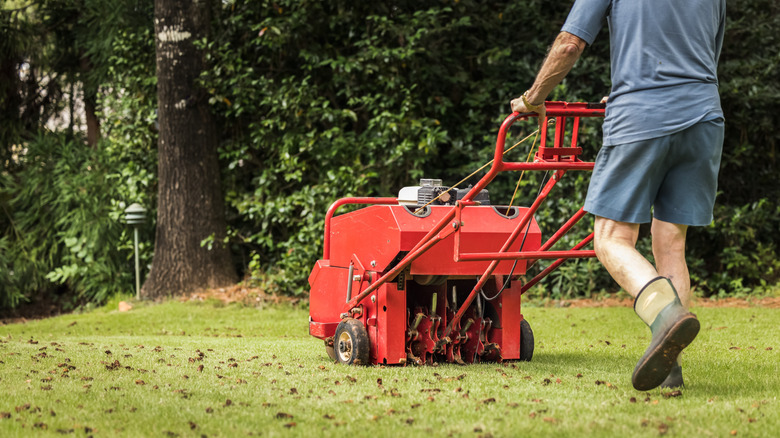
Coring reduces thatch and, as mentioned above, does a bunch of other good things for your lawn. Chopping those cores out of your lawn does some damage, but doing it in the fall allows that damage to begin healing before winter sets in, and then completely heal in the spring. You should always overseed your lawn after aeration to ensure robust growth; the holes left by the machine will be filled with new grass seed. You can rent aeration machines or hire someone to do the work for you. Or, if you have the equipment, it's certainly something you can do yourself.
To get even more bang for your buck, there is a tactic you may wish to employ before you put your aerator into action. Top dress the lawn with a thin, fine layer of compost, spreading it evenly and working it into the soil with a leaf rake. Perhaps you can use a mulching lawn mower blade on your fall leaves to add additional plant material, too. Then, use the core aerator to aerate your lawn. Overseed after you've finished, then water. This adds nutrients via the compost for a lush, green lawn.