

Here's Why Crabgrass Is Taking Over Your Lawn And What To Do About It
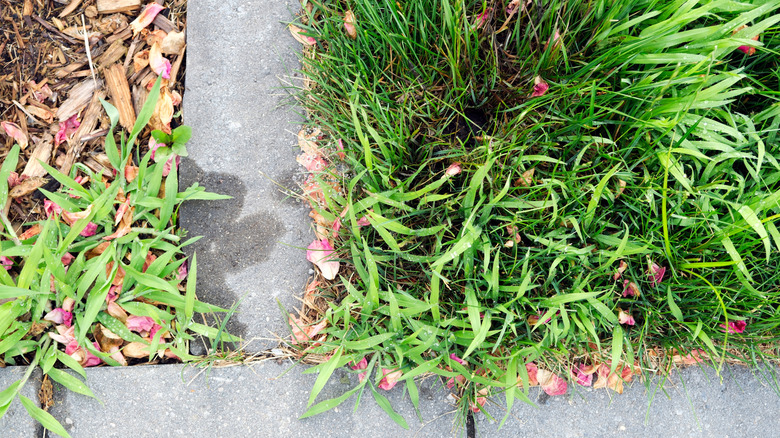
Nothing puts off a lawn enthusiast faster than weeds. After bartering your weekends away on regular mowing, irrigation, and fertilization, surely the grass should look lush and healthy. Yet, as you're taking in the turf, you notice thick, pale green, fork-shaped blades standing out from the manicured, deep green grass. Ugh, is that crabgrass again? There's a reason it's taking over your lawn: excessive thatch.
In an exclusive interview with Hunker, Jon Sneider, owner of Jon Sneider Lawn Care & Tree Service, explains, "Excessive thatch can contribute to crabgrass problems by creating an unhealthy lawn and preventing water and nutrients from reaching the soil properly. Because it disrupts water movement and healthy root development, it can make it difficult to maintain thick, dense grass." Even though crabgrass has an annual lifecycle, meaning it dies by frost, it remains a nuisance year after year because it self-sows. So, when the weather warms up in summer, usually after you've seen the last of Forsythia blooms, these self-sown seeds germinate and rapidly grow, monopolizing the space. Sometimes, when thatch, which is the brown layer between the soil and grassy blades, grows over ½ inch thick, it weakens the turf and exacerbates weedy pressure.
Sneider believes crabgrass typically takes over when it finds exposed areas on the lawn. "It's important to note that thin or stressed grass and bare soil are bigger factors in allowing crabgrass to establish," he says. "This is especially true in sunny areas where crabgrass and other weeds take advantage of patchy areas." The situation is often worse when the turf is undergoing drought or heat stress.
Manual removal, herbicides, or reseeding — how to eliminate crabgrass
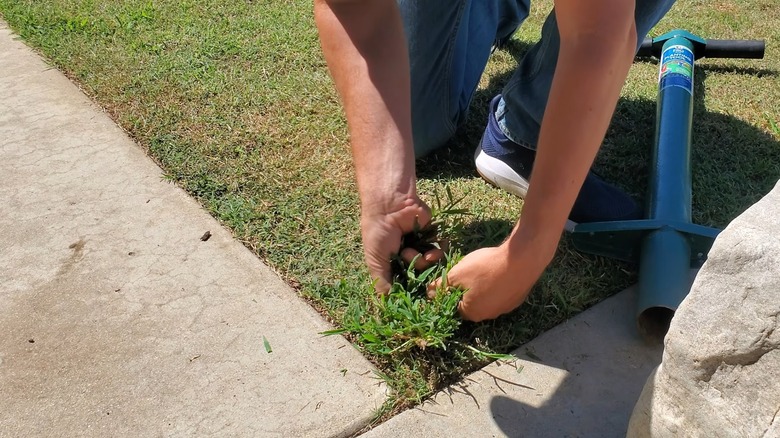
The best way to get rid of pesky crabgrass before it takes over your yard is to pull it out by the roots, preferably before it has had the time to set seeds. Be warned, though, that it will require lots of elbow grease and may only be suitable for small infestations. "If it's already past the stage where you only have a few that can be pulled out or removed before the spread happens, use a crabgrass post-emergent spray specifically labeled for use on [your] type of lawn," says Sneider. Approved active ingredients include quinclorac, topramezone, mesotrione, and fenoxaprop p-ethyl, but be sure to verify their potential impact on your grass.
Although spraying post-emergent herbicides may seem like one of the easiest ways to kill crabgrass, do note that it will not prevent new seeds from germinating. This explains why crabgrass keeps coming back in August and September, despite chemical treatments. Moreover, cautions Sneider, "You will see the best results if the crabgrass is young." Try to spray emergent crabgrass when it only has three to five leaves; otherwise, you might have to go in with multiple applications. Afterwards, "Aerate and overseed thin areas in the fall to establish thicker turf and repair areas where crabgrass took over," recommends our expert.
However, he adds, "If crabgrass has completely taken over and there isn't a lot of healthy lawn left, it may be more cost-effective to start over by removing the existing lawn and installing a new lawn with either sod or seed." He advises using a good-quality seed blend, as watering it is easier, and the resultant upkeep savings help offset the higher price point.
Maintain a healthier lawn to prevent crabgrass
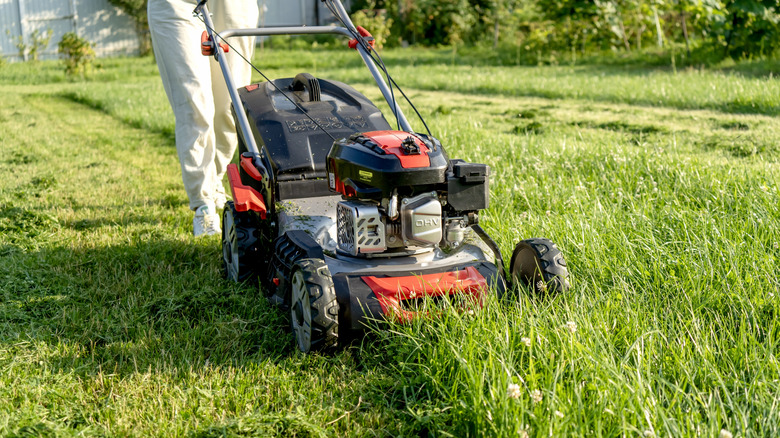
Since excessive thatch can worsen the crabgrass problem, dethatching your lawn can be helpful, believes Sneider. It'll also help pre-emergent treatment to absorb faster and more effectively into the soil. However, he warns that dethatching alone is insufficient to prevent future infestations. You must also focus on establishing a lush lawn. "It's important to maintain a full, healthy lawn with good mowing, watering, and seeding so there is less room in the soil for crabgrass to germinate," he explains.
He particularly advises against mowing too short — cutting off more than ⅓ of the blades or maintaining turf at under 3 inches (unless it's a dwarf variety). The reason? "This stresses the grass and gives crabgrass more opportunity to establish," elaborates Sneider. Although leaving grass clippings on the lawn is beneficial since they decompose to release nutrients into the soil, you must avoid it late in the season to contain spread. "Collect the grass clippings in late summer to early fall since crabgrass seed can be easily spread for the following year," he mentions.
You must complement post-emergent treatments with pre-emergent herbicide applications. After all, notes Sneider, "A single mature crabgrass clump can produce anywhere from 5,000 to 150,000 seeds." And you don't want them to sprout and spread in your lawn. But time it right, as applications are effective only when the soil has consistently warmed to 55 degrees Fahrenheit and is moist. You must also avoid reseeding, as chemicals can damage grass seeds.