

Consumer Reports Picks The Top Washing Machine Cleaner — And You Probably Already Have It
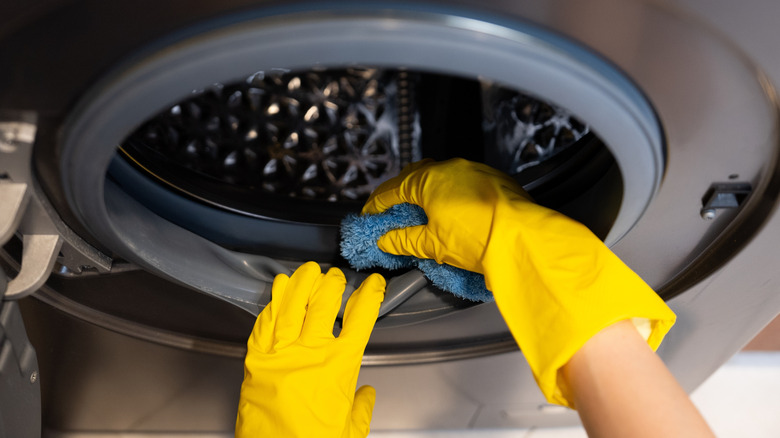
Black gunk on the door seal. A musty smell that will not go away. If your washer has either problem, chances are your washing machine is dirty. After taking a look at washing machine cleaners, you've probably wondered which ones really work. Well, you can stop your search, because according to Consumer Reports, many purpose-made washing machine cleaners do not do much when it comes to cleaning washing machines. Instead, the thing that gives the best results is something far more familiar: bleach — a chemical you probably already have in your home.
In its testing, Consumer Report named Clorox's disinfecting bleach, which is basically regular chlorine bleach with a few extras, its top pick. They found that Clorox disinfecting bleach was the only thing that got rid of black buildup on the rubber door seal (called the gasket). In comparison, all the purpose-made washing machine cleaners failed at this. Where those cleaners did succeed was getting rid of the mildew smell, but so did the bleach.
Bleach is not magic, though. Consumer Reports specifically mentioned that even though bleach got rid of the black gunk on the washing machine's door seal, the door seal was not totally clean. In other words, do not expect it to get your washing machine's rubber gasket squeaky clean by running it with bleach alone. To do that, you will have to clean it regularly—it's worth it too, as it helps prolong the life of your washing machine.
How to clean your washing machine with bleach
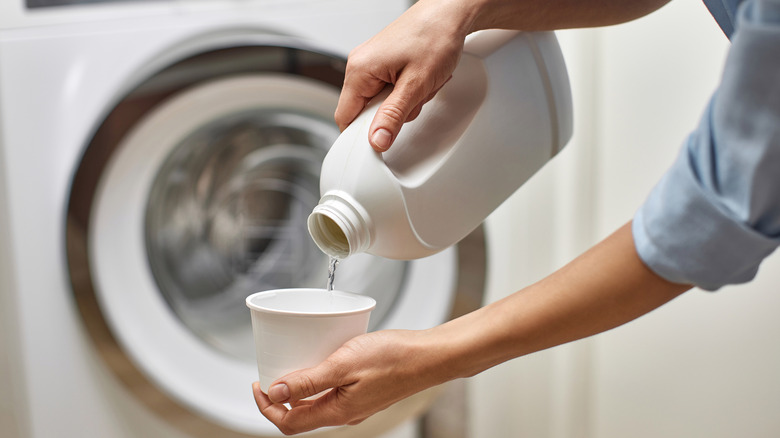
Before cleaning your washing machine with Clorox disinfecting bleach, check your washing machine's manufacturer's guidelines, because some brands specifically call for using oxygen bleach, which is different than chlorine bleach. Also, when using bleach, make sure that you have rubber gloves on and doors and windows open for ventilation. Better yet? Wear eye goggles. Otherwise, this cleaning process is pretty simple.
Once you are ready, apply bleach and water to a microfiber cloth and wipe deep into the folds of the seal, rinsing the cloth often and adding more bleach as needed. After several rounds, the black buildup should look much better. You can also pour ¼ cup of bleach into the washing machine's bleach dispenser and run a tub-sanitize cycle to get the inside of your washer sparkling clean as well.
Then, once the tub-sanitize cycle is complete, run an extra rinse cycle to get rid of any residue, wipe the gasket dry, and that is it. Now all you have to do is leave the washing machine's door open so the drum can dry fully. Lastly, keep in mind that you should never mix bleach with other cleaners or disinfectants when trying to clean your washing machine. Doing so can release dangerous gases, which can lead to health problems. Also, if you are using any bleach other than Clorox disinfecting bleach, make sure to check its strength on the label, as higher concentrations may need to be further diluted or used in smaller doses.