

7 Rare And Valuable Vintage Lamps To Look For At The Thrift Store
We may receive a commission on purchases made from links.
Vintage lamps may not be the first thing most people look for when thrift shopping. They're not the usual exciting thrifting finds, like designer clothes, gold jewelry, or vintage dishware patterns. But for collectors and resellers, the right rare vintage lamp can be the finishing touch to a valued collection, and some can bring big money to the bank. Take a look for these seven valuable lamps in the home goods section when you next hit the thrift shop, because these sweet secondhand finds may be your next bedside lamp or, in one rare case, your new retirement fund.
Some of the rarest and most valuable vintage lamps may not look like what you imagine. For example, a vintage lotus flower lamp immediately draws the eye, but it also sells fast. Instead, look for the vintage lamps that are diamonds in the rough, the ones that may be smaller and hiding behind larger lampshades.
What makes a vintage lamp valuable? Like a lot of products, it's often about brand recognition. Big names like Tiffany, Handel, and Pairpoint will offer lucrative sales. Rare beauties like the Laurel mushroom lamp or the Fulper Vasekraft line will draw in big bucks for the right collector. And reverse-painted lampshades create scenes that can match both modern and antique decor. From pottery to stained glass, here's a roundup of rare and valuable vintage lamps worth looking for at the thrift store.
Slag glass lamps
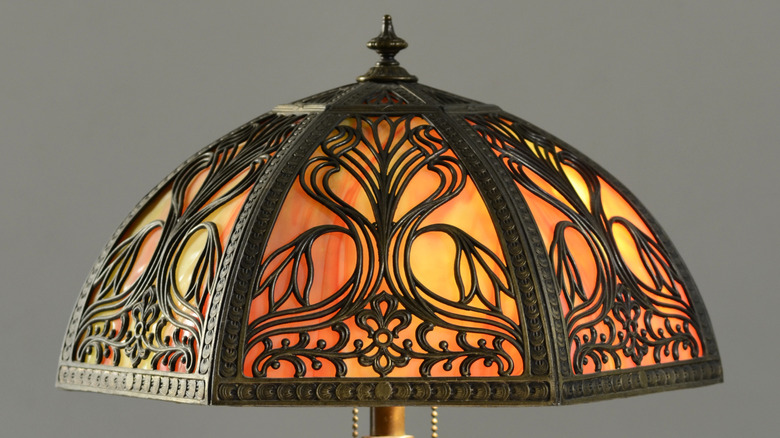
"Slag glass" refers to the type of material used in these intricate vintage lampshades, an early example of upcycling. Slag, the marbled byproduct of steel production, was incorporated into glass for vases, jewelry boxes, and lamps. Slag glass hit its stride in the late 1800s with both the Art Nouveau and Art Deco periods, since the dark metalwork over slag glass panels could be designed with curved motifs or geometric blocks. Even famous studios like Tiffany got in on the trend. Rare colors like pink or red are worth the most, and current sales range from the hundreds to over $5,000.
Reverse-painted lamps
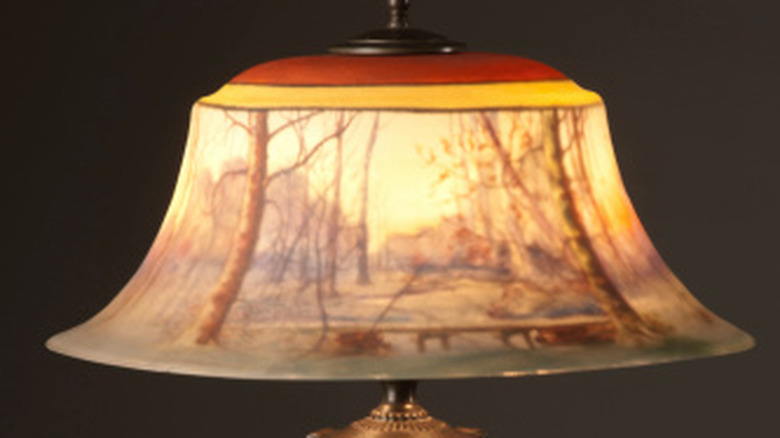
Talk about a trick of the light. Reverse-painting is a technique that creates depth by painting an intricate scene on the underside of the lampshade. This results in a piece of art that truly pops when the lamp is lit. Two big companies produced reverse-painted lamps that are worth a lot today: Handel and Pairpoint. Handel Company, active from 1903 to 1936, was well-known for its reverse-painted lampshades, some of which have been appraised for $15,000 to $18,000 in past years.
Tiffany stained glass lamps
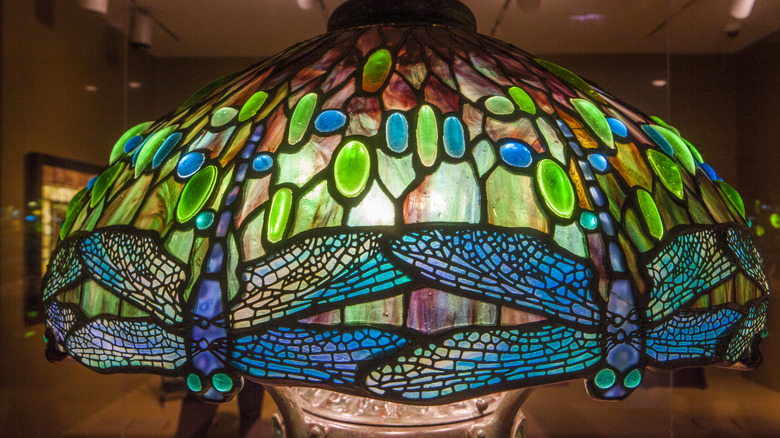
The world-famous Tiffany, the original, the iconic standard. Stained glass Tiffany lamps are wonders housed in museums, but can still be found (if you're lucky!) on thrift store shelves or as the score of a lifetime at an estate sale. The look is often imitated, with "Tiffany-style" lamps still manufactured today. True Tiffany lamps made from 1900 to 1928 had "TIFFANY STUDIOS NEW YORK" stamped on both the base and shade, followed by a model number. Less commonly, lamps from other years may have "TGDCO," "Tiffany Furnaces, Inc.," or "Louis C. Tiffany Furnaces, Inc." as a stamp on the base instead. Keep an eye out for Tiffany lamps: their value can range from $5,000 to over $1 million.
Pairpoint puffie lamps
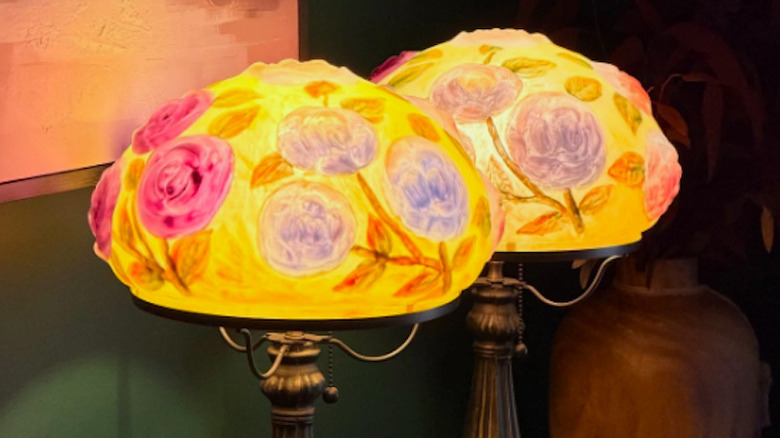
Before puff paint was ever sold in arts and crafts stores in the 1980s, there were the puffy painted lamps from Pairpoint (say that five times fast!). The "puff" of these lamps allowed the flowers, wildlife, fruits, and motifs to literally rise off the lampshade, creating a unique glass look that combined texture and light. Known as "puffies" among collectors, this classic style also appears in modern replicas that offer the charm for less. Look for originals that bear the base mark "P" in a diamond, or "Patented July 9, 1907" on the shade. A replica pair of Pairpoint rose lamps goes for a few hundred dollars on eBay, while one original has been appraised for $15,000 to $20,000.
Emeralite green banker's lamps
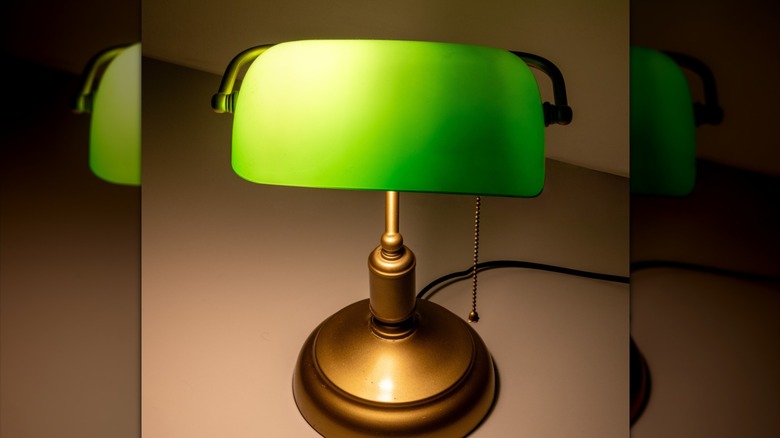
While it seems like every banker and librarian in America once had one of these classic green lamps on their desk, the original Emeralite desk lamps are something rare. They ran from 1909 to 1916 and were made with white opal glass cased in a layer of green. The second run produced lamps from 1916 to the 1930s. The brass base, the iconic shape, and of course, the soft green lighting (thought to be ideal for reading small print; ads touted the light was "kind to your eyes") made it one of a kind. The originals can be found sale for around $2,700, and just the green lampshade alone recently sold for over $300.
Laurel mushroom lamps
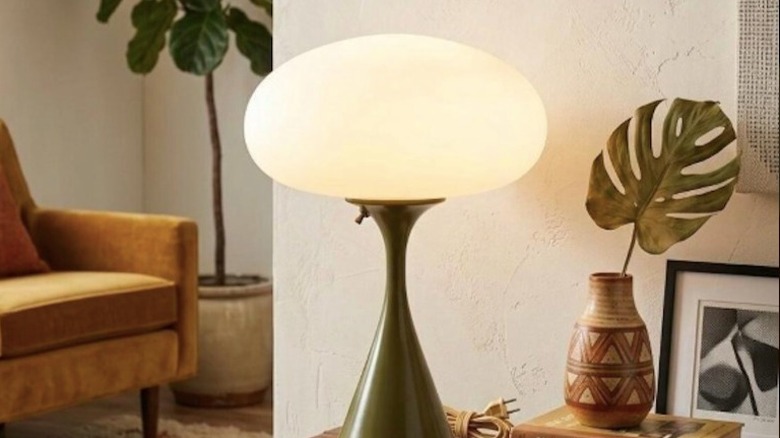
A mid-century modern dream, a Laurel mushroom lamp is a treasure for both collectors and lovers of MCM design. With its American-made design, it can still work as a functioning lamp in modern homes while adding that atomic-age charm. It also inspired countless derivatives: The wide variety of mushroom lamps still sold in stores today owe the Laurel company, active from the 1950s to the '70s, a shout-out. An original Laurel mushroom lamp can range from $500 to over $3,000, depending on its condition. They are sold on sites like eBay and Etsy for around $700, so even if you don't plan to keep it, there's good reason to start hunting for mushrooms at the thrift store.
Fulper Vasekraft pottery lamps
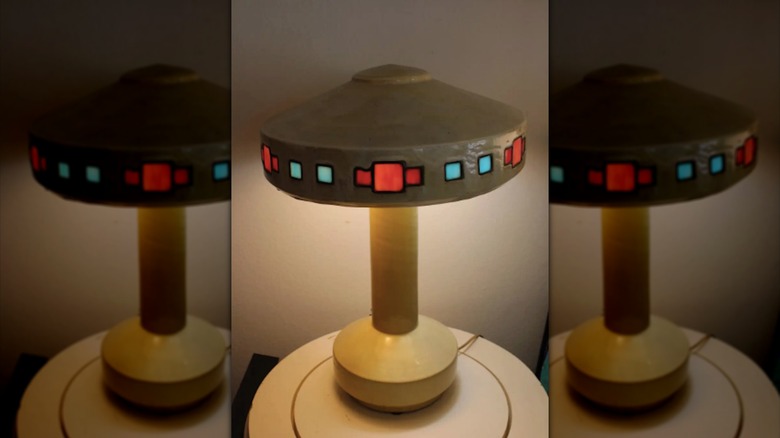
These small pottery lamps may be overlooked for the flashy, bright lights (no pun intended) and swirls of colorful glass on thrift store shelves. But look again. The pottery company Fulper created its coveted Vasekraft line of lamps in 1909. The artistic combination of pottery and opalescent glass in the base and shade was innovative and rare, and collectors pay big for it. A rare mushroom-shaped Fulper that was discovered in a home in New York sold at auction for a record $36,000 in 2006, while the small lamp pictured here is on sale as of this writing for $13,000.