

Do This To Your Spring-Blooming Perennials In October & Thank Yourself Later

As fall sets in and the weather changes, it may feel like your garden tasks are wrapping up for the year. However, October is a busy gardening month, full of jobs that range from raking leaves to pruning plants to harvesting crops before the first frost. October is also an important month to plan ahead and ensure that your garden will be lush and thriving come springtime, and that particularly applies to spring-blooming perennials. For many gardeners, especially those who live in warmer climates, October is well within the recommended planting window; just make sure to consult the USDA Plant Hardiness Zone Map, otherwise you might make a big mistake when planting perennials. Along with planting new perennials, October is the perfect time to care for existing ones, and that can be accomplished by dividing them.
Plant division is a method of propagation where you take one mature plant and split it into multiple different plants. It's one of several helpful fall garden tasks to prepare for spring. Dividing perennials helps to spread out overcrowded root systems, allowing each plant to receive more plentiful water, nutrients, and airflow, which in turn promotes growth and can even rejuvenate unhealthy plants. Plus, it's an easy way to add more beautiful flowers (or tasty perennial herbs) to your garden once spring rolls around.
Easy steps to divide your spring-blooming perennials this October
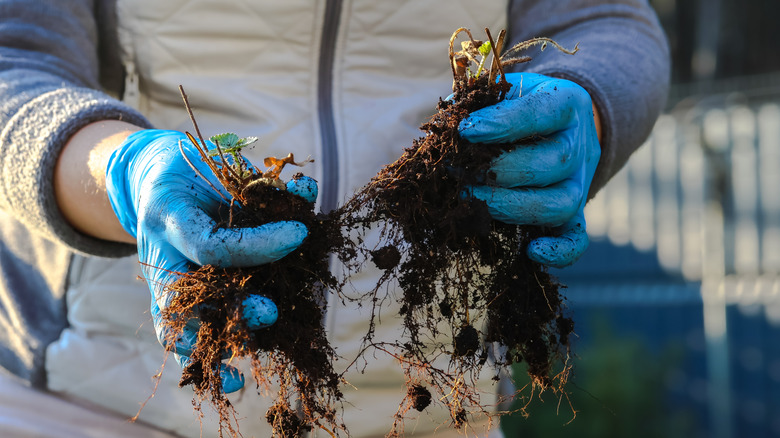
So, how do you divide your perennials? And which ones need to be divided? First, it's important to note that some perennials don't always benefit from being divided. A few examples of perennials you shouldn't split include baby's breath (Gypsophila paniculata), lavender (Lavandula spp.), false indigo (Baptisia spp.), and foxglove (Digitalis spp.). Some perennials that respond well to division are hostas (Hosta spp.), irises (Iris spp.), and peonies (Paeonia spp.), but there are many more. If you're unsure whether to divide your spring-blooming perennials, it's best to consult reliable gardening resources beforehand.
Aside from plant species, the health of a perennial is also important to assess, as ones with stunted growth, diminished blooms, or dead patches could likely benefit from a little more root space. Once you've decided which of your perennials to divide, the process is quite easy. Simply dig up the plant (root ball included) using a spade or garden fork. Next, remove loose dirt around the roots and gently separate the mature plant into separate sections by pulling the roots apart or cutting through the roots when needed. Make sure each section has several shoots and a healthy root system, then replant right away, spacing out each new perennial evenly and thoroughly watering. That's it — the simple process of plant division that will pay off in a few months when your gorgeous spring-blooming perennials start to thrive.