

Say Goodbye To Gravel: The Recycled Weed-Resistant Material For Your Yard
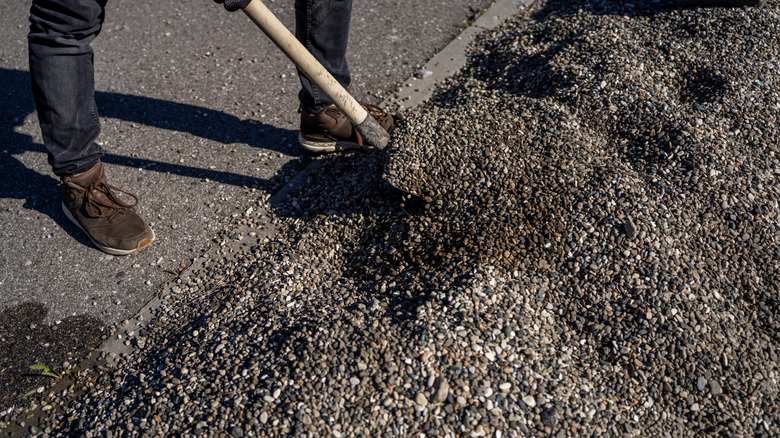
New gravel looks beautiful at first, but it quickly allows water, seeds, and weeds to accumulate. It also needs regular maintenance, such as raking, weeding, and filling holes. For walkways, paths, and empty spots in the yard, crushed concrete made from recycled materials is a good weed-resistant substitute for standard landscaping gravel.
This aggregate consists of crushed concrete obtained from demolished roads, driveways, and constructions, after the removal of any debris and reinforcement steel. While gravel has smooth, round pieces, crushed concrete should have angular particles which, being compacted, fit tightly with each other. Small particles fill the gaps between the bigger ones and create a dense surface with limited access to light for growing weeds. It is precisely this feature that allows crushed concrete to be used as a cheaper alternative to poured concrete driveways.
Crushed concrete is resistant to weeds but not weed proof. As soil, leaves, and other organic substances accumulate, weed seeds can germinate and take root. Just as you need to prevent and remove weeds in gravel, you will also need to take action to prevent weeds in crushed concrete. The key is to create a weed-free base first before adding it to a walkway or other garden project.
How to use crushed concrete in your landscaping
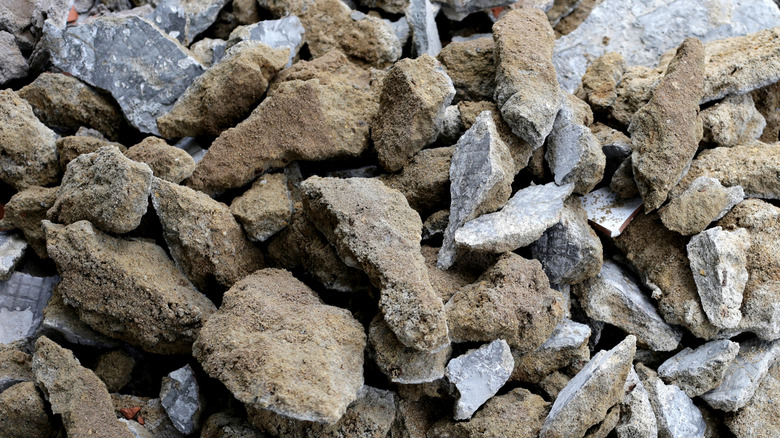
Ideal areas for the use of crushed concrete include garden paths, side yard paths, utility areas near sheds, and wide borders. Due to the rough nature of crushed concrete, it is not recommended to use near swimming pools, playgrounds and patios.
This process of landscaping with crushed concrete starts with clearing the area of all the grass, weeds and roots as well as the loose soil in the ground. Edging should be added in cases where crushed concrete will be near a lawn and flower bed since the material has a tendency to spill over from where it was placed initially. Product size is also important. A product that is mixed with finer particles or "fines" is going to compact more and make a harder surface. This will normally be the choice that works best for your walkway. A washed and coarse product will have less fines; it won't compact as well.
If you're going to use it as mineral mulch, adding a depth of 4 inches will work better than spreading a little bit over the surface. Add it in layers and moisten it lightly to reduce dust. Unlike traditional organic mulch, it won't decay and add nutrients to the soil, but it will allow plenty of water to drain through to the plants' roots, making it a good choice for arid areas. Avoid using it near acid-loving plants, as over time, it can raise the soil pH too high for them.