

How To Fix Cracks In Asphalt Driveways In Two Simple Steps
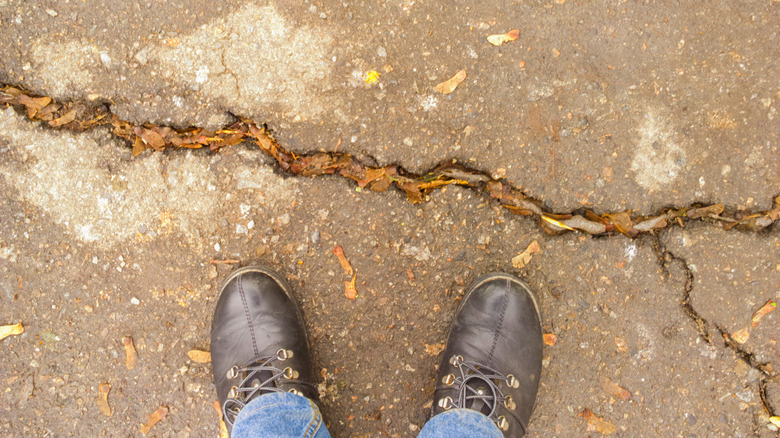
Cracks can take an asphalt driveway from sleek to unappealing in no time, but your driveway doesn't have to stay like that. While one of the downsides to asphalt driveways is that cracks can worsen relatively quickly, it isn't difficult to fix them and stop the damage from spreading. In fact, it only takes two steps to get the job done. First, you clean the crack, and then you fill it with an asphalt filler. The amount of time it takes depends on the number of cracks your driveway has, as well as how large each one is, but it's generally a fairly quick process. However, asphalt fillers can take at least a full day or two to cure, so you will need to schedule the process for a period of low traffic and no rain.
Before you begin, there are a few factors to note. Firstly, if the crack is significantly large and missing chunks of asphalt, you may need to get an asphalt patch instead of a filler. The cleaning step will be more or less the same, but the application and drying process may be different. Make sure you read through all the directions on the product you choose and follow them closely for the best results. Secondly, while black is classic, there are different colors of asphalt driveways. Color-matching the filler to your driveway will help preserve its aesthetics.
How to clean and fill cracks in asphalt
Cleaning the crack comes first, as it allows the filler to adhere better. It also provides a better picture of what you're dealing with. You may find that the crack is wider than you first thought when all the loose bits are cleared away, or that dirt and dust made it look wider than it actually is. Use a brush, screwdriver, or other tool to clear out any pebbles, loose asphalt bits, or plants that are growing inside the crack. A leaf blower or vacuum can also help remove debris once it's loosened.
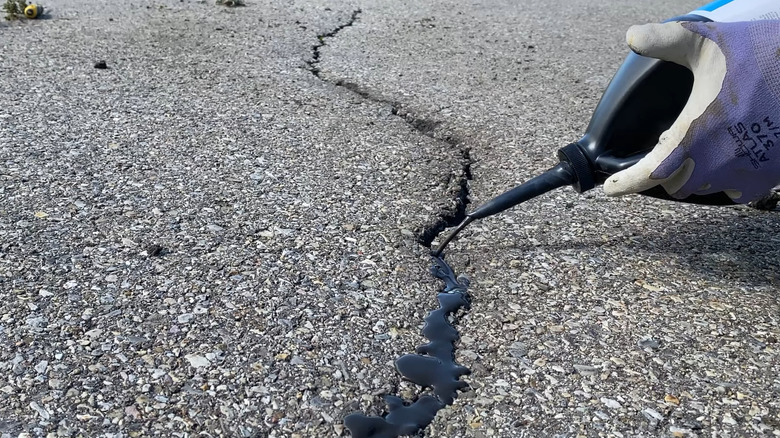
Next, grab your asphalt crack filler and put on some gloves to avoid accidental contact with the product. Fillers that use a caulking tube-style applicator are generally easy to use, but some fillers are rolled on, sprayed, or poured instead. Either way, carefully and slowly fill the crack, making sure the filler goes into the crack rather than just sitting on top. You may need to fill particularly large cracks in layers rather than all at once. Finally, smooth out the overflow with a putty knife or similar tool, let the filler dry completely, and you're good to go.
Asphalt crack fillers can last a couple of years. However, they won't stop new cracks from appearing elsewhere in your driveway. If filling cracks is taking up too much of your time, you might want to look at more durable alternatives for your driveway, as they may be better suited to your climate and usage.