

The Downsides Of Asphalt Driveways Nobody Talks About
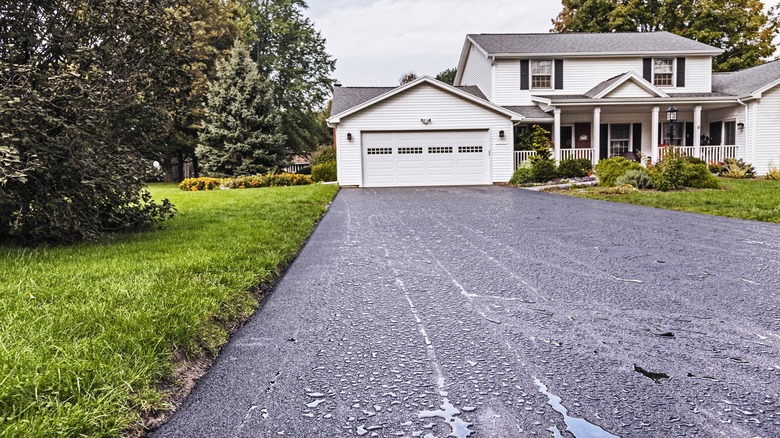
A driveway needs to be long-lasting and durable enough to support vehicles, and asphalt is a material that satisfies both requirements. Moreover, installation is cheaper than concrete, and because it flexes with changing temperatures, it's less likely to crack. All these are good reasons to choose asphalt as a driveway material, but there are also reasons to give it a pass, and they aren't often mentioned in the brochures promoting asphalt as a driveway material.
Let's start with the fact that asphalt is black. (That's why it's sometimes called 'blacktop' although that's an entirely different material, altogether.) Anything colored black is a heat sink, which means it absorbs heat from the sun rather than reflecting it (as lighter-colored concrete does), and it gets very hot. It gets so hot, in fact, that it can alter the climate around your house, potentially raising the ambient temperature from three to 10 degrees Fahrenheit on hot days. Not to mention that the pavement itself can reach temperatures of up to 152 degrees Fahrenheit, which is uncomfortable for walking and bad for your car tires.
Another problem with asphalt (one that it shares with concrete) is that it's impermeable. Rain water can't penetrate the tarry, oily surface, so it has to flow around it, and this often creates water flow problems that have to be corrected with yard drainage solutions. On individual properties, the altered flow stresses vegetation and creates erosion that can undermine foundations when severe. Communities with a large number of non-permeable surfaces made from asphalt and concrete face an increased threat of flooding.
Maintenance and ecological issues
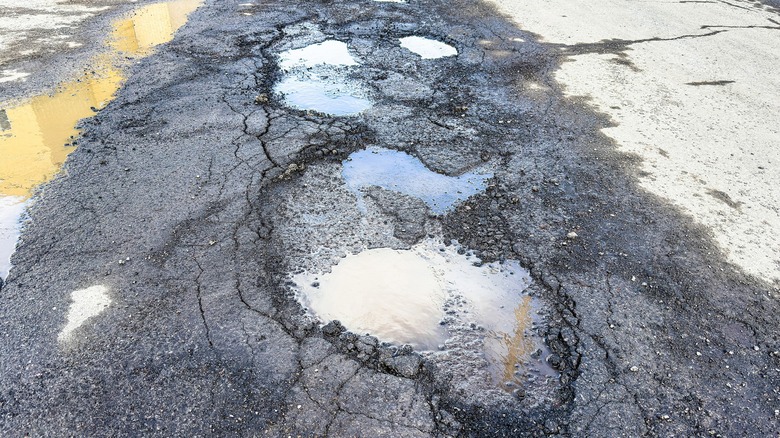
Asphalt isn't exactly what you would call a low-maintenance driveway material. When cracks do happen to appear, it's important to fix them promptly, because once water starts to seep through, the cracks widen, chunks break off, and potholes form. If the ground underneath the driveway shifts, and part of the driveway sags, that condition can lead to standing water, along with more deterioration and potholes, so that will also need to be fixed. Even if the asphalt stays in good condition, it should be resealed every two to five years to keep it that way.
One of the least-appreciated drawbacks of a driveway made from asphalt or concrete is the effect it has on local wildlife. It restricts the freedom of movement of small mammals, amphibians and insects, which tend to avoid crossing paved surfaces, and that can affect their exposure to predators and ability to procreate. Driveway lighting adds an extra element of disruption by interfering with movements of nocturnal species.
On the ecological side of things, asphalt isn't a particularly an eco-friendly driveway material. Production consumes large amount of energy to achieve the temperatures necessary for it to occur. Moreover, it pollutes the atmosphere; one ton of paving material releases 30 to 50 kilograms of carbon dioxide, one of the most important greenhouse gases. Fortunately, there are ways to mitigate these environmental problems. One way is to make new pavement out of reclaimed asphalt, and another is to produce new asphalt at lower temperatures.