

Move Over, Concrete: This Eco-Friendly Driveway Material Is Gaining Attention
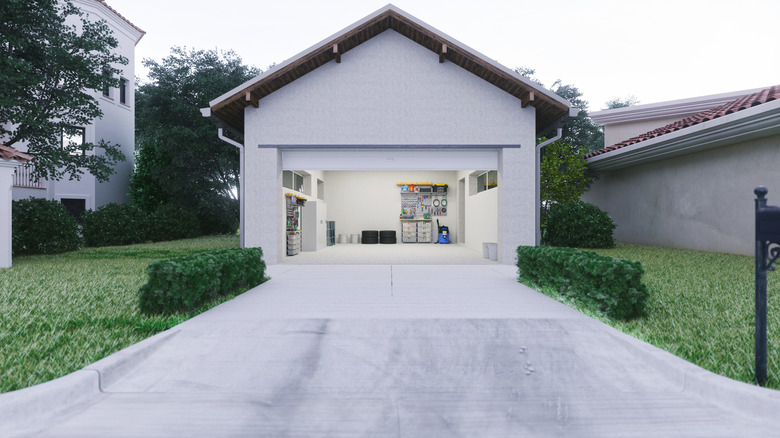
Concrete is both one of the most common and the most environmentally impactful driveway surfaces. Its production and transportation create vast amounts of carbon dioxide, and toxic air pollution. Once in place, concrete driveways contribute to urban heat islands and to stormwater runoff and its associated pollution. These impacts lead many homeowners to seek more sustainable alternatives to solid concrete, like gravel or permeable pavers. But there is a surprising emerging option that researchers say could be a game-changer for driveways and other places where hard surfaces are needed: mycelium.
When you hear mycelium, you may think mushrooms, and that's close, but you won't be replacing your cement drive with a mat of toadstools anytime soon. Mushrooms are basically the fruits of the far-reaching fungus mycelium. This fungus is a web-like organism found underground that plays a critical role in our ecosystem, supporting plant life and soil structure. It is made of a network of strands called hyphae that can be fused together in a manufacturing process to form a solid material.
Mycelium-based materials are being studied for their potential use in a variety of industries, including construction, These innovative composites are widely considered to be a promising new product in the world of sustainability. Visibilt, a Danish company, has developed a unique paver made of mycelium. The first publicly available versions are being installed in Faelledby, an eco-friendly, all-timber neighborhood in Copenhagen, and other research and development is ongoing. Instagrammer james_stew explains the manufacturing process for these mycelium-based pavers that could one day replace your standard concrete driveway.
How mycelium may be the next best driveway material
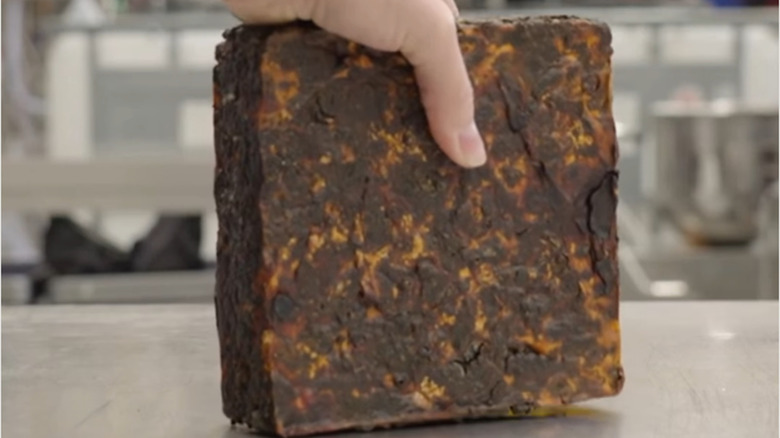
Mycelium can be made into sturdy bricks and other composites that could one day replace many of our conventional building materials, including driveways. This isn't science fiction. Mycelium is already being used as a moldable composite packaging material (as a sustainable replacement for plastics and styrofoam), and it was used to create a fantastical piece of architecture in Queens, New York, called the Hy-Fi, demonstrating its structural capabilities. But before mycelium-based paving material can replace concrete on a wide scale, it has to overcome certain obstacles.
Growing mycelium takes time, and manufacturing this natural material on a large scale will take a lot of innovation. One major issue is that this material has a lower compressive strength than concrete (it's about 1% as strong right now), and manufacturing processes will need to evolve to ensure this material can handle the heavy use a driveway gets. Mycelium is also biodegradable, which is awesome for its sustainability profile (and for products like packaging), but makes its long-term durability questionable. Still, the all-natural material holds a lot of promise for the future of green landscape design, and scientists and researchers are hard at work to develop "mycocrete" and bricks that may someday soon be available as a sustainable driveway alternative.