

There's Another Way To Sharpen Mower Blades Without A Bench Grinder
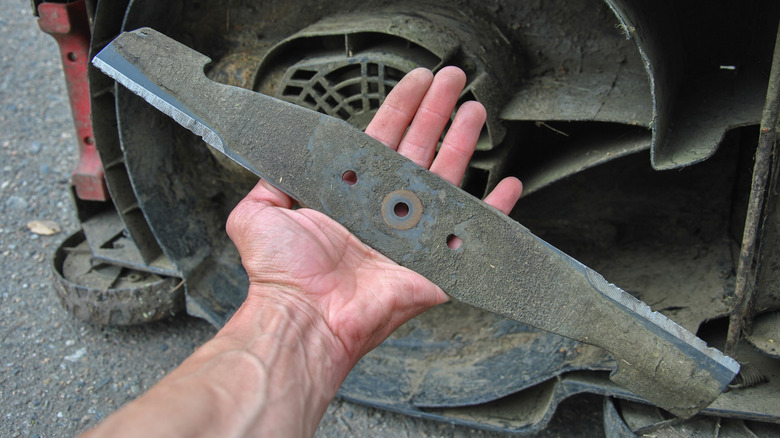
Using a dull blade is a common lawn mowing mistake that can cause serious problems for your lawn. A blade that needs sharpening will tear grass instead of slicing it smoothly, leaving your lawn looking tattered and shabby. Grass with torn ends also loses water, which could lead to browning and even disease. The fix is easy — maintain your mower blade. You may have to refine the cutting edge one to three times a season, and one of the most common ways to do that is with a bench grinder. But if you still haven't made that particular addition to your tool lineup just yet, there are plenty of alternative tools to sharpen your lawn mower blade, including a lateral move to another workshop essential: a stationary belt sander.
One of the best benefits of using a belt sander to sharpen your mower blades instead of a bench grinder is that it is more likely to produce a smoother finish. Belt sanders also generally run cooler, which reduces the chance of burning the blade. Blue or black spots mean the metal's temper is compromised, making that part of the blade brittle and more prone to dulling. That's a hard mistake to fix. In addition, a stationary belt sander is much more forgiving compared to the harsh wheels on a bench grinder. Sanders offer control while providing a uniform edge without gouging the steel.
How to sharpen mower blades with a stationary belt sander
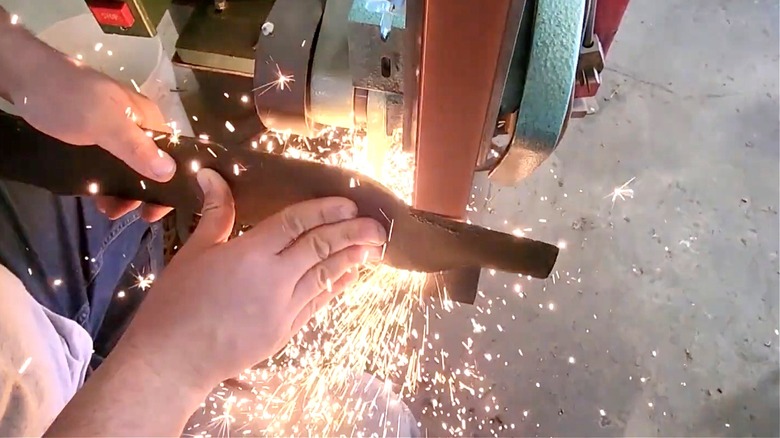
Before sharpening your blade with a belt sander, grab safety glasses and hearing protection. Wear durable gloves to handle the hot, freshly sharpened end when sharpening the opposite end. For your sander, you'll need to choose the right sandpaper for the job. A medium-grit (60 to 120) belt will work for most blades.
Remove the blade from your mower after disconnecting its power source. Ensure your sander's belt spins away from the cutting edge. Hold the blade with both hands, and if possible, rest one end on the table with the bevel facing the belt for more control. Some people draw the blade horizontally so the sander runs perpendicular to the blade, while others hold the blade vertically to let the sander run with the length of the blade — you can do whichever is more comfortable. Just be sure to angle the bevel parallel to the belt, and inch the blade forward until you make contact. Using gentle pressure, make multiple passes along the entire length of the bevel to evenly sharpen the edge. Stop occasionally to check your work and avoid overheating, cooling the hot blade with water if needed.
Once one end is about as sharp as a butter knife, you're good to go. Flip the blade, and repeat the process for the opposite bevel. After each end is sharpened to your satisfaction, check the blade for balance by hanging it on a nail secured to a wall. If one side starts to spin down, remove a bit more material from that end to equalize the weight.