

How Long Do Lawn Mower Blades Typically Last?

If you want to keep your lawn trimmed neatly, you need a dependable mower, sharp blades, and a good maintenance schedule. However, even the best maintenance can't extend your lawn mower blades' lifespan indefinitely. So how long can they actually last? The ideal time to replace lawn mower blades is every year or two, but lawn mower blades can last a bit longer than that if you need to push it. The full lifespan of a lawn mower blade is generally around two to three years. That doesn't mean they stay in peak condition that entire time, though. How long they last and how much work it takes to maintain them depends on a few factors.
Under ideal circumstances, your mower blades can last up to three years, but what exactly are the ideal circumstances? Lawn mower blades wear down with use, so it's only natural that less use will extend their lifespan. If you have a smaller yard or have swapped some of your grass out for a no-mow grass alternative, your lawn mower blades are likely to last longer. They're also more likely to last the full three years if you mow carefully and plant thinner grass. Avoid scraping them against rocks or other obstacles, swap out thicker turf grasses like Bermuda grass, and don't let areas become overgrown before mowing. However, some factors are out of your control. If your lawn has sandier soil or is particularly uneven, you can expect your lawn mower blades to have a shorter lifespan.
What type of lawn mower blades last the longest?
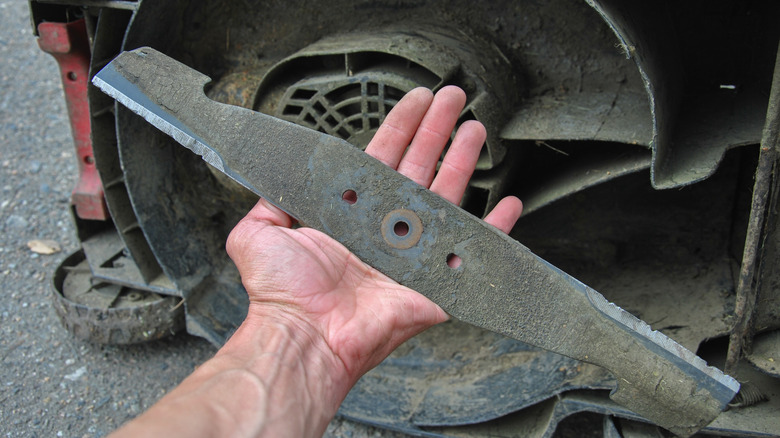
In general, the lawn mower blades that are taken care of last the longest. Regular maintenance, proper sharpening, and careful use will extend the lifespan of any mower blade. Cleaning your lawn mower blades will also extend the lifespan of your mower and the blades. However, how the blades were made can also make a difference. In general, a thicker lawn mower blade will have a longer lifespan than a thinner one. Thinner metal is more likely to break or chip if you run over something hard. Additionally, it can't be sharpened as many times as thicker metal, since sharpening removes some amount of metal each time. Thicker metal isn't impervious to damage, and it will also eventually become too thin to sharpen again, but it's generally sturdier.
The metal used to craft the mower blades can also make a difference. High carbon blades are generally flexible enough to limit damage when they hit a rock, but they're prone to rusting. While some blades are coated with rust-preventing solutions, these wear off with use and sharpening. Alloy steel blades are generally more rust-resistant and have wear-resistant edges, but are more likely to be damaged if they hit an obstacle. If you have a rocky lawn and are able to keep the blades clean to prevent rust, then high carbon blades should be fine. If your lawn is generally free from obstacles but you live somewhere with high humidity or sandier soil, then alloy steel blades may last longer.