

Ditch The Grass: A Weed-Resistant Lawn Alternative You Don't Have To Mow
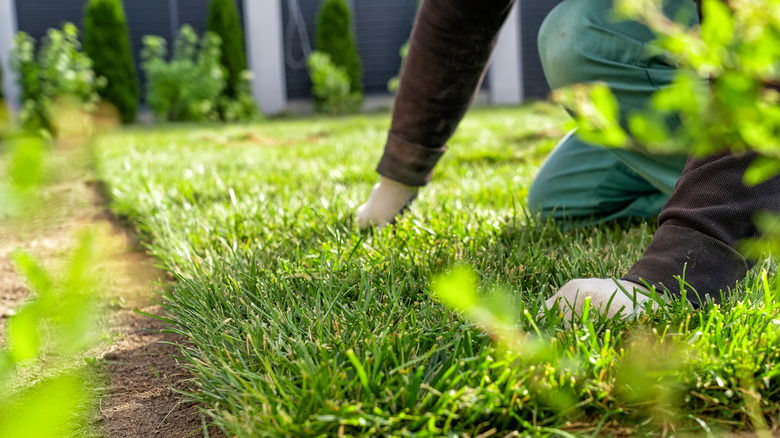
Grass has been the traditional lawn plant for centuries; but, for some people, it might have overstayed its welcome. If constant mowing, seeding, feeding, and weeding is taking up too much of your time and energy, it might be time to replace it. There are plenty of alternatives to grass lawns, but one you should really consider planting is smooth rupturewort (Hernaria glabra), sometimes called the green carpet rupturewort. This lovely perennial forms a nice, short, green blanket over an outdoor area. It grows thickly enough to outcompete weeds and only reaches a couple inches tall, meaning you don't need to worry about mowing it, either.
Rupturewort has lush, green foliage which turns reddish bronze in winter. Its leaves and stems grow densely to keep weeds at bay, but they spread horizontally more than vertically. Rupturewort blooms throughout summer, leaving tiny greenish flowers all across your lawn. They can be hard to see, but these flowers offer nectar for several small pollinators, including gnats. Mowing isn't the only care task you may be able to skip, as rupture is quite drought-tolerant once established and needs minimal watering. In addition to being low-maintenance and weed-resistant, rupturewort is fairly resistant to foot traffic. While it may not be able to handle heavy use, such as heavy equipment driving across it or parking your car on it, you can still walk on and use your lawn as normal. That's great news if you already have a seating area or want to try some DIY outdoor furniture projects.
Growing rupturewort as a lawn alternative
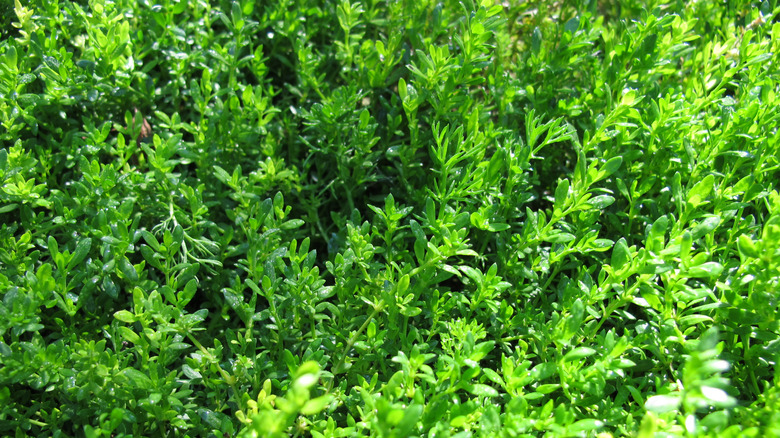
You can start your rupturewort from seeds either indoors during fall and winter or by direct sowing in spring. It isn't picky about soil types, as long as the ground is well-draining. If you often have yard drainage problems, you should address those before planting. For lighting, rupturewort can handle full sun to partial shade. However, if you live in a particularly hot climate, you may want to provide it with some extra shade and water to prevent heat stress.
With all that in mind, prepare your lawn for planting by removing any grass, existing weeds, stones, or other obstacles. Scatter the rupturewort seeds over the ground, but don't cover them. If you started your seeds indoors, space your rupturewort 1 ½ to 2 feet apart. They will need water while they become established, but won't need watering, mowing, or weeding afterwards. It should be noted that rupturewort is primarily hardy in USDA plant hardiness zones 7 through 11. While some people have seen success growing it as a perennial as far north as zone 4, like upper-New York state, you should be aware that the colder your winters are, the more likely it is that you'll need to grow your rupturewort as an annual. Since it grows relatively slowly, it may not be as effective as a total lawn replacement in this case. Instead, consider using it to suppress weeds in a smaller section of your lawn or in your garden.