

Brown Recluse Vs. Orb Weaver Spider: How To Easily Tell The Difference
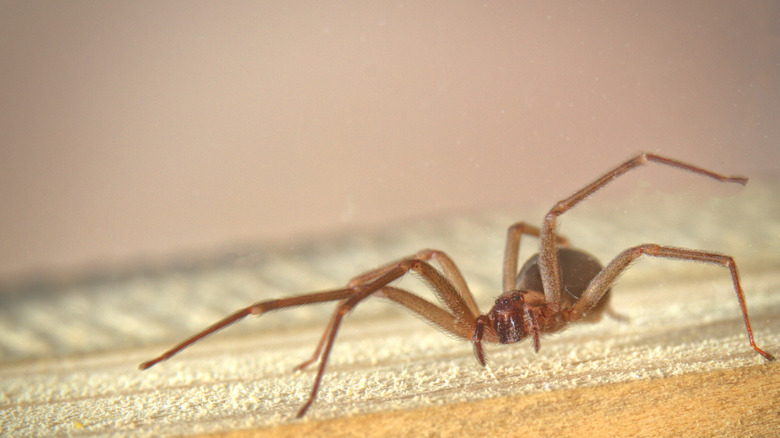
A spider's brown color is not sufficient to confirm that the arachnid is a brown recluse. One useful method for differentiating brown recluses and orb weavers is checking the web of the spider. An orb weaver spins highly organized circular webs which consist of silk lines that extend radially from the center in a spoke-like manner. In contrast, brown recluses do not create webs to capture their prey. The spiders are nocturnal hunters who make use of scattered webs as resting places during the daytime.
Additional physical traits help to identify these spiders. Many species of orb weavers have colorful or patterned legs and abdomens. They also have round abdomens and spiky or hairy legs. Some species are brown or gray colored, while others are yellow, orange, black, or white colored.
A brown recluse has a much simpler appearance. Its abdomen and long thin legs are all the same shade of tan to dark brown and have no striping, banding, or mottling. Neither do the legs have any prominent spines. Adults typically have a darker-colored mark resembling a violin on their back, with the neck pointing backward towards the abdomen. But this mark should not be the only method of identification. Six eyes arranged in three pairs are a better indication, but this requires a hand lens for a proper look, and you probably shouldn't get that close.
Additional clues to differentiate between the brown recluse and the orb weaver spider
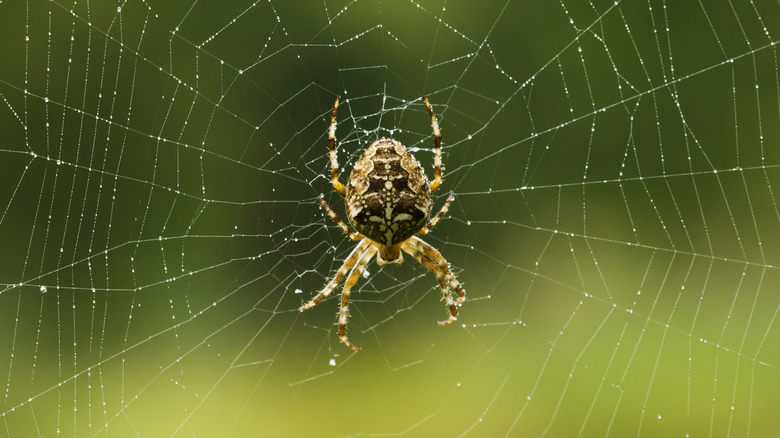
Orb spiders are generally found in outdoor sites such as porches and pose no harm to people. Therefore, an orb spider on a secluded section of the garden should be left alone. Brown recluse spiders enjoy living in dark, dry places that don't get disturbed, such as attics or basements, in boxes, along piles of clothes, and behind furniture. This species is found in the south-central and midwestern parts of the United States.
If you believe you've found a brown recluse spider in your home, you shouldn't try to touch it with your hands. It's best to use gloves when handling boxes that may contain a spider. Shake out shoes or clothing that may have been left in a garage or basement. If the spider is hairy, striped, and roaming, it may actually be a wolf spider. Anyone who believes they have been bitten by a brown recluse should seek medical attention rather than trying to identify the spider. Deaths from brown recluse spiders are extremely rare and typically affect only young children, older adults, and people with poor health, but they can cause tissue damage.