

The Unique Concrete Style That's A Great Alternative To Gravel Driveways
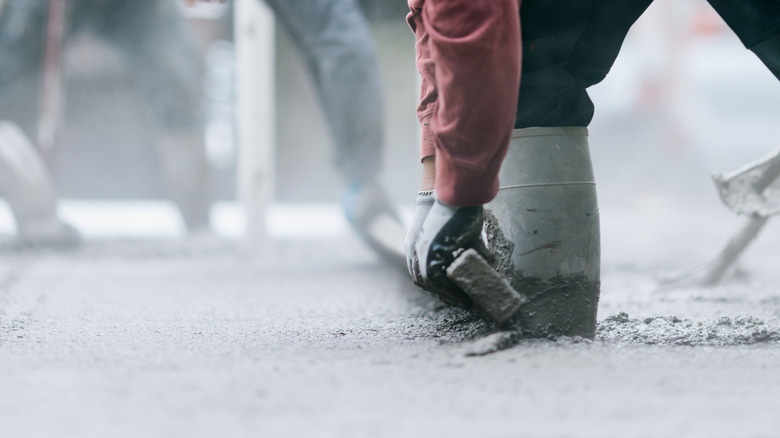
Gravel creates a relaxed, rustic driveway, but as a material it can be frustrating. Vehicle traffic can create ruts and potholes that require regrading, while individual stones may spread into the lawn or street. Even installing gravel driveways can be a little tricky. Salt finish concrete offers a more stable surface without losing that natural, slightly weathered appearance.
Despite its name, this finish is not made by mixing large amounts of salt into concrete. The driveway is poured and leveled normally, and while the surface is still workable, coarse rock salt is scattered over it and pressed partway into the concrete. After the slab has set and has undergone several days of curing, the salt is washed and brushed away. This results in small and irregularly shaped holes all around the surface.
The final driveway has a natural stone look instead of being a completely even and uninterrupted surface. This can help increase traction but should not be considered a slip-proof material, especially when wet or frozen. You could also frame the textured slab with brick driveway edging to give it a cleaner, more defined border. Because the salt-finish method requires few additional materials, it can be a relatively simple decorative upgrade compared with opting for an elaborate (and expensive) stamped concrete design. However, you must apply the salt at the right stage and press it to a consistent depth. You should therefore discuss it with a concrete contractor before the driveway is poured. A traditional salt finish cannot simply be added to fully cured concrete without first applying a suitable overlay.
Where salt finish concrete works best
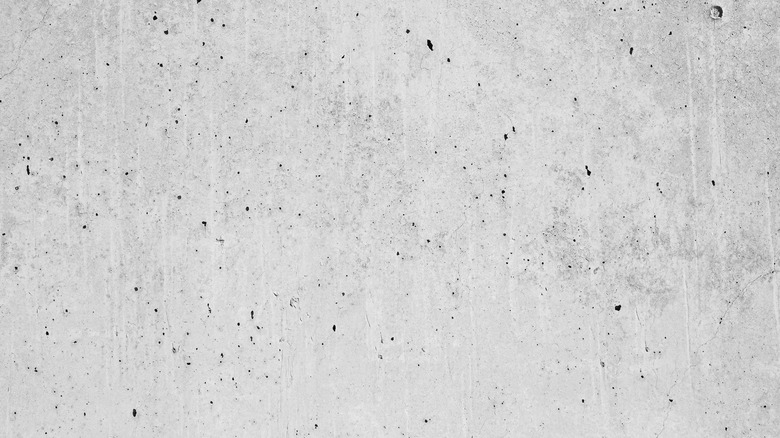
One of the primary factors you should consider before opting for salt finish concrete is the climate. Because water can collect in all those tiny holes, concrete finishes that include salt tend to be applied in warm climates. In climates that experience freeze-thaw cycles, water in these holes may weaken the concrete over time, resulting in flakes of the material chipping off from the main body, a process known as "spalling." Proper mixing and curing of the concrete and a good waterproofing sealer will minimize the chances of this happening.
Drainage must be considered too. While gravel can allow water to drain through its surface, concrete makes water drain on top of the slab. So it's essential for a new driveway to have adequate compaction of its base and sufficient slope to make sure that water drains away from the garage or home and not toward it. That's why control joints are always a good idea: They reduce the likelihood of structurally significant cracks forming.
Another potential source of confusion is deicing salt. The rock salt used to create the pattern is removed during installation. That does not mean the completed driveway can be covered freely with salt during winter. Deicing chemicals can contribute to scaling and spalling, especially when moisture repeatedly freezes and thaws inside the concrete. The driveway will also need occasional cleaning because dirt can settle inside the textured surface. Its sealer should be renewed according to the product manufacturer's instructions and the amount of weathering and vehicle traffic the slab is exposed to. If frequent freezing, drainage concerns, or maintenance make this finish unsuitable, consider other durable driveway alternatives to gravel before choosing a surface.