

The Guideline For Gravel Driveways Many Homeowners Don't Find Out About Until It's Too Late
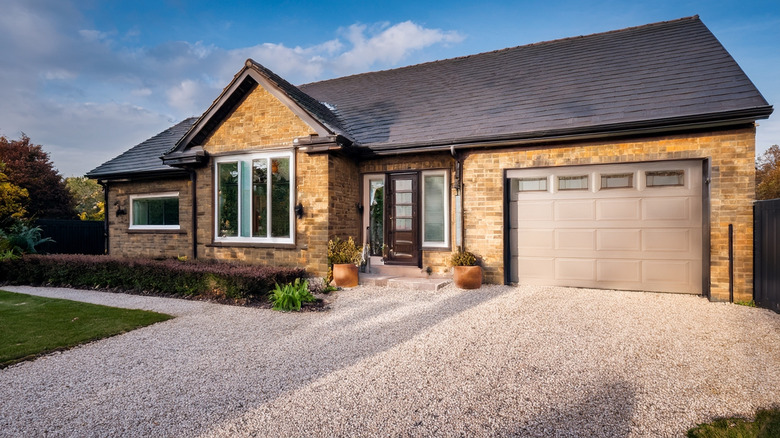
Gravel driveways can be a smart choice for homeowners who want driveway material that's affordable, easy to install, and helps manage flooding. Unlike concrete, gravel allows water to seep between stones and be absorbed by the soil. This can prevent water from pooling in your driveway and causing damage — but that's only true if you install it properly in the first place.
What some homeowners don't know about gravel driveways is that the layout of your property can affect its drainage. If your gravel driveway has no drainage, it can still accumulate standing water, under high levels of rainfall. The water accumulates faster than it can be soaked up by the soil, especially when it has nowhere else to go. The gravel in your driveway can also be washed out by heavy rainfall, requiring maintenance to fix. Water runoff from an improperly managed driveway can also cause the surrounding grass and plants to become overwatered. And if your gravel driveway is close to your home's foundation, the water buildup could cause damage to your house.
All that's not to say that you should be avoiding a gravel driveway entirely. Gravel is still a solid driveway material — you just need to understand how to set up your driveway for better drainage. This starts with understanding the slope of your driveway, from there, you can look at additional solutions like drains and ditches.
How to give your gravel driveway proper drainage
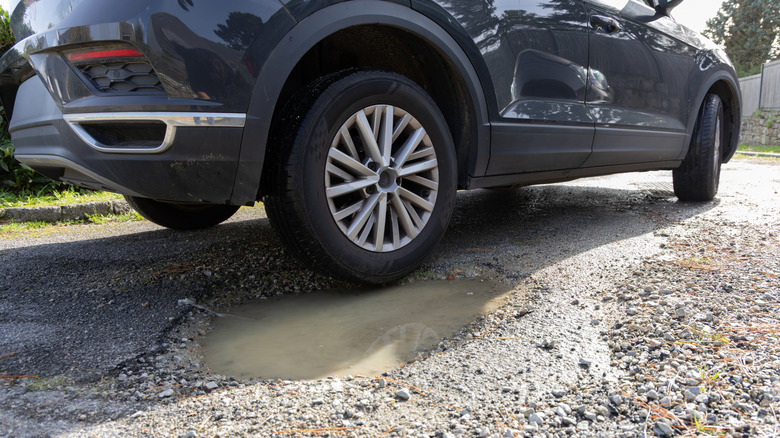
When designing a gravel driveway, understanding the slope of your home is important. If it's completely flat, heavy rainfall will have nowhere to go, and you'll have to deal with standing water. The ideal slope for a gravel driveway is between 2% to 5%. If it's extremely sloped, then gravity can pull gravel down the downhill.
But there are other solutions you can use to help prevent gravel in a driveway from washing away. One common solution is to use a drain. Located wherever the heaviest flow or pool of water occurs, drains can help move water away from your driveway and toward a deposit where it can drain properly. This helps prevent water from flooding your driveway. A French drain, for example, uses a long pipe filled with gravel and lined with small holes to help slowly disperse standing water across the yard. And you can install a French drain in your gravel driveway in a few simple steps. Another option is digging a gravel ditch alongside of your driveway, so the water has a safe place to collect without endangering your yard or home.
Some professionals recommend having your driveway re-sloped. If you're dealing with significant drainage issues, you can have additional material added to the top of your driveway to encourage better water flow. For steep driveways, reworking the layout to make it longer and curvier helps create a shallower slope. Lastly, choosing the right kind of gravel will improve stability. You might want to go with popular options like crusted stone or pea gravel, because of their look. But it is important to think about how your driveway is used. Foot traffic, vehicle weight, and day-to-day wear all affect how the material behaves.