

How Many Passes Should You Make With Lawn Aerators?
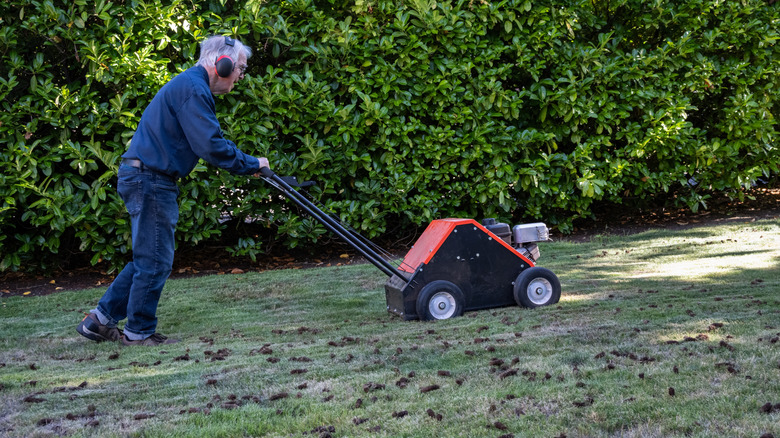
All plants need adequate care to grow and thrive, and the grass in your lawn is no exception. Using an aerator creates holes in the soil that reduce compaction while making grass roots better able to receive water, oxygen, and nutrients. With all of the important benefits aeration offers, it's important to get the process done right for longer-lasting effects. This is why one pass with a lawn aerator often isn't enough to get the job done. While there isn't a one-size-fits-all answer to exactly how many passes you should make, most lawns do require multiple passes with aerators, and even more depending on soil compaction status and whether you're seeding the lawn.
First, you will need to decide which type of aerator to use. A core aerator is generally best for home lawns, especially if you have compacted soil (you may also want to consider the differences between core and spike aerators before renting or purchasing). Even so, Iowa State University Extension and Outreach notes that you will need to create between 20 and 40 holes for each square foot of your lawn. Such a feat ultimately requires multiple passes. At minimum, you will need to run the aerator horizontally and then vertically across the lawn at least one time each. While you can also use spike aerators with multiple passes, know that these will actually worsen soil compaction.
Other reasons why your lawn needs additional aerator passes
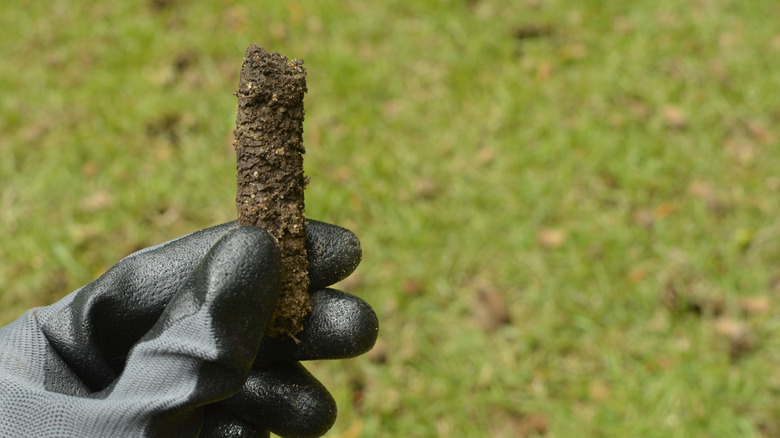
Compaction is another factor when trying to determine the proper number of aeration passes. Signs of compacted soil include stressed or thinning grass, water runoff after rain or irrigation, and ground that feels harder to walk on than normal. Certain soils are also naturally more prone to compaction, such as sandy loam. You can also easily check for compacted soil in your yard with a simple screwdriver test. The Fairfax County Master Gardeners Association recommends inserting a screwdriver directly into the ground to see if you can push it down 3 to 6 inches. If this is not possible, your soil is likely compacted and could use some aeration. Just make sure you test multiple parts of the lawn to see if compaction is a widespread problem, or if it's limited to one part of your yard.
Another consideration is whether you plan on seeding the lawn, which is a common practice after aeration. For best results, the Extension Foundation recommends making between 6 and 10 passes with an aerator to ensure you create enough holes in the soil. Wait a month after aerating before planting new seeds to ensure more even turf growth. You can also try this lawn aeration trick for patchy lawns in a pinch.
Overall, most home lawns need aeration at least every 1 to 2 years, with some requiring less frequency. As a rule of thumb, the more your household is out there enjoying the yard (including pets and kids), chances are you need to aerate the lawn more often to alleviate compaction from foot traffic.