

Core Vs. Spike Aerators: How Are They Different?
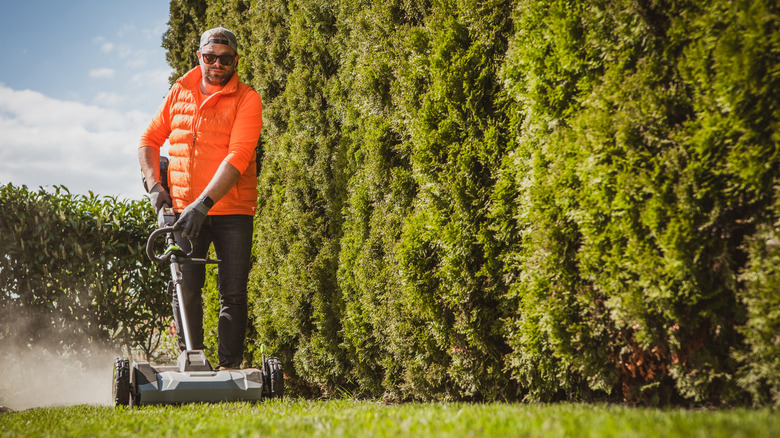
There's more to achieving a healthy lawn than sticking to a strict mowing schedule. Even if your yard looks like a thick green carpet now, compacted soil underneath can prevent grass roots from getting the oxygen, water, and nutrients they need. It can also cause water and fertilizer to run off instead of down into the ground. Aeration helps to fix this problem by creating small holes in the surface of your lawn. By making heavy clay or compacted soils more absorbent, aeration encourages stronger root growth that helps your grass handle whatever your family or local climate throws at it.
As you begin to explore how to aerate your lawn, it is important to understand the difference between core and spike aerators. Core aerators are considered the gold standard for aeration because their hollow tines remove plugs of soil to create deep openings in badly compacted soil. Spike aerators simply poke a series of temporary, shallow holes into the ground, making them a quick and simple way to help compacted ground absorb more water and nutrients in the short-term.
Neither type of aerator will transform your lawn from a patchy brown mess to a glossy green expanse overnight. However, they can both support healthier soil by allowing fertilizer and organic matter to penetrate it much better. Whether a core or spike aerator is right for your situation depends on several factors, including the level of soil compaction you're trying to fix, the amount of physical work you want to perform, and of course, your budget.
How to choose the best aerator
Spike aerators are the least expensive option. They gently loosen compacted soil for a limited time, making them better for mildly compacted yards. You can find plenty of spike aerators on Amazon for under $40, from small handheld tools to spiked shoes that slip on over a pair of boots. They typically offer several rows of thin spikes measuring about 2 inches long. This allows them to slide into compacted ground using relatively little pressure, although covering a lot of ground with a rotary spike aerator is definitely a good arm workout! If your goal is to create little pockets for water, fertilizer, or seed to hang out in soil that's already pretty healthy, spike aerators are a budget-friendly option. However, experts point out that because each tine pushes soil out of the way without removing any, spike aerators can make a badly compacted lawn even worse in the long run.
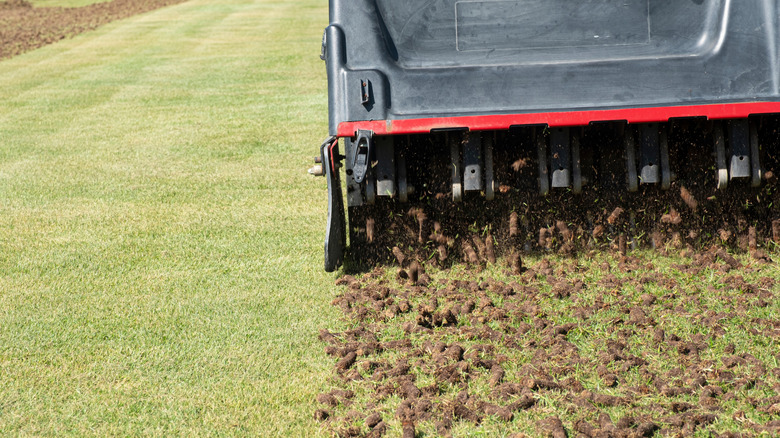
Core aerators are a more aggressive way to loosen soil that's become badly compacted over time due to heavy traffic, poor soil management, or over-tilling. There are three different types of core aerators: manual, push-behind, and tow-behind units. Each features hollow tines that are driven into the ground before being quickly pulled out, bringing a plug of compacted soil with them. The holes left behind by a core aerator are much larger than what you can achieve with a spiked tool, typically measuring around 2 to 3 inches deep and ¼ to ½ inch wide. Core aerators tend to be more expensive but easier to operate, whether you're stepping on a manual tool or guiding a self-propelled model. However, they are widely considered to be the superior choice when it's time to aerate your lawn.