

Dump Traditional Crack Fillers: There's A Faster Way To Fix Asphalt Driveways
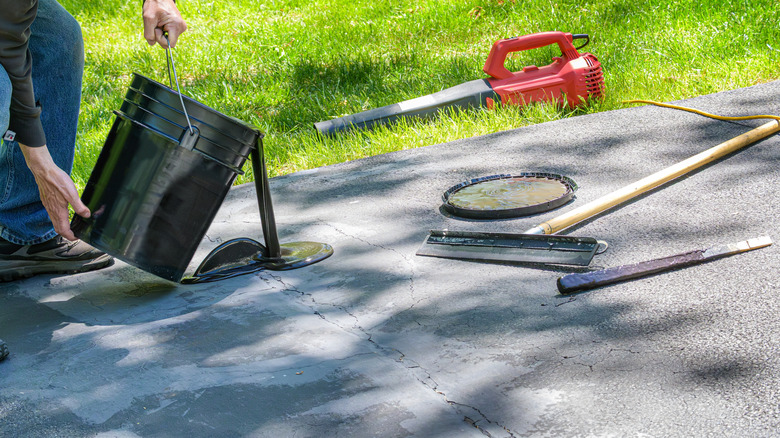
Dealing with a cracked asphalt driveway? When you compare concrete vs. asphalt driveways, asphalt is usually the lower-cost option. Even though installation is cheaper, you may still end up paying for repairs, including cracks.When that happens, you have two main options: Crack fillers and crack sealers. One fast way to seal a crack is with asphalt crack tape. It often takes less time than fillers and offers more flexibility once applied..
Cracks are one of the downsides of asphalt driveways that rarely get mentioned, but they're often fixable with DIY products. Asphalt crack tape sits on top of the damaged area and bonds to the surface when heated. Because it's rubberized, the tape moves with your driveway's expansions and contractions, helping it last longer. The watertight seal it creates protects the crack and provides a long-term fix.
Fillers, on the other hand, go into the crack and bond to the interior surfaces to keep the damage from spreading. Once cured, the filler becomes hard and inflexible, which means it may not hold up as well if the driveway shifts frequently. Each method has pros and cons. Fillers don't require heat, but they do require precision to apply. It can also be time-consuming and requires repeated squeezing to apply the product. Crack tape is rolled over the damaged area with less need for accuracy and is heated to bond, often making it the faster option.
Asphalt crack tape seals up small cracks with heat
Since cracks are among the common repair for an asphalt driveway, keeping asphalt crack tape on hand lets you make quick fixes as needed. The product often comes in different widths, — commonly 1 inch, 2 inches, and 4 inches — to accommodate gaps of various sizes. You'll also need a propane torch to apply the heat required to bond the tape permanently. If you don't feel comfortable operating a propane torch, fillers or hiring an asphalt repair company are safer alternatives.
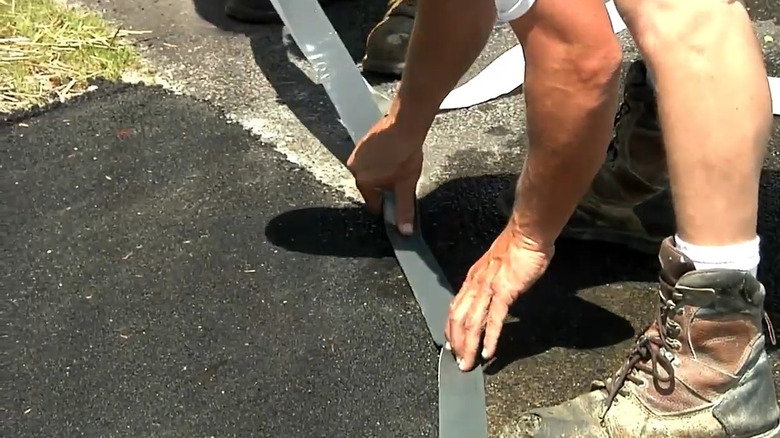
You don't need to perform much preparation, other than cleaning the surface, to ensure a good bond. Make sure the surface isn't greasy, and wait until it's completely dry to apply the tape. The repair tape comes in a roll with a liner to prevent sticking. Remove the backing and press the tape over the crack, keeping it centered as you unroll it. It lays down quickly, and you can press it into place with your foot as you go.
For the heating process, apply the propane torch flame directly to the tape. Watch for the material to begin melting — when it starts to liquefy, move the torch to the next section. Avoid overheating, which can burn the tape and reduce its effectiveness. Allow the repair to cool completely before walking or driving over it.