

Can I Sharpen Both Sides Of Lawn Mower Blades?
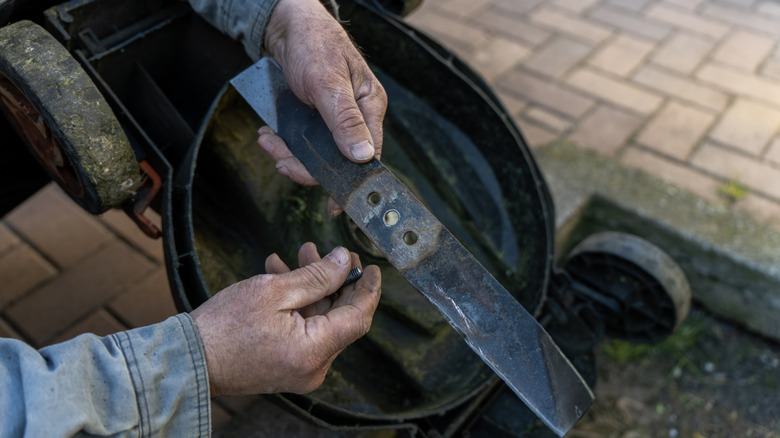
If your lawn looks torn and ragged instead of cleanly clipped, a dull blade is usually to blame. Most homeowners think of sharpening the lawn mower blade themselves, which is fine, until they hit the instruction to "sharpen both sides." What does it really mean? Do you sharpen both the front and back edges? The top side and underside of each cutting edge? Or, do these otherwise simple instructions mean something completely different? Of course, if you prefer the easiest way to sharpen your mower blades — taking them to a professional — the guesswork is eliminated for you. But if you prefer the budget-friendly DIY route, it can save you time (and money) to know which section to touch up. To clarify: Each blade has a cutting edge and a sail (turned up portion opposite the cutting edge) — and you sharpen only the cutting edges on opposite ends of the spinning blade.
That distinction matters more than it might seem, as it'll mean the difference between a well-maintained lawn and a poorly cut one. As the blade spins, the sail creates areas of high and low pressure that lift the grass up right before the beveled top edge cuts it. The integrity of the sail is essential to the blade's performance, so sharpening it will only add to the wear and put you closer to needing a replacement. This might also leave you with an unbalanced blade, which could make the mower spin unevenly, wear down its internal parts faster, and cause unusual vibrations in the machine.
Identifying the blade's cutting edge, and how to sharpen it
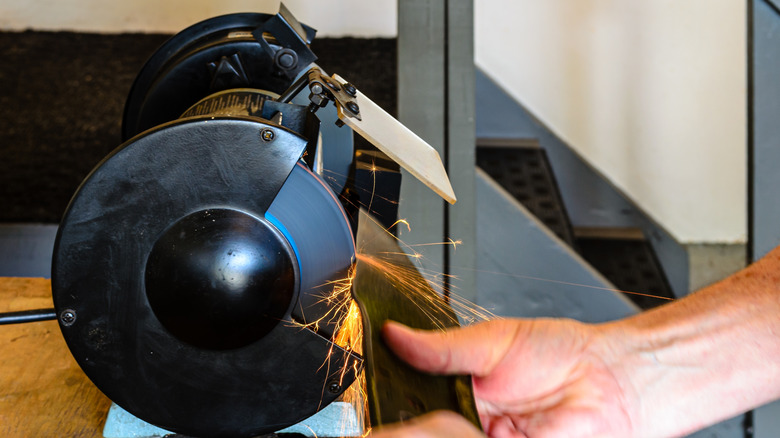
This basic sharpening rule applies regardless of whether you have a standard lawn mower blade or a mulching blade. To identify which part of the mower blade you should sharpen, look at the outer edge of the blade for the angled section called the bevel. It is typically a 3- to 4-inch cutting edge on opposite sides of the blade, and if it looks dull (or your cut grass looks choppy), sharpen it. While sharpening, rest your sharpening file or grinder against the existing slope on the bevel (usually 30 degrees). Remember, you don't want to oversharpen your lawn mower blades; you only need to make the edge about as sharp as a butter knife, enough to cut a blade of grass but not your finger as you test the sharpness.
Now, what about sharpening the underside of the cutting edge? You can skip trying to grind an angle on that flat bottom side of the blade — mower blades are designed with a single top bevel, and working that alone is enough to maintain a sharp edge. What you could do, however, is make a few light strokes with the sharpening file on the bottom side to remove the burrs toward the end of your sharpening job. Burrs are wire-like metal slivers that curl back on the blade and collect on the bottom end when you're sharpening the bevel. Once burrs develop, you can consider the bevel sharpened. Feel for the burr using your fingers, and remove it with a pass on the bevel's underside to refine the edge.