

The Mowing Habit That Can Cause Crabgrass To Take Over Your Lawn
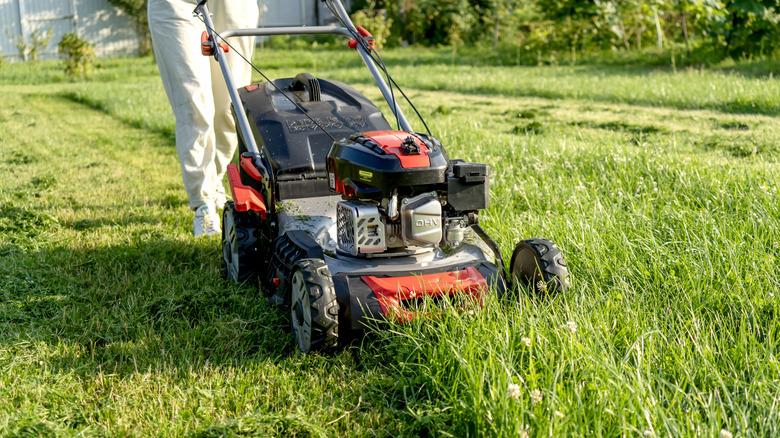
Maintaining a healthy lawn is not only important from an aesthetic standpoint, but it also helps to control unwanted weeds and plants that tend to pop up in unhealthy yards. This includes crabgrass, which can infest landscape beds, home lawns, gardens, athletic fields, and virtually everywhere else landscaping or turf exists. While technically a type of grass, this summer annual is often regarded as a weed due to its rapid growth rate and ability to cause problems in home lawns. You may also be surprised to know that mowing doesn't automatically reduce crabgrass growth, especially if you're cutting your lawn too short.
It's a common misconception that mowing your lawn short can help to eradicate and prevent crabgrasses. In fact, according to the PennState Extension, crabgrass is capable of growing and seeding in turf that's only ½ inch tall. Cutting your grass too short decreases the density of the turf, thereby creating an opportunity for naturally short crabgrasses to compete for growth. Taller turf can also provide cooling shade to soils to minimize the hot conditions and the sunlight crabgrass needs in order to grow.
Good mowing habits complement other crabgrass control measures
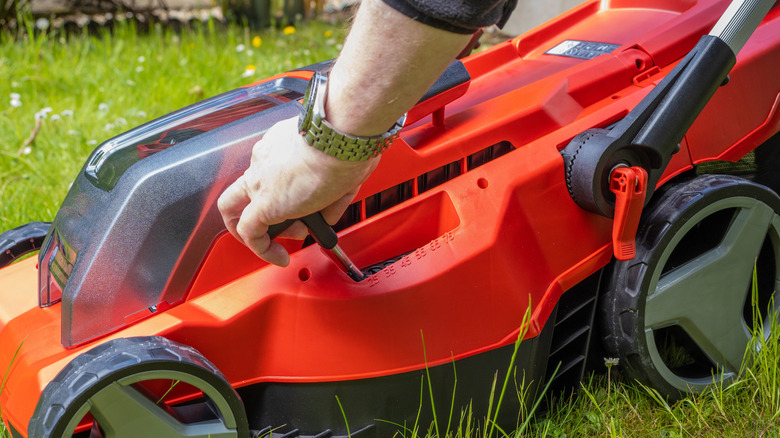
As for the best mowing height to help stop crabgrass growth, most experts recommend that you keep your grass about 2 to 3 inches tall. This gives your lawn the best fighting chance against crabgrasses. Once crabgrass successfully sprouts in your yard, you can almost guarantee that full-grown plants will then form and spread seeds. The danger here is that pesky crabgrass can take over your yard and eventually cause thin turf.
Increasing your mowing height is just one method of crabgrass control. You'll also want to prevent overwatering your lawn, as doing so can provide the environment crabgrass seeds need to germinate. To prevent this occurrence, the University of Georgia Cooperative Extension recommends that your lawn receives about 1 inch of water per week –- this includes water from rainfall. During crabgrass season in the summer, you'll want to be mindful about aerating your lawn and applying nitrogen-based fertilizers that could erroneously feed these unwanted plants.
When to consider chemical controls for crabgrass
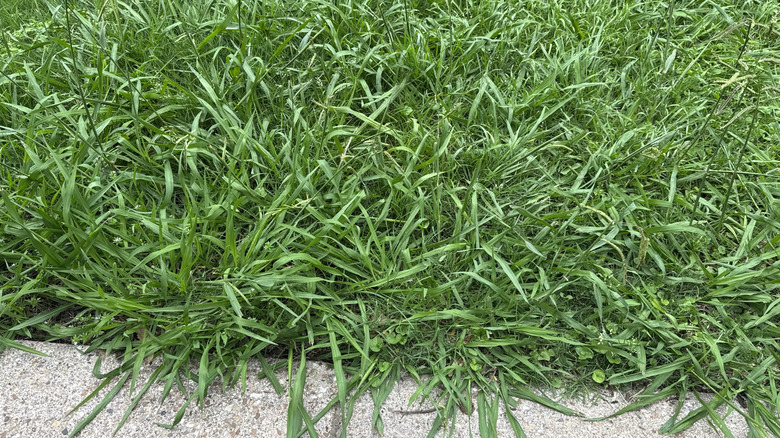
Unfortunately, once crabgrass starts growing in your lawn, changing your mowing technique isn't enough to completely control this nuisance plant. For this reason, you might consider treating your yard with a pre-emergent herbicide to get a handle on crabgrass before its starts germinating and spreading seeds. This is especially helpful if your lawn experienced crabgrass growth during the previous season. If you decide to use pre-emergent on your lawn, apply it in early spring, or once soil temperatures in your area exceed 55 degrees Fahrenheit 4 to 5 days in a row, per the University of Massachusetts Extension. Be sure to follow all instructions and safety precautions indicated on the product label before use. You'll also want to make sure the product is specifically designed to treat crabgrass.
When it comes to crabgrass management in home lawns, know that patience and consistency are both critical to success, and it may be impossible to get rid of crabgrass entirely. It can take a few seasons to fully eradicate crabgrass, so keep up with your good mowing techniques and other strategies. Overall, your mission is to prevent crabgrass from reseeding and spreading through your lawn.